
DOSERANK guide
Magnesium Glycinate Dose: Evidence-Based Guidelines
Published

Magnesium glycinate has emerged as one of the most popular supplemental forms of magnesium, prized for its superior absorption and minimal digestive side effects compared to other forms. Yet determining the right mg glycinate dose remains a common challenge for both first-time users and experienced supplement takers. The optimal dose depends on individual factors including baseline magnesium status, specific health goals, and existing dietary intake. This article examines evidence-based dosing recommendations, explains how to calculate your personal needs, and outlines safety considerations to help you make informed decisions about supplementation.
Understanding Magnesium Glycinate Bioavailability
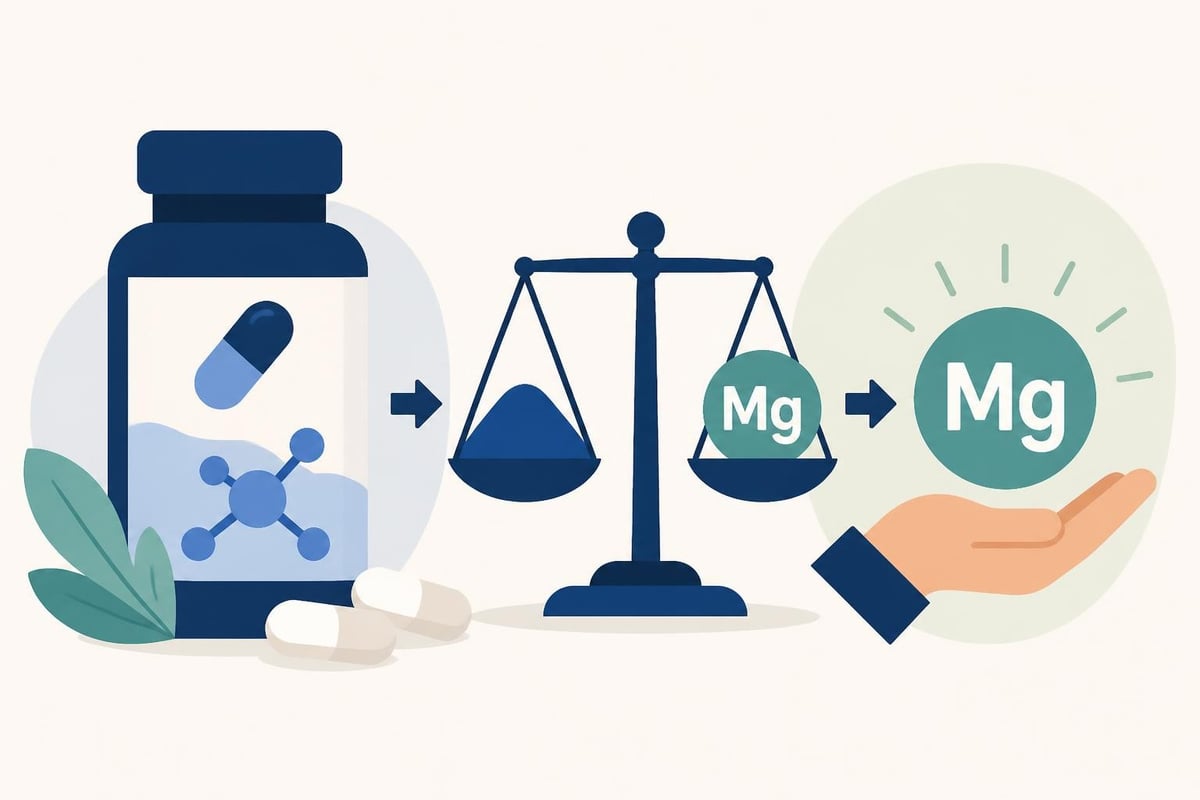
Magnesium glycinate consists of magnesium bound to the amino acid glycine, creating a chelated compound that enhances intestinal absorption and reduces the laxative effect common with other forms like magnesium oxide or citrate. When evaluating product labels, understanding the difference between elemental magnesium and the total compound weight becomes essential for accurate dosing.
Elemental Versus Compound Weight
A 500 mg capsule of magnesium glycinate typically contains only 50-100 mg of elemental magnesium, with the remainder being glycine and molecular bonds. This distinction matters significantly when comparing products and calculating your actual mg glycinate dose.
Key label considerations:
- Elemental magnesium content is what counts toward RDA targets
- Total compound weight includes both the mineral and amino acid
- Bisglycinate and diglycinate are alternate names for the same chelated form
- Absorption rates for glycinate range from 30-40%, higher than most forms
The amino acid glycine itself provides additional benefits beyond serving as a carrier, including potential calming effects on the nervous system and support for collagen synthesis. This dual-action profile makes glycinate particularly valuable for individuals targeting sleep quality or stress management.
Evidence-Based Dosing Recommendations
Clinical research provides dose-specific guidance for various health outcomes. A recent placebo-controlled trial examining magnesium bisglycinate in adults with poor sleep demonstrated that 500 mg of magnesium bisglycinate (providing approximately 100 mg elemental magnesium) taken before bed improved sleep quality metrics over eight weeks.
Dosing by Health Goal
| Health Goal | Typical Daily Dose | Elemental Magnesium | Timing |
|---|---|---|---|
| General maintenance | 200-400 mg compound | 40-80 mg elemental | With meals |
| Sleep quality | 400-500 mg compound | 80-100 mg elemental | 30-60 min before bed |
| Muscle cramps | 300-500 mg compound | 60-100 mg elemental | Evening |
| Anxiety support | 400-600 mg compound | 80-120 mg elemental | Split doses |
Research suggests that for improving magnesium status in individuals with documented deficiency, higher doses may be warranted initially, typically ranging from 300-400 mg of elemental magnesium per day divided into two or three doses. This approach helps restore cellular and bone magnesium stores more rapidly while minimizing digestive tolerance issues.
The mg glycinate dose for stress and anxiety has been examined in multiple studies, with a systematic review from 2024 noting that doses ranging from 75-360 mg of elemental magnesium showed benefits for anxiety symptoms. Most participants tolerated these doses well across durations extending beyond eight weeks.
Starting Dose Protocol
Beginning with a conservative mg glycinate dose and gradually increasing helps your body adapt while identifying your individual sweet spot.
- Week 1-2: Start with 100-200 mg compound (20-40 mg elemental) once daily
- Week 3-4: Increase to 200-400 mg compound (40-80 mg elemental) if well-tolerated
- Week 5+: Adjust to target dose based on response and health goals
- Ongoing: Reassess every 4-8 weeks and adjust as needed
This titration approach reduces the risk of digestive upset even with the gentle glycinate form. Some individuals achieve their desired outcomes at lower doses, while others benefit from progressing to the higher end of the recommended range.
Safety Limits and Upper Thresholds
The European Food Safety Authority establishes clear upper limits for supplemental magnesium distinct from dietary intake. For adults, the tolerable upper intake level from supplements stands at 250 mg of elemental magnesium per day, assuming normal kidney function.
Critical safety considerations:
- Dietary magnesium does not count toward the supplemental upper limit
- Individuals with kidney disease should consult healthcare providers before supplementing
- Exceeding upper limits increases risk of diarrhea, nausea, and cramping
- Very high doses (>5000 mg elemental) can cause serious toxicity but are rare with oral supplements
The 250 mg elemental threshold translates to approximately 1250-2500 mg of magnesium glycinate compound, depending on the specific product formulation. This wide margin provides safety reassurance when using typical recommended doses.
Most adverse effects from excessive magnesium supplementation involve digestive symptoms that resolve quickly when dosing is reduced. Unlike some minerals, magnesium does not readily accumulate to toxic levels in individuals with healthy kidney function because excess is efficiently excreted through urine.
Factors That Influence Your Ideal Dose
Individual magnesium requirements vary based on multiple physiological and lifestyle factors that affect both absorption and utilization. Calculating your optimal mg glycinate dose requires considering these variables rather than relying solely on general recommendations.
Dietary Intake Assessment
Before determining your supplement dose, evaluate your baseline magnesium consumption from food sources. Rich dietary sources include:
- Dark leafy greens (spinach, Swiss chard)
- Nuts and seeds (almonds, pumpkin seeds)
- Whole grains (brown rice, quinoa)
- Legumes (black beans, chickpeas)
- Dark chocolate (70%+ cacao)
Average dietary magnesium intake in the United States falls below the recommended daily allowance of 310-420 mg for adults, with most people consuming only 250-300 mg daily. This gap often justifies supplementation even at moderate doses.
Absorption Modifiers
Several factors enhance or inhibit magnesium absorption, affecting how much of your chosen mg glycinate dose reaches your bloodstream.
| Factor | Effect on Absorption | Recommendation |
|---|---|---|
| Vitamin D status | Enhances absorption | Ensure adequate vitamin D |
| High calcium intake | Competes for absorption | Space doses 2+ hours apart |
| Alcohol consumption | Increases urinary loss | Reduce intake or increase dose |
| Proton pump inhibitors | Reduces absorption | May need higher doses |
| High-fiber meals | Slightly reduces absorption | Take between meals if sensitive |
Comparing glycinate to other forms, research on magnesium glycinate versus citrate suggests that while citrate may have a slight edge in bioavailability, glycinate produces fewer digestive side effects, making it preferable for sustained higher doses.
The DoseRank methodology accounts for these absorption variables when ranking magnesium supplements, evaluating not just elemental content but also form-specific bioavailability and the presence of cofactors that enhance utilization.
Timing and Dose Distribution Strategies
When you take your mg glycinate dose can be as important as how much you take. Strategic timing maximizes both absorption and targeted benefits.
Single Versus Split Dosing
Single daily dose benefits:
- Simplified routine improves consistency
- Ideal for sleep-specific goals (taken before bed)
- Reduces pill burden
- Works well for doses under 200 mg elemental
Split dosing advantages:
- Better absorption for total daily amounts above 200 mg elemental
- More stable blood levels throughout the day
- Reduced digestive sensitivity
- Allows strategic timing for different health outcomes
For individuals using magnesium glycinate primarily for stress resilience, splitting the dose between morning and evening can provide more consistent nervous system support throughout the day.
Optimal Timing Windows
Taking magnesium glycinate with or between meals affects both absorption and tolerability differently than other forms.
- Morning dose: Supports daytime stress management and muscle weakness prevention
- Afternoon dose: May reduce exercise-related cramping and support exercise recovery
- Evening dose: Enhances sleep quality, reduces nighttime muscle cramps
- With meals: Improves tolerability for sensitive individuals
- Empty stomach: May enhance absorption but increases digestive sensitivity
The glycine component of this form provides calming neurotransmitter effects that make evening dosing particularly logical for those targeting sleep or nighttime muscle relaxation.
Age and Gender Considerations
Recommended daily allowances for magnesium vary by age and gender, which should inform your baseline mg glycinate dose before adjusting for specific health goals.
RDA by demographic group:
- Adult men (19-30): 400 mg total daily (diet + supplements)
- Adult men (31+): 420 mg total daily
- Adult women (19-30): 310 mg total daily
- Adult women (31+): 320 mg total daily
- Pregnant women: 350-360 mg total daily
- Lactating women: 310-320 mg total daily
These total daily amounts include both dietary sources and supplements. If your diet provides 200-250 mg daily, a supplement delivering 100-150 mg elemental magnesium typically achieves the RDA.
Special Population Adjustments
Certain groups require modified dosing approaches based on physiological status or increased requirements.
Older adults often need higher supplemental doses due to reduced intestinal absorption efficiency, increased medication use that depletes magnesium, and lower dietary intake. Starting with 200-300 mg elemental daily may be appropriate in this population, though kidney function should be verified first.
Athletes and highly active individuals lose additional magnesium through sweat and have increased muscle tissue demands, potentially justifying doses toward the higher end of safe ranges. However, electrolyte balance requires attention to other minerals like sodium and potassium alongside magnesium.

Product Selection and Label Reading
Calculating your proper mg glycinate dose requires accurately interpreting supplement labels, which vary significantly in how they present information.
Decoding Common Label Formats
Format 1: "Magnesium (as Magnesium Bisglycinate) 100 mg" This indicates 100 mg of elemental magnesium delivered via the bisglycinate form.
Format 2: "Magnesium Bisglycinate 500 mg (providing 100 mg elemental magnesium)" This specifies both compound weight and elemental amount clearly.
Format 3: "Magnesium Bisglycinate Chelate 1000 mg" Without elemental content listed, assume approximately 20% elemental magnesium (200 mg).
Always look for the elemental magnesium amount when calculating your total daily mg glycinate dose. Products that list only compound weight without clarifying elemental content should be avoided or carefully researched before purchase.
Quality Markers Beyond Dose
Dose accuracy matters little if the product lacks quality manufacturing standards. Evidence-based selection criteria include:
- Third-party testing certifications (USP, NSF, ConsumerLab)
- Clear elemental magnesium labeling
- Minimal unnecessary fillers or additives
- Appropriate storage and stability testing
- Manufacturing transparency
The DoseRank platform evaluates supplements across these dimensions alongside dose appropriateness, providing rankings that account for trust, value, and evidence rather than dosing alone.
Monitoring Response and Adjusting Dose
Finding your optimal mg glycinate dose involves systematic tracking of both benefits and any subtle adverse effects over several weeks.
Response Indicators
Positive response markers:
- Improved sleep latency or quality within 1-2 weeks
- Reduced muscle cramping frequency within 3-7 days
- Better stress tolerance after 2-4 weeks
- Normalized bowel movements (if previously constipated)
- Reduced fatigue levels after 4-6 weeks
Signs of excessive dosing:
- Loose stools or diarrhea
- Unexplained fatigue or lethargy
- Nausea, especially on an empty stomach
- Muscle weakness rather than improved function
Most individuals find their ideal dose through gradual upward titration until benefits plateau or mild digestive changes appear, then reducing slightly to find the sustainable sweet spot.
Reassessment Timeline
Magnesium status changes gradually, requiring patience and periodic evaluation rather than daily dose adjustments.
- First 2 weeks: Monitor tolerability and digestive response
- Weeks 3-8: Assess primary health goal outcomes (sleep, stress, cramps)
- Weeks 8-12: Evaluate whether current dose maintains benefits
- 12 weeks+: Consider whether continued supplementation remains necessary or if dose reduction is possible
Some individuals achieve optimal cognitive function and alertness improvements with temporary supplementation that corrects deficiency, after which lower maintenance doses suffice.
Drug and Supplement Interactions
Magnesium glycinate interacts with several common medications and other supplements, requiring dose timing adjustments or medical supervision.
Medication Interactions
| Medication Class | Interaction | Recommendation |
|---|---|---|
| Bisphosphonates | Reduces absorption | Separate by 2+ hours |
| Antibiotics (quinolones, tetracyclines) | Reduces antibiotic absorption | Take magnesium 2 hours before or 4-6 hours after |
| Proton pump inhibitors | Reduces magnesium absorption | May need higher doses |
| Diuretics | Increases magnesium loss | Monitor status, may need higher doses |
| Muscle relaxants | Additive effects possible | Use caution, medical supervision advised |
Always inform healthcare providers about your mg glycinate dose when prescribed new medications, as timing adjustments may be necessary to preserve effectiveness of both the supplement and medication.
Supplement Synergies
Magnesium works synergistically with several other nutrients, potentially allowing for lower effective doses when combined strategically.
Beneficial combinations:
- Vitamin D: Enhances magnesium absorption and utilization
- Vitamin B6: Supports magnesium entry into cells
- Taurine: Complements cardiovascular and calming effects
- Calcium: Balanced ratio important (1:1 to 2:1 calcium to magnesium)
High-dose calcium supplements (>500 mg) taken simultaneously with magnesium can compete for absorption, so spacing doses by at least two hours optimizes uptake of both minerals.
For individuals seeking comprehensive support beyond single-nutrient supplementation, DoseRank's quick quiz identifies optimal supplement combinations based on specific health goals and existing nutrient status.
Forms Comparison and Conversion
Understanding how magnesium glycinate compares to other common forms helps contextualize dosing recommendations and explains why direct dose conversions between forms are imperfect.
Elemental Content by Form
Different magnesium compounds deliver varying amounts of elemental magnesium per gram of compound:
- Magnesium oxide: ~60% elemental (high concentration, poor absorption)
- Magnesium citrate: ~16% elemental (good absorption, mild laxative)
- Magnesium glycinate: ~14-20% elemental (excellent absorption, gentle)
- Magnesium malate: ~15% elemental (energizing, good absorption)
- Magnesium L-threonate: ~8% elemental (brain-specific, expensive)
This means 500 mg of magnesium oxide provides approximately 300 mg of elemental magnesium, while 500 mg of magnesium glycinate provides only 70-100 mg elemental. However, the glycinate form's superior bioavailability partially compensates for lower elemental content.
Converting Between Forms
When switching from another magnesium form to glycinate, matching elemental magnesium content serves as a starting point, but absorption differences may require adjustment.
Example conversion:
- Current dose: 400 mg magnesium citrate (64 mg elemental)
- Equivalent glycinate: 320-450 mg compound (64 mg elemental)
- Adjustment consideration: May achieve similar effects with slightly less due to superior absorption
Individual responses vary enough that conversion should involve gradual transition and response monitoring rather than simple mathematical substitution.
Testing and Verification
Laboratory testing can verify whether your current mg glycinate dose is achieving desired effects on magnesium status, though standard tests have limitations.
Available testing methods:
- Serum magnesium: Reflects only 1% of total body stores, often normal even with deficiency
- Red blood cell magnesium: Better indicator of tissue stores but less widely available
- 24-hour urinary magnesium: Shows retention and excretion patterns
- Magnesium loading test: Most sensitive but requires medical supervision
Most individuals select their mg glycinate dose based on symptom response rather than laboratory testing, since symptoms often improve before serum levels normalize and optimal levels for specific health outcomes may differ from population reference ranges.
For those seeking precision, working with a healthcare provider to establish baseline status and retest after 8-12 weeks of supplementation at a consistent dose provides the clearest picture of individual needs.
Long-Term Supplementation Considerations
Many people wonder whether they need to continue their mg glycinate dose indefinitely or can eventually reduce or eliminate supplementation.
Dependency and Tolerance
Unlike some supplements, magnesium does not create physiological dependency, and your body does not develop tolerance requiring progressively higher doses. If you stop supplementation after correcting deficiency and return to adequate dietary intake, magnesium status should remain stable.
However, if the factors that created initial deficiency persist (inadequate diet, medications that deplete magnesium, high stress levels), symptoms may gradually return after discontinuation.
Maintenance strategies:
- Periodically reduce dose to assess minimum effective amount
- Focus on improving dietary magnesium intake alongside supplementation
- Consider seasonal adjustment if stress or activity levels vary
- Reassess every 3-6 months whether supplementation remains beneficial
Some individuals find that addressing digestive comfort and optimizing nutrient absorption allows them to maintain status with lower supplement doses over time.
Cost-Effectiveness Over Time
When supplementing long-term, cost per dose becomes relevant to sustainability. Magnesium glycinate typically costs more than oxide or citrate forms, but the difference narrows when compared on an absorbed-magnesium basis.
A bottle providing 60 doses at 100 mg elemental magnesium typically costs between twelve and thirty dollars, translating to $0.20-0.50 per day. Products at the lower end of this range without quality compromises offer better long-term value.
DoseRank rankings incorporate value alongside evidence and dose fit, helping identify products that deliver optimal results without unnecessary premium pricing.
Determining your optimal mg glycinate dose requires balancing evidence-based guidelines with individual factors including baseline status, health goals, and response patterns. Most adults benefit from doses providing 100-200 mg of elemental magnesium daily, with timing and form selection playing supporting roles in achieving desired outcomes. If you're looking for personalized supplement recommendations that account for dosing accuracy, bioavailability, and your specific health objectives, DoseRank can help you identify the best magnesium glycinate products through evidence-based rankings and a targeted matching process.