
DOSERANK guide
Supplements Healthy: Evidence-Based Guide to Smart Choices
Published

Making supplements healthy choices requires more than walking into a store and picking bottles with appealing labels. The supplement industry generates over $50 billion annually in the United States alone, yet research shows that many consumers struggle to distinguish between products backed by solid evidence and those relying purely on marketing. Understanding how to evaluate supplements healthy options through a systematic lens empowers you to invest in products that genuinely support your wellness goals rather than simply padding your medicine cabinet.
The Foundation of Evidence-Based Supplement Selection
When evaluating whether supplements healthy additions to your routine, evidence quality serves as the cornerstone of informed decision-making. Clinical trials published in peer-reviewed journals provide the most reliable insights into whether a specific nutrient or compound delivers measurable benefits for particular health outcomes.
The Linus Pauling Institute's Micronutrient Information Center offers comprehensive, science-based summaries on individual vitamins and minerals, including detailed mechanisms of action and safety profiles. These resources examine not just whether a supplement works, but how it works, what populations benefit most, and under what conditions outcomes improve.
Hierarchy of Evidence Quality
Not all studies carry equal weight when assessing supplements healthy effectiveness. Understanding this hierarchy helps you cut through marketing claims:
- Systematic reviews and meta-analyses pool data from multiple trials, offering the strongest conclusions
- Randomized controlled trials compare supplement groups against placebo groups with rigorous protocols
- Observational studies identify associations but cannot prove causation
- Animal and in-vitro studies suggest mechanisms but require human validation
- Anecdotal reports and testimonials provide the weakest form of evidence
The Cochrane Library exemplifies rigorous systematic review methodology, regularly updating evidence assessments as new trials emerge. Their reviews on specific supplements provide transparent appraisals of both benefits and potential harms.

Dosage Precision: The Critical Variable in Supplement Efficacy
Even supplements healthy in principle can fail to deliver results when dosing falls outside the therapeutic range. The gap between a subtherapeutic dose and an effective dose often represents the difference between wasted money and genuine benefit.
Research demonstrates that many commercial formulations contain doses far below those used in successful clinical trials. A 2024 analysis of joint health supplements found that 68% contained glucosamine doses below the 1,500 mg daily threshold established in efficacy studies. This disconnect creates a marketplace where consumers purchase products that mirror successful research in name only.
Understanding Dose-Response Relationships
The relationship between supplement dose and physiological response follows predictable patterns:
| Dose Range | Typical Response | Common Examples |
|---|---|---|
| Below therapeutic threshold | Minimal to no measurable effect | Underdosed herbal extracts, token vitamin amounts |
| Therapeutic window | Optimal benefit with minimal risk | Clinically validated doses from trials |
| Upper tolerable limit | Increased risk without added benefit | Megadoses of fat-soluble vitamins |
| Toxic range | Adverse effects outweigh benefits | Excessive iron, vitamin A |
When improving vitamin D status, for instance, doses below 1,000 IU daily rarely achieve meaningful serum level increases in deficient individuals, while doses between 2,000-4,000 IU align with clinical efficacy data. Understanding these dose-response curves transforms supplement selection from guesswork into precision.
Quality Markers That Separate Reliable Products from Empty Promises
Manufacturing quality directly impacts whether supplements healthy claims translate into actual nutrient delivery. Third-party testing, certificate of analysis transparency, and adherence to Good Manufacturing Practices (GMP) serve as critical quality indicators.
Independent verification programs test for:
- Label accuracy: Does the bottle contain what the label claims?
- Contaminant screening: Are heavy metals, microbes, or adulterants present?
- Bioavailability: Is the nutrient form absorbable by the human body?
- Stability testing: Does the product maintain potency through expiration?
A 2025 investigation found that 31% of supplements tested contained significantly different amounts of active ingredients than labeled, with some products showing less than 20% of claimed content. These discrepancies undermine even well-intentioned supplement strategies.
Red Flags in Product Marketing
Certain marketing tactics signal products that prioritize sales over supplements healthy efficacy:
- Proprietary blends that hide individual ingredient doses
- Structure-function claims that vastly exceed evidence
- Before-and-after photos without controlled trial data
- Miracle cure language targeting serious diseases
- Pressure tactics emphasizing scarcity or limited-time offers
Harvard Health Publishing provides balanced consumer guidance, emphasizing that while some supplements benefit specific populations, they rarely substitute for whole-food nutrition in healthy individuals eating varied diets.
Matching Supplements to Individual Biochemistry and Goals
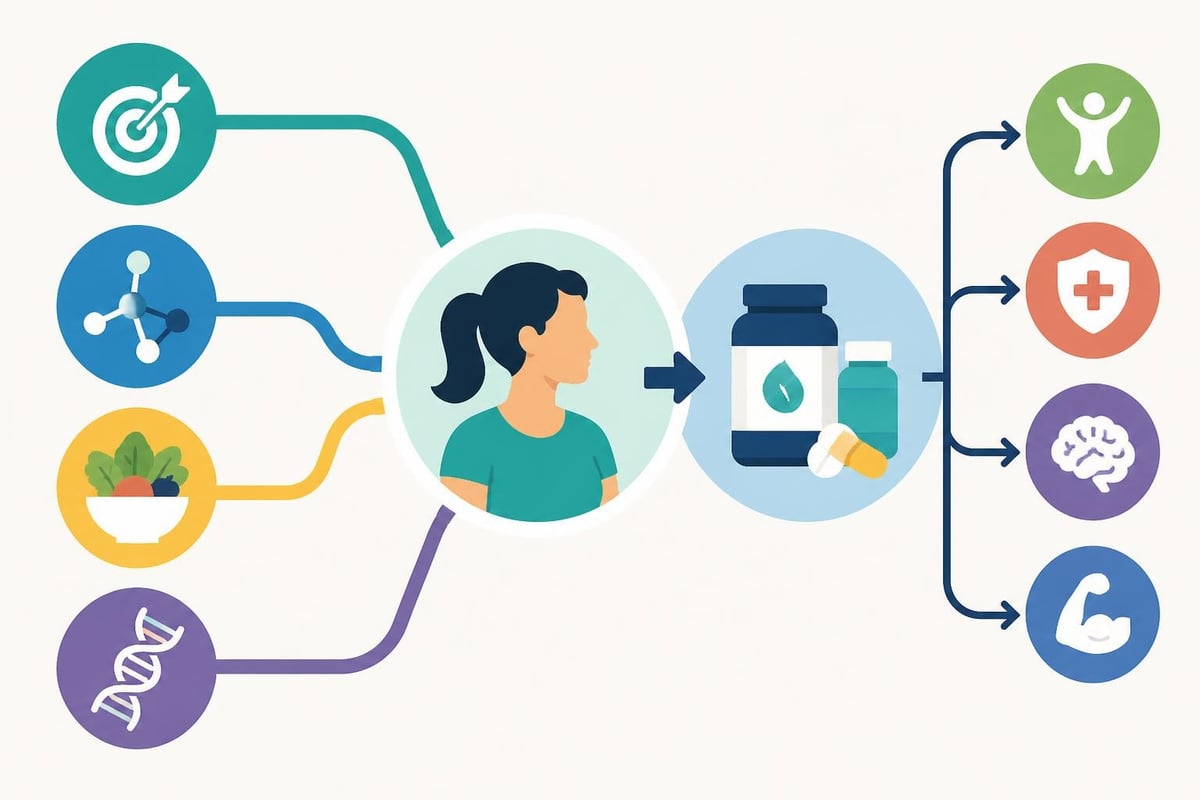
Personalization represents the frontier of making supplements healthy strategies more effective. Two individuals with identical diets may have vastly different nutrient status due to genetic variations, medication interactions, digestive efficiency, and lifestyle factors.
Genetic polymorphisms affect how we metabolize and utilize nutrients. The MTHFR gene variant, present in approximately 40% of the population, reduces the body's ability to convert synthetic folic acid into its active form. For these individuals, methylfolate supplementation proves more effective than standard folic acid.
Assessment Tools for Personalized Supplementation
| Assessment Method | What It Reveals | Best For |
|---|---|---|
| Blood biomarkers | Current nutrient status, deficiencies | Vitamin D, B12, iron, omega-3 index |
| Symptom patterns | Functional insufficiencies | Fatigue, cognitive issues, immune weakness |
| Dietary analysis | Intake gaps from food sources | Identifying nutrients consistently undersupplied |
| Health goal mapping | Outcomes-based selection | Athletic performance, cognitive function, immune function |
The DoseRank methodology incorporates multiple evaluation dimensions, assessing supplements not only on evidence quality but also on dose appropriateness, manufacturer trustworthiness, cost-effectiveness, and real-world availability. This multifaceted approach recognizes that the "best" supplement varies depending on individual circumstances.
Timing, Combinations, and Absorption Optimization
How you take supplements matters nearly as much as which supplements you take. Nutrient absorption varies dramatically based on timing, co-factors, and food matrix interactions.
Fat-soluble vitamins (A, D, E, K) require dietary fat for absorption. Taking these nutrients with meals containing healthy fats increases bioavailability by 30-50% compared to taking them on an empty stomach. Conversely, water-soluble vitamins (B-complex, vitamin C) absorb efficiently without food, though some individuals experience gastric discomfort when taking them solo.
Strategic Nutrient Pairing
Certain nutrients enhance each other's absorption and function:
- Vitamin D + magnesium: Magnesium activates vitamin D, making both more effective
- Iron + vitamin C: Vitamin C dramatically increases non-heme iron absorption
- Calcium + vitamin K2: K2 directs calcium to bones rather than soft tissues
- Curcumin + black pepper extract: Piperine increases curcumin bioavailability 2,000%
Equally important, some combinations interfere with absorption. Calcium competes with iron, zinc, and magnesium for uptake. High-dose zinc supplementation can induce copper deficiency over time. These interactions require thoughtful scheduling rather than taking all supplements in a single morning handful.
Population-Specific Supplementation Needs
Life stage, physiological condition, and specific health challenges create distinct supplementation requirements. Making supplements healthy choices demands acknowledging these contextual factors rather than applying one-size-fits-all recommendations.
Pregnancy and Lactation
Nutrient demands increase substantially during pregnancy, with folate, iron, iodine, and choline requirements rising 50-100% above baseline. The World Health Organization provides guidance on micronutrient interventions for pregnant women in various global contexts, emphasizing evidence-based approaches to reducing deficiency-related complications.
Prenatal formulations should contain methylfolate rather than folic acid, provide chelated iron for better tolerance, and include adequate choline (450 mg daily), which many prenatal vitamins omit despite its critical role in fetal brain development.
Aging Adults
Adults over 60 face multiple challenges that impact nutrient status:
- Reduced stomach acid production decreases B12 and mineral absorption
- Decreased skin synthesis of vitamin D from sunlight
- Lower caloric intake while nutrient needs remain constant
- Medication interactions that deplete specific nutrients
For this population, supplements healthy aging include vitamin B12 in methylcobalamin form, vitamin D3 at 2,000-4,000 IU daily, and potentially calcium if dietary intake falls below 1,000 mg. Antioxidant capacity support through whole-food-based supplements may help counter oxidative stress accumulation.
Athletes and Active Individuals
Physical training increases requirements for several nutrients beyond what sedentary individuals need. Magnesium losses through sweat can compromise muscle cramps control and exercise recovery. Vitamin D status affects testosterone production and muscle mass maintenance.
Iron demands rise in endurance athletes due to increased red blood cell turnover and foot-strike hemolysis. Female athletes face particular risk of iron depletion, with up to 50% showing depleted stores even without clinical anemia.

Common Deficiency Patterns in Modern Diets
Despite food abundance in developed nations, specific nutrient insufficiencies remain widespread due to soil depletion, food processing, and dietary pattern shifts. Recognizing these patterns helps identify where supplements healthy additions make the greatest impact.
Vitamin D insufficiency affects an estimated 42% of American adults, with higher rates in individuals with darker skin pigmentation, those living at northern latitudes, and people who spend limited time outdoors. Winter months particularly exacerbate this deficiency as UVB radiation intensity drops below the threshold for skin synthesis.
Magnesium intake falls below recommended levels in roughly 50% of the population. Food processing removes much of the magnesium naturally present in whole grains, while modern agricultural practices have reduced magnesium content in produce by 20-40% compared to crops grown 70 years ago.
The Omega-3 Gap
Western diets provide excessive omega-6 fatty acids while falling short on omega-3s, creating inflammatory imbalances. The average American consumes an omega-6 to omega-3 ratio of approximately 15:1, while optimal health corresponds to ratios near 4:1 or lower.
Fish oil or algae-based omega-3 supplements can help correct this imbalance, but dose matters significantly. Products providing less than 500 mg combined EPA and DHA daily rarely move biomarkers meaningfully. Research-backed doses typically range from 1,000-2,000 mg of combined EPA and DHA for general health maintenance.
Navigating Marketing Claims and Regulatory Limitations
The supplement industry operates under a regulatory framework quite different from pharmaceuticals. Supplements do not require FDA approval before marketing, placing greater responsibility on consumers to evaluate products critically.
Structure-function claims like "supports immune health" or "promotes heart function" require no proof of efficacy. Companies must simply include a disclaimer stating the FDA has not evaluated the claim. This regulatory gap allows marketing departments considerable creative freedom.
Disease claims, conversely, are prohibited. A supplement cannot legally claim to "treat," "cure," or "prevent" any disease without undergoing the drug approval process. Companies navigate this restriction through carefully worded implications that suggest therapeutic benefits without explicitly stating them.
Evaluating Clinical Study References
Many supplement labels reference clinical studies, but critical evaluation reveals important nuances:
- Was the study conducted on the specific formulation being sold, or on a different product?
- Did the study use the same doses present in the commercial product?
- Was the study peer-reviewed and published in a reputable journal?
- Who funded the research, and were conflicts of interest disclosed?
- What was the sample size, and were results statistically significant?
Independent platforms that rank supplements based on comprehensive evaluation criteria help consumers bypass marketing noise and focus on products with genuine merit. Tools like a quick quiz can narrow options based on specific health goals, streamlining the selection process.
Cost-Effectiveness and Value Optimization
Making supplements healthy choices also means making them financially sustainable. Price per serving varies wildly across brands, with premium pricing sometimes reflecting superior quality and other times simply covering marketing expenses and retail markup.
Calculating cost per effective dose rather than cost per bottle reveals the true value proposition. A $15 bottle containing 30 servings of subtherapeutic doses costs more per effective unit than a $40 bottle with 60 servings at clinically validated doses.
| Evaluation Factor | Budget Option | Premium Option | Value Assessment |
|---|---|---|---|
| Cost per month | $12 | $35 | Budget appears cheaper |
| Dose vs. research dose | 50% of effective dose | 100% of effective dose | Premium delivers efficacy |
| Third-party testing | None | Certificate of analysis | Premium verified |
| Cost per effective dose | $24 (requires double dose) | $35 | Premium is better value |
Generic and store-brand supplements can offer excellent value when they match effective doses and undergo third-party verification. Conversely, expensive boutique brands may provide no additional benefit beyond attractive packaging and influencer endorsements.
Integration with Whole-Food Nutrition
The most supplements healthy strategy recognizes that pills never fully replace food. Whole foods provide fiber, phytochemicals, and nutrient cofactors that isolated supplements cannot replicate. The synergistic effect of nutrients within their natural food matrix often exceeds the sum of individual components taken separately.
Food-first philosophy suggests targeting nutrient gaps through dietary improvement before defaulting to supplementation. Someone with low vitamin C status benefits more from adding bell peppers, citrus fruits, and berries than from taking ascorbic acid tablets, as whole foods deliver bioflavonoids and other compounds that enhance vitamin C function.
That said, certain situations make supplementation essential rather than optional. Individuals with malabsorption conditions, those following restrictive diets (vegan, ketogenic, elimination protocols), and people with dramatically increased requirements often cannot meet needs through food alone. In these contexts, supplements bridge unavoidable gaps.
The DoseRank platform evaluates supplements across six key dimensions: evidence quality, dose fit with research standards, manufacturer trust, cost value, popularity signals, and practical availability. This comprehensive approach helps users identify products that deliver genuine health benefits rather than empty promises, supporting informed decisions aligned with individual wellness goals.
Making supplements healthy decisions requires evaluating evidence, understanding dosing precision, verifying quality, and matching products to your unique biochemistry and goals. Rather than navigating this complex landscape alone, platforms like DoseRank streamline the process by ranking supplements across evidence, dose appropriateness, trust, value, and availability dimensions. Whether you're addressing a specific deficiency or optimizing performance, taking their quick quiz helps identify the most effective options tailored to your individual needs.