
DOSERANK guide
Best Supplements For: Evidence-Based Ranking Guide
Published

Choosing supplements in 2026 feels like navigating a maze of marketing claims, influencer endorsements, and conflicting advice. With thousands of products flooding store shelves and online marketplaces, identifying the best supplements for your specific health goals requires more than gut instinct or flashy packaging. Evidence-based evaluation, proper dosing, manufacturer trust, and real-world availability all play critical roles in determining which supplements actually deliver measurable benefits. This comprehensive guide breaks down the frameworks, criteria, and practical strategies that help you separate legitimate solutions from overhyped trends.
Understanding What Makes Supplements "Best" for Specific Goals
The term "best supplements for" means different things depending on your individual needs. A product optimal for joint health won't necessarily excel at supporting cognitive function or stress resilience. Rather than chasing universal "superfoods," effective supplementation starts with defining your exact outcome.
Defining Your Health Outcome First
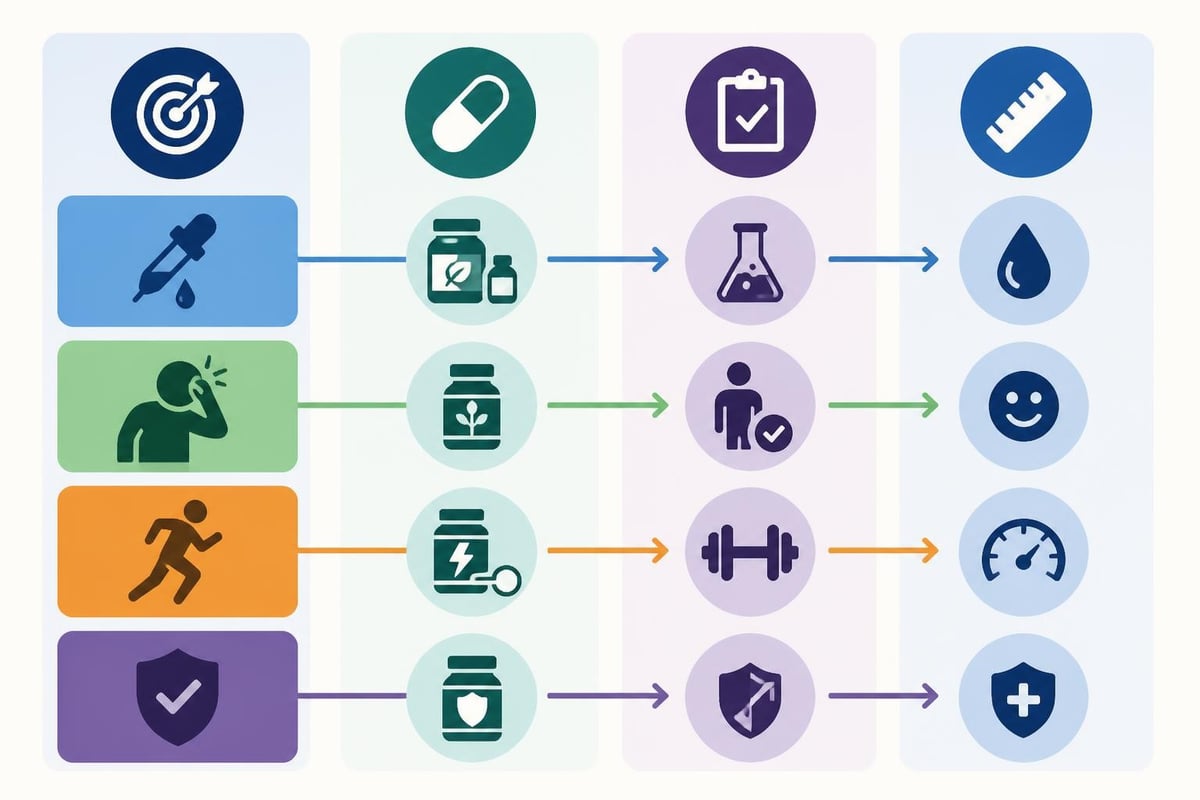
Before evaluating any supplement, clarify the measurable change you want to see. Are you targeting blood markers like vitamin D levels? Subjective improvements such as sleep quality? Physical performance metrics like endurance or recovery speed? Each outcome requires different evidence standards and dosing protocols.
- Biomarker-driven goals: Nutrient status (iron, B12, omega-3 index), blood sugar control, cholesterol management
- Symptom-relief targets: Digestive comfort, joint pain, fatigue, brain fog
- Performance objectives: Muscle mass gains, exercise recovery, alertness, endurance
- Preventive health: Immune support, bone density, cardiovascular protection, antioxidant capacity
When your goal is precisely defined, you can filter thousands of products down to the handful with clinical trial data showing meaningful effects on that exact parameter. Generic "wellness" claims collapse under scrutiny, while targeted outcomes reveal which formulations have reproducible human evidence.
The Six Pillars of Supplement Quality Evaluation
Finding the best supplements for any purpose demands a multi-dimensional assessment framework. Single-factor decisions (buying the cheapest option or the most popular brand) often lead to products that underdeliver or carry hidden risks.
| Evaluation Factor | What It Measures | Why It Matters |
|---|---|---|
| Evidence Strength | Quality and quantity of human clinical trials | Separates proven efficacy from theoretical benefits |
| Dose Fit | Whether the product delivers clinically effective amounts | Many products contain doses far below studied levels |
| Trust & Safety | Third-party testing, manufacturing standards, contamination risk | Unverified products may contain unlisted ingredients or toxins |
| Value | Cost per effective dose versus alternatives | Premium pricing doesn't guarantee superior formulation |
| Popularity | Real-world usage patterns and sustained demand | Long-term market presence suggests consistent user satisfaction |
| Availability | Where and how easily you can obtain the product | Discontinued or region-locked products disrupt consistent use |
Platforms that integrate all six factors provide a more reliable compass than influencer recommendations or retailer bestseller lists. DoseRank's methodology illustrates how systematic ranking across these dimensions surfaces supplements that perform well holistically, not just in isolated categories.
Evidence-Based Assessment of Popular Supplement Categories
Not all supplement types carry equal research backing. Some categories boast decades of rigorous human trials, while others rely primarily on test-tube studies or animal models. Understanding the evidence landscape helps you invest in products with reproducible clinical support.
Omega-3 Fatty Acids: Cardiovascular and Inflammatory Support
Fish oil and algae-based omega-3 supplements rank among the most studied nutritional interventions. Cochrane systematic reviews have evaluated dozens of randomized controlled trials examining EPA and DHA supplementation for heart health. While early observational data suggested robust protective effects, more recent high-quality trials show modest or minimal impact on major cardiovascular events in people without prior heart disease.
Key considerations for omega-3 supplementation:
- Dose matters significantly: Studies showing benefits typically used 2-4 grams daily of combined EPA+DHA, far exceeding the 300-500 mg found in many standard products
- Triglyceride form absorbs better than ethyl ester formulations, especially when taken with fatty meals
- Storage and freshness directly affect potency: Oxidized fish oil loses efficacy and may contribute to oxidative stress rather than reducing it
- Blood biomarker tracking provides objective feedback through omega-3 index testing, which measures red blood cell membrane incorporation
Despite mixed findings for cardiovascular outcomes, omega-3 supplements consistently demonstrate benefits for triglyceride reduction and show promise for inflammatory conditions. The American College of Cardiology notes that evidence for routine supplementation in stable coronary disease remains limited, underscoring the importance of matching your specific health goal to the available evidence base.
Probiotics: Gut Health and Beyond
Probiotic supplements represent one of the fastest-growing categories, with hundreds of strain combinations marketed for digestive health, immune function, and even mood support. However, "probiotic" functions as an umbrella term covering vastly different bacterial species and strains, each with distinct mechanisms and evidence profiles.
A recent umbrella meta-analysis synthesizing clinical trial evidence for gastrointestinal disorders found that specific probiotic strains show measurable benefits for certain conditions (antibiotic-associated diarrhea, irritable bowel syndrome, specific types of infectious diarrhea), while broader claims about "general gut health" lack comparable support.
What determines probiotic efficacy:
- Strain specificity: Lactobacillus rhamnosus GG and Saccharomyces boulardii show different effects than Bifidobacterium longum or Lactobacillus acidophilus
- Colony-forming units (CFU) count: Effective doses in clinical trials typically range from 1 billion to 100+ billion CFU daily, depending on the strain and condition
- Delivery mechanism: Enteric coating, microencapsulation, or refrigeration requirements protect viable bacteria through stomach acid
- Defined endpoints: Products studied for digestive comfort, diarrhea, or specific symptoms perform better than those marketed with vague "balance" claims
The best supplements for gut-related goals match the exact strain and dose used in published human trials addressing your specific issue, rather than multi-strain blends with unproven synergistic formulations.

Vitamin D: Widespread Deficiency, Targeted Intervention
Vitamin D supplementation presents a clear use case: correcting measured deficiency. Unlike many supplements marketed to enhance already-normal function, vitamin D shows strong evidence for restoring bone health, immune function, and overall well-being when baseline levels fall below optimal thresholds.
Harvard's Nutrition Source emphasizes that vitamin D supplementation benefits depend heavily on your starting status. People with documented deficiency (serum 25-hydroxyvitamin D below 20 ng/mL) experience meaningful improvements, while those with adequate levels see minimal additional gain from megadoses.
Best supplements for vitamin D status improvement include:
- Vitamin D3 (cholecalciferol) rather than D2 (ergocalciferol), which raises serum levels more efficiently
- 1,000-4,000 IU daily doses for maintenance in most adults, with higher therapeutic doses for documented deficiency under medical supervision
- Combined with fat for optimal absorption, since vitamin D is fat-soluble
- Periodic blood testing to confirm you're reaching target serum levels (generally 30-50 ng/mL for most health outcomes)
Vitamin D illustrates a fundamental principle: the best supplements for correcting deficiency may provide little value when taken unnecessarily by people with normal status.
Evaluating Dose Fit and Bioavailability
Even when clinical evidence supports a supplement ingredient, the product you purchase may deliver doses far below studied amounts or in forms your body can't effectively absorb. This gap between research and retail formulation creates a major pitfall in supplement selection.
The Dosing Disconnect in Commercial Products
Walk through any supplement aisle and you'll find magnesium products ranging from 50 mg to 500 mg per serving, all claiming similar benefits. Yet clinical trials demonstrating effects on sleep, muscle function, or muscle cramps typically used 300-500 mg of elemental magnesium daily.
Common dosing pitfalls:
- Proprietary blends that hide individual ingredient amounts behind a total blend weight
- Multiple-ingredient formulas spreading active compounds across several capsules, requiring you to take 6-8 pills daily to match studied doses
- Label confusion between compound weight versus elemental nutrient (e.g., 1,000 mg magnesium citrate contains only ~160 mg elemental magnesium)
- Subtherapeutic amounts included solely to list impressive-sounding ingredients on the label
The best supplements for any goal transparently disclose exact per-serving amounts of each active ingredient and align those doses with published human research. When evaluating products, cross-reference the label against clinical trial protocols rather than trusting marketing claims about "clinically studied ingredients" without dose context.
Bioavailability: Form Matters as Much as Dose
Your body absorbs different chemical forms of the same nutrient at dramatically different rates. Magnesium oxide costs less to manufacture but delivers lower bioavailability than magnesium glycinate or citrate. Similarly, synthetic folic acid converts to active folate less efficiently in many people compared to methylfolate.
| Nutrient | Lower Bioavailability Form | Higher Bioavailability Form | Clinical Significance |
|---|---|---|---|
| Magnesium | Magnesium oxide (~4% absorption) | Magnesium glycinate, citrate, or threonate (~30-40%) | Oxide may cause digestive upset; glycinate better tolerated |
| Iron | Ferrous sulfate | Ferrous bisglycinate or iron polysaccharide | Bisglycinate reduces constipation and nausea while maintaining absorption |
| Vitamin B12 | Cyanocobalamin | Methylcobalamin or adenosylcobalamin | Methyl forms bypass conversion steps, especially important for vitamin B12 status in people with genetic variants |
| Curcumin | Standard curcumin powder | Formulations with piperine, liposomal delivery, or proprietary complexes | Standard curcumin absorption is extremely poor without enhancement |
Premium pricing sometimes reflects genuinely superior formulation chemistry rather than marketing hype. The best supplements for efficient absorption justify slightly higher costs through dramatically improved bioavailability, potentially requiring lower doses to achieve the same effect.
Trust, Safety, and Third-Party Verification
The supplement industry operates under less stringent regulatory oversight than pharmaceutical drugs, creating significant variation in quality control and label accuracy. Consumer Reports' investigations have repeatedly uncovered products containing unlisted ingredients, contamination with heavy metals or pesticides, and dosing that doesn't match label claims.
What Third-Party Testing Actually Verifies
Independent certification programs test finished products to confirm they contain what the label states, meet purity standards, and avoid common contaminants. However, different programs verify different attributes.
Major third-party testing organizations and their focus:
- USP (United States Pharmacopeia): Verifies ingredient identity, strength, purity, and dissolution rates
- NSF International: Tests for contaminants, confirms label claims, and inspects manufacturing facilities
- ConsumerLab: Independent testing program publishing comparative analyses and contamination screening results
- Informed Sport/Informed Choice: Specialized testing for banned athletic substances, critical for competitive athletes
Products bearing these certifications demonstrate a higher standard of manufacturing accountability. While testing adds cost, it provides objective assurance that you're getting what you paid for-a non-negotiable factor when determining the best supplements for health outcomes that depend on consistent, accurate dosing.
Manufacturer Transparency and Track Record
Beyond third-party seals, evaluate manufacturers based on their transparency practices and history. Companies that publish certificates of analysis for each production batch, disclose ingredient sourcing, and maintain accessible quality documentation demonstrate greater accountability than those hiding behind opaque supply chains.
Red flags suggesting lower trust:
- Websites or labels making disease cure claims (illegal for dietary supplements in the United States)
- Absence of contact information or customer service channels
- Extremely low pricing that seems implausible given ingredient costs
- History of FDA warning letters or recalls (publicly searchable databases)
- Reluctance to provide ingredient sourcing or third-party testing documentation upon request
The best supplements for long-term health support come from manufacturers with clean compliance records, transparent operations, and willingness to substantiate their quality claims with documentation rather than marketing language.

Value Assessment Beyond Price Tags
Supplement pricing varies wildly, with seemingly identical products ranging from budget-friendly to premium luxury. Smart value assessment compares cost per effective dose rather than package price, factoring in bioavailability and concentration.
Calculating True Cost Per Dose
A $15 bottle containing 30 servings of 100 mg magnesium oxide costs $0.50 per serving but delivers roughly 4 mg of absorbed magnesium. A $30 bottle with 30 servings of 400 mg magnesium glycinate costs $1.00 per serving but provides approximately 120-160 mg of absorbed magnesium. The "expensive" option delivers 30-40 times more actual magnesium for only double the cost.
Steps for value comparison:
- Identify the elemental or active ingredient amount per serving
- Determine how many servings you need daily to match clinical study doses
- Calculate total monthly cost at effective dosing
- Adjust for bioavailability differences between chemical forms
- Factor in third-party testing costs (certified products may justify 15-20% premium)
The best supplements for budget-conscious consumers aren't necessarily the cheapest products, but rather those delivering clinically meaningful doses at the lowest cost per effective unit of absorbed nutrient.
When Premium Pricing Reflects Real Advantages
Some expensive supplements justify their cost through superior formulation science, patented delivery systems, or extensive clinical validation. Others simply exploit consumer psychology with luxury packaging and influencer endorsements.
Legitimate reasons for premium pricing:
- Patented bioavailability enhancement (e.g., liposomal encapsulation, time-release matrices)
- Proprietary extraction or purification processes yielding higher purity or standardized active compounds
- Extensive clinical trial investment specifically testing the branded formulation
- Sustainable or organic certification with verified supply chain documentation
- Specialized forms for specific populations (allergen-free, vegan, minimalist formulations)
Contrast these with unjustified premium positioning based solely on marketing, celebrity endorsements, or vague "pharmaceutical-grade" claims without supporting documentation. Value-conscious purchasing means paying for functional advantages, not brand prestige.
Matching Supplements to Your Personal Context
Even evidence-based, properly dosed, high-quality supplements may not be the best supplements for your individual situation if they don't align with your health status, medications, genetics, or practical constraints.
Medical Interactions and Contraindications
Supplements interact with prescription medications, surgical procedures, and existing health conditions in ways that demand professional guidance. Fish oil increases bleeding risk when combined with anticoagulants. High-dose vitamin E interferes with chemotherapy. Calcium blocks absorption of thyroid medication and certain antibiotics.
Before starting any new supplement regimen, especially if you take prescription medications or have chronic health conditions, consult with a healthcare provider who can review potential interactions. This precaution becomes critical when considering supplements for symptom relief that might mask underlying conditions requiring medical diagnosis.
Genetic Factors Affecting Nutrient Metabolism
Individual genetic variations influence how efficiently you absorb, convert, and utilize specific nutrients. MTHFR gene variants affect folate metabolism, potentially making methylfolate superior to folic acid. Variations in vitamin D receptor genes may alter your vitamin D requirements. Caffeine metabolism genes determine whether pre-workout supplements energize you or trigger anxiety and sleep disruption.
While comprehensive nutrigenetic testing remains expensive and interpretation complex, awareness of common variants in your ancestry group can inform supplement selection. For instance, people of Northern European descent show higher prevalence of lactose intolerance gene variants, suggesting calcium sources beyond dairy-based formulations.
Practical Adherence and Lifestyle Integration
The most scientifically validated supplement provides zero benefit if you forget to take it consistently. Practical factors like pill size, dosing frequency, timing requirements, and taste significantly affect long-term adherence.
Adherence-friendly supplement characteristics:
- Once-daily dosing versus multiple daily doses scattered across specific meal timings
- Smaller capsule or tablet size for people with swallowing difficulties
- Powder or liquid forms offering flexible dosing and easy mixing
- Minimal food requirements (some work equally well with or without meals)
- Room-temperature stability eliminating refrigeration needs during travel
The best supplements for real-world results balance scientific merit with practical sustainability in your daily routine. A perfect formulation you abandon after two weeks fails compared to a good formulation you maintain consistently.
Navigating the Decision-Making Process
With thousands of options spanning dozens of health goals, systematic decision-making tools help you identify the best supplements for your specific needs without information overload.
Using Structured Evaluation Frameworks
Rather than researching individual products one by one, leverage platforms that systematically rank supplements across evidence, dose, trust, value, and availability dimensions. This approach surfaces products excelling holistically rather than in isolated categories.
For instance, if you're looking to improve stress resilience, a comprehensive ranking system filters hundreds of adaptogens, amino acids, and minerals down to those with human trial evidence for perceived stress scores or cortisol response, delivered in doses matching study protocols, from manufacturers with third-party testing, at competitive cost-per-dose, and actually available for purchase in your region.
The Role of Personalized Assessments
Generic supplement recommendations ignore individual variation in baseline nutrient status, health goals, medications, and preferences. Personalized approaches use questionnaires or quizzes to narrow the field before detailed product evaluation.
A quick assessment covering your primary health goals, existing supplement use, dietary patterns, and any medical conditions helps eliminate irrelevant categories entirely. Someone seeking immune support with no digestive issues doesn't need to evaluate probiotic rankings. Someone with documented vitamin D deficiency can skip multivitamin comparisons in favor of targeted D3 supplementation.
Tools like the 60-second quiz streamline this filtering process, connecting your specific situation to the most relevant supplement categories and evidence-backed products within each category.
Beyond Individual Supplements: Combination and Timing Strategies
The best supplements for complex health goals often involve strategic combinations and timing rather than single-ingredient products. However, combination approaches require careful planning to avoid redundancy, interactions, and excessive dosing.
Synergistic Pairings Backed by Research
Certain nutrients work together, either through complementary mechanisms or by facilitating each other's absorption and utilization:
- Vitamin D + Vitamin K2: K2 directs calcium into bones and teeth rather than soft tissues, theoretically improving vitamin D's bone health benefits
- Vitamin C + Iron: Ascorbic acid enhances non-heme iron absorption from plant sources by up to 300%
- Magnesium + Vitamin D: Magnesium activates vitamin D, while vitamin D supports magnesium absorption
- Omega-3 + Vitamin E: Vitamin E protects polyunsaturated fats from oxidation, though excessive amounts may reduce omega-3 benefits
Not all marketed combinations reflect genuine synergy. Many products pair ingredients with independent mechanisms simply to justify higher pricing or create proprietary formulations without demonstrating enhanced efficacy versus individual supplementation.
Timing and Sequencing for Optimal Absorption
When you take supplements matters nearly as much as what you take. Fat-soluble vitamins (A, D, E, K) absorb best with dietary fat. Some minerals compete for absorption when taken simultaneously. Stimulatory supplements taken at night disrupt sleep.
Basic timing guidelines:
- Morning with breakfast: Multivitamins, B-complex, vitamin D, iron (if not causing nausea), CoQ10
- With lunch or dinner: Omega-3s, fat-soluble vitamins, curcumin
- Between meals: Amino acids, certain probiotics, minerals competing with meal components
- Evening or bedtime: Magnesium glycinate (for sleep support), melatonin, non-stimulatory adaptogens
The best supplements for your schedule align evidence-based timing with your actual eating patterns and daily routine, prioritizing consistency over theoretical optimization that proves unsustainable.
Monitoring Progress and Adjusting Your Protocol
Supplement efficacy requires objective assessment rather than subjective impressions. Placebo effects run strong, and confirmation bias leads us to attribute positive changes to new supplements while ignoring other variables.
Biomarker Tracking for Measurable Outcomes
When supplementing to correct deficiency or optimize specific markers, periodic testing provides objective feedback:
- Vitamin D: Serum 25-hydroxyvitamin D every 3-6 months during initial correction, then annually
- Vitamin B12: Serum B12 or methylmalonic acid for confirmed absorption and status
- Iron: Ferritin, serum iron, and transferrin saturation to distinguish deficiency from anemia
- Omega-3 index: Red blood cell membrane EPA+DHA percentage reflecting long-term status
- Magnesium: Red blood cell magnesium (more reliable than serum for true status)
Insurance coverage varies widely for these tests. Self-pay options through direct-to-consumer labs typically range from $25-100 per marker, making them accessible for monitoring expensive supplementation protocols where confirming efficacy justifies the testing cost.
Subjective Tracking for Symptom-Focused Goals
For outcomes like cognitive function, sleep quality, or stress resilience, validated questionnaires and symptom logs provide more reliable assessment than memory alone:
- Baseline establishment: Document symptoms for 1-2 weeks before starting supplementation
- Structured rating scales: Use consistent 1-10 scales or validated questionnaires rather than vague "feeling better"
- Environmental controls: Note other life changes (stress events, diet shifts, exercise changes) occurring simultaneously
- Sufficient trial duration: Most supplements require 4-12 weeks for maximal effect; premature evaluation misses delayed benefits
If objective tracking shows no improvement after an adequate trial at clinical doses, discontinue and reassess whether the supplement addresses your actual limiting factor. Money spent on ineffective supplements diverts resources from interventions that might actually help.
Finding the best supplements for your health goals demands a systematic approach that balances scientific evidence, proper dosing, manufacturer trust, value, and practical fit with your individual context. Rather than relying on marketing claims or influencer recommendations, evidence-based evaluation frameworks surface products with proven efficacy delivered in clinically meaningful amounts. DoseRank streamlines this complex process by ranking supplements across six critical dimensions and using personalized quizzes to match your specific goals with the highest-performing options, transforming overwhelming choice into confident, evidence-backed decisions.