
DOSERANK guide
Supplements Products: A Complete 2026 Buyer's Guide
Published
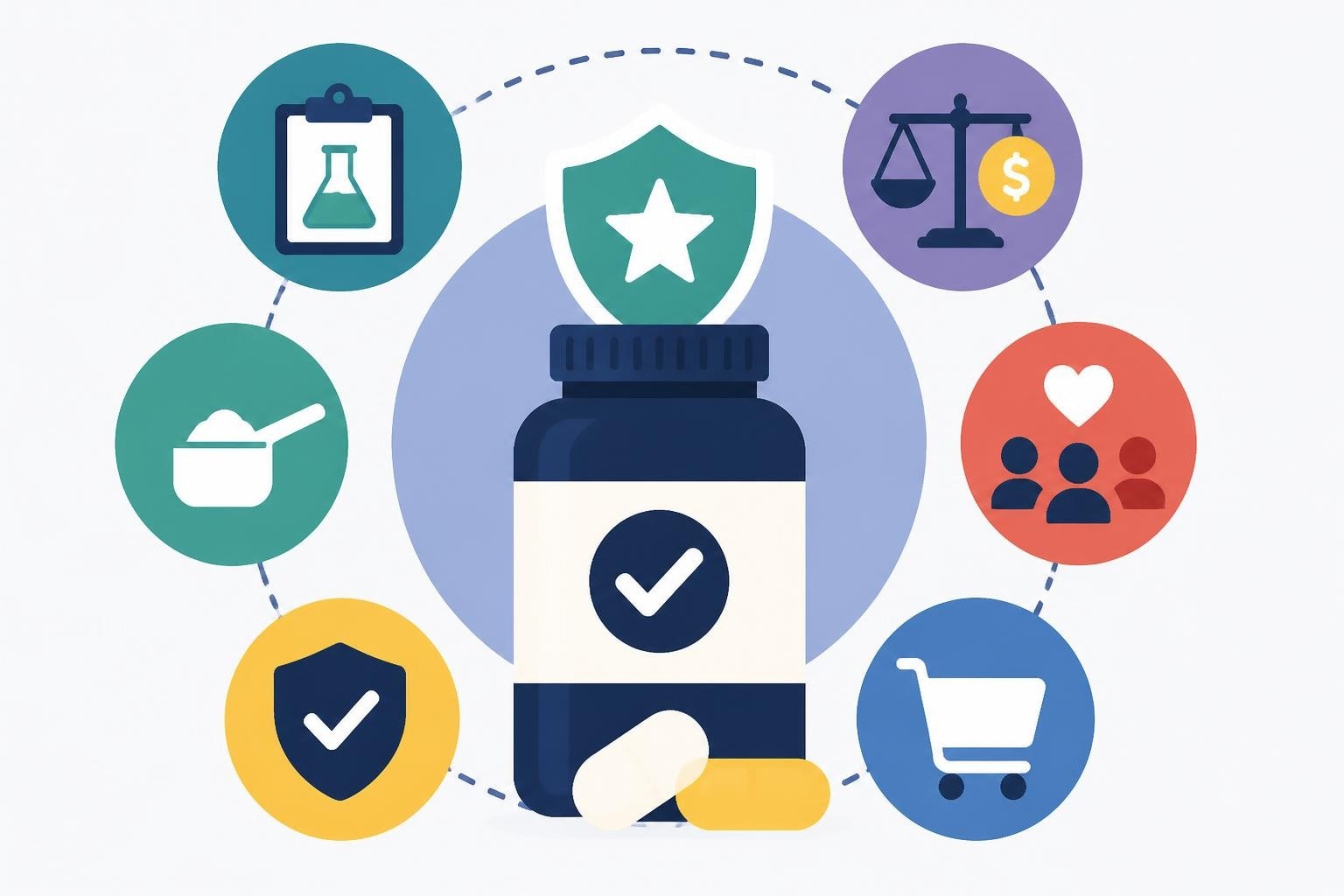
The supplements products market has grown into a complex ecosystem where consumers face thousands of choices but limited reliable guidance. In 2026, Americans spend over $50 billion annually on dietary supplements, yet most shoppers struggle to distinguish between products backed by solid science and those making empty promises. Understanding how to evaluate supplements products requires a framework that goes beyond marketing claims and considers measurable factors like clinical evidence, appropriate dosing, manufacturer credibility, and real-world value.
The Evolution of Supplements Products Standards
The landscape of supplements products has shifted dramatically over the past decade. Regulatory frameworks, consumer expectations, and scientific understanding have all advanced, yet significant gaps remain between what products promise and what they deliver.
Current Regulatory Environment
Unlike pharmaceutical drugs, supplements products in the United States operate under the Dietary Supplement Health and Education Act of 1994, which places the burden of safety on manufacturers rather than requiring pre-market approval. The FDA monitors products after they reach shelves, but this reactive approach means problematic formulations can circulate before intervention occurs.
Recent efforts have focused on improving transparency. The Dietary Supplement Label Database now houses over 160,000 product labels, allowing consumers and researchers to verify ingredient lists and serving sizes. This database represents a crucial step toward accountability, though it cannot verify whether products actually contain what their labels claim.
Key regulatory checkpoints for supplements products include:
- Good Manufacturing Practice (GMP) compliance
- Accurate ingredient labeling requirements
- Prohibited claims enforcement
- Adverse event reporting systems
- Third-party certification programs
Manufacturing standards have tightened considerably. Safety considerations for dietary supplement manufacturers now encompass raw material verification, contamination testing, and batch-to-batch consistency protocols. Companies that invest in these safeguards differentiate themselves in a crowded marketplace.

Evidence-Based Evaluation of Supplements Products
Separating effective supplements products from ineffective ones demands a systematic approach grounded in clinical research. The quality of evidence supporting any given supplement varies enormously, from robust randomized controlled trials to unsubstantiated testimonials.
Hierarchy of Scientific Support
Not all studies carry equal weight. Meta-analyses and systematic reviews that pool data from multiple randomized controlled trials provide the strongest foundation for claims. Observational studies offer useful signals but cannot establish causation. Animal research and in-vitro studies, while valuable for exploring mechanisms, rarely predict human outcomes reliably.
| Evidence Type | Strength | Limitations | Example Application |
|---|---|---|---|
| Systematic reviews/meta-analyses | Highest | Publication bias possible | Omega-3 for cardiovascular health |
| Randomized controlled trials | Strong | May lack real-world applicability | Vitamin D for bone density |
| Cohort studies | Moderate | Confounding variables | Multivitamin use and longevity |
| Case reports | Weak | Cannot generalize | Rare adverse reactions |
The European Food Safety Authority has established rigorous standards for evaluating health claims on supplements products. Their framework requires that claimed effects be measurable, that the active ingredient be characterized, and that a cause-and-effect relationship be established through human studies. This approach contrasts sharply with less stringent systems that allow structure-function claims with minimal substantiation.
Dose-Response Relationships
Even supplements products backed by solid research can fail if dosing falls outside therapeutic ranges. Many products contain trace amounts of active ingredients far below levels used in clinical trials. A magnesium supplement providing 50 mg when studies used 400 mg daily cannot reasonably expect to replicate published benefits.
Understanding dose fit requires examining:
- Minimum effective dose from human studies
- Optimal dose range for specific outcomes
- Upper safety limits to avoid toxicity
- Bioavailability of the specific form used
- Timing and frequency that match research protocols
For example, someone hoping to improve magnesium status should look for products delivering 300-400 mg of elemental magnesium in bioavailable forms like magnesium glycinate or citrate, matching the dosing patterns validated in research on serum and red blood cell magnesium levels.
Trust Signals in Supplements Products
Quality varies wildly across the supplements products industry. Independent testing consistently reveals products that contain less than claimed amounts of active ingredients, harbor contaminants, or include unlisted fillers. Building a framework for assessing trustworthiness protects consumers from wasted money and potential harm.
Third-Party Verification Programs
Several organizations conduct independent testing of supplements products, each with distinct protocols and standards. NSF International, USP (United States Pharmacopeia), and ConsumerLab each verify different aspects of product quality.
What third-party certifications actually verify:
- NSF Certified for Sport: Tests for banned athletic substances and label accuracy
- USP Verified: Confirms identity, strength, purity, and dissolution
- ConsumerLab Approved: Evaluates quality, label claims, and value
- Informed Choice: Screens for prohibited substances in sports nutrition
Consumer Reports testing has documented significant discrepancies between labels and actual content. In their turmeric testing, some products contained almost none of the expected curcuminoids, while others exceeded label claims by wide margins. These findings underscore why third-party verification matters.
Manufacturer Transparency Factors
Beyond certifications, companies demonstrate trustworthiness through operational transparency. Supplements products from manufacturers who disclose sourcing, publish certificates of analysis, maintain adverse event databases, and fund independent research earn higher confidence than those relying solely on marketing.
Manufacturing location affects oversight. Facilities registered with the FDA and subject to regular inspections operate under tighter scrutiny than offshore operations with minimal accountability. While country of origin alone does not determine quality, it influences the regulatory framework governing production.

Value Assessment Beyond Price
Evaluating supplements products requires looking past sticker price to calculate true cost-per-benefit. A $10 bottle delivering subtherapeutic doses provides less value than a $30 product at evidence-based levels.
Cost-Effectiveness Calculations
True value emerges from dividing cost by actual therapeutic content. A 60-capsule bottle of vitamin D3 at $12 containing 125 mcg (5,000 IU) per capsule costs $0.20 per serving. A 90-capsule bottle at $18 with the same strength costs $0.20 per serving, making them equivalent despite different total prices.
Factors that influence supplements products value:
- Milligrams of active ingredient per dollar
- Bioavailable forms versus cheaper inactive variants
- Serving size relative to therapeutic dose
- Absence of unnecessary fillers or additives
- Realistic shelf-life and stability claims
Some products appear inexpensive but require multiple servings to reach effective doses, multiplying actual cost. Others combine numerous ingredients at doses too low to be meaningful, spreading money across compounds unlikely to deliver individual benefits.
Hidden Cost Considerations
Beyond purchase price, supplements products carry indirect costs. Poor absorption means money spent on compounds that pass through the body unused. Products requiring refrigeration add energy costs. Those causing digestive side effects may necessitate additional interventions.
| Value Factor | High-Value Indicator | Low-Value Warning |
|---|---|---|
| Dose efficiency | Single serving meets therapeutic threshold | Multiple servings required |
| Form quality | Chelated minerals, active vitamins | Oxide forms, synthetic variants |
| Added ingredients | Minimal excipients, clean label | Long list of fillers and binders |
| Packaging | Light-protective, moisture-sealed | Clear bottles, loose caps |
| Testing documentation | Published COA, third-party verified | No testing information available |
Popularity Metrics and Consumer Behavior
Market popularity of supplements products reflects a complex mix of actual efficacy, marketing effectiveness, influencer promotion, and cultural trends. High sales do not guarantee quality, but analyzing popularity patterns reveals useful insights.
Consumer Demand Patterns in 2026
Current trends show strong growth in personalized nutrition, clean-label formulations, and condition-specific supplements products. Consumers increasingly seek targeted solutions rather than general multivitamins. Interest in cognitive function support, immune function optimization, and stress resilience has driven development of specialized formulations.
Social media significantly influences purchasing decisions, sometimes problematically. Viral supplements products often gain traction based on anecdotal reports rather than clinical evidence. This dynamic creates a marketplace where scientifically dubious products can outsell well-validated alternatives simply through effective digital marketing.
Most popular supplements products categories in 2026:
- Immune support formulations
- Cognitive enhancement blends
- Digestive health probiotics
- Sleep quality aids
- Sports performance supplements
- Beauty and skin health nutrients
- Energy and metabolic support
- Joint and bone health compounds
Research indicates that supplement use and increased risks exist for certain populations and products, particularly when taken without medical guidance or in excessive amounts. Popularity should never override caution when evidence suggests potential harms.
Availability and Distribution Channels
Where supplements products are sold affects both accessibility and credibility. Distribution channels range from licensed healthcare practitioners to mass-market retailers to direct-to-consumer online platforms, each with distinct advantages and vulnerabilities.
Channel-Specific Considerations
Professional-grade supplements products sold through healthcare providers typically undergo stricter quality controls but cost more and require practitioner access. Mass-market brands offer convenience and competitive pricing but vary widely in quality. Online direct-to-consumer brands eliminate middlemen but require consumers to verify claims independently.
Brick-and-mortar retail provides immediate availability and the ability to examine packaging, while online shopping offers broader selection and easier price comparison. Multi-channel availability suggests established distribution relationships and market acceptance, though it does not guarantee efficacy.
Distribution channel assessment matrix:
| Channel | Accessibility | Price Point | Quality Oversight | Information Support |
|---|---|---|---|---|
| Healthcare practitioners | Low | High | Strong | Excellent |
| Specialty health stores | Medium | Medium-High | Variable | Good |
| Chain pharmacies | High | Medium | Moderate | Limited |
| Mass retailers | High | Low-Medium | Variable | Minimal |
| Online direct | Highest | Variable | Variable | Platform-dependent |
Availability fluctuations can indicate supply chain issues, manufacturing problems, or regulatory actions. Supplements products that frequently go out of stock may lack robust production systems, while those with consistent availability demonstrate reliable supply chains.

Navigating Common Supplements Products Categories
Different categories of supplements products serve distinct purposes and come with category-specific considerations. Understanding these nuances helps consumers match products to their actual needs rather than perceived wants.
Vitamins and Minerals
Single-nutrient supplements address documented deficiencies more precisely than broad-spectrum multivitamins. Testing can identify specific gaps, such as low vitamin D status or inadequate B12 levels, allowing targeted supplementation at appropriate doses.
The World Health Organization guidance on multiple micronutrient supplements emphasizes that healthy populations eating varied diets rarely benefit from supplementation, while specific groups (pregnant women, elderly individuals, restrictive dieters) have legitimate needs. This evidence-informed perspective counters marketing that suggests everyone requires daily supplementation.
Herbal and Botanical Products
Plant-based supplements products present unique challenges around standardization. Unlike synthetic vitamins with defined chemical structures, herbs contain hundreds of compounds whose concentrations vary by growing conditions, harvest timing, and extraction methods.
Quality herbal products specify standardization to marker compounds (curcumin in turmeric, ginsenosides in ginseng, silymarin in milk thistle) and use extraction ratios that match clinical research. Products listing only the plant name without standardization details offer no assurance of active ingredient content.
Specialty and Combination Formulas
Multi-ingredient supplements products promise synergistic benefits but often deliver subtherapeutic doses of each component. A formula containing fifteen ingredients at low levels may be less effective than three ingredients at researched doses.
When evaluating combination products, consider whether:
- Each ingredient has standalone evidence for the claimed benefit
- Doses match levels used in clinical studies
- Ingredients actually complement each other mechanistically
- The combination has been tested together, not just individually
- Potential interactions between components have been evaluated
Personal Goal Alignment with Supplements Products
Matching supplements products to specific health goals requires clarity about desired outcomes and realistic expectations about what supplementation can achieve. Harvard Health guidance emphasizes that supplements should supplement, not replace, healthy behaviors like balanced nutrition, regular exercise, adequate sleep, and stress management.
Defining Measurable Outcomes
Vague goals like "better health" or "more energy" make it impossible to evaluate whether supplements products deliver results. Specific, measurable targets like improving sleep quality, reducing exercise recovery time, or supporting healthy aging markers allow progress tracking.
Platforms that help users explore specific health outcomes and match them to evidence-based interventions streamline the selection process. Rather than browsing thousands of products hoping to stumble upon the right option, starting with a defined goal and working backward to identify supplements with proven efficacy for that outcome increases success probability.
Goal-setting framework for supplements products:
- Identify the specific outcome you want to influence
- Research which biomarkers or symptoms define that outcome
- Review clinical evidence linking supplements to those measures
- Verify that available products deliver evidence-based doses
- Establish baseline measurements before starting supplementation
- Monitor changes over an appropriate timeframe
- Adjust or discontinue based on objective results
Quiz-Based Selection Tools
Decision fatigue often prevents optimal supplement selection. Tools like the 60-second quiz narrow the field by asking targeted questions about health goals, current symptoms, dietary patterns, and lifestyle factors. This guided approach reduces overwhelming choice paralysis and increases the likelihood of selecting supplements products aligned with individual needs.
Quality Assurance and Ongoing Verification
Selecting quality supplements products is not a one-time decision. Manufacturing batches vary, companies change ownership, formulations get reformulated, and new evidence emerges. Ongoing verification ensures continued quality.
Monitoring Product Changes
Manufacturers periodically adjust formulations, sometimes reducing active ingredient levels while maintaining prices or switching to cheaper forms with lower bioavailability. Consumers should review updated labels rather than assuming consistency.
Sign up for manufacturer communications to receive reformulation notices. Check the DoseRank methodology periodically to see how rankings shift as new evidence accumulates or product formulations change. What ranked highly last year may no longer represent the optimal choice today.
Adverse Event Awareness
While most supplements products are safe when used appropriately, adverse reactions do occur. The FDA's MedWatch system collects reports, but many reactions go unreported because consumers do not recognize the connection between supplements and symptoms.
Warning signs requiring immediate discontinuation:
- Unexpected allergic reactions (rash, swelling, breathing difficulty)
- Digestive distress beyond mild, temporary adjustment
- Changes in heart rate or blood pressure
- Unusual fatigue or weakness
- Cognitive changes or mood disturbances
- Laboratory test abnormalities
Some supplements interact with medications, altering their effectiveness or increasing side effect risks. Anyone taking prescription drugs should verify compatibility before adding supplements products, ideally with guidance from a pharmacist or physician familiar with both pharmaceutical and nutritional interactions.
Data-Driven Product Ranking Systems
The complexity of evaluating supplements products has given rise to systematic ranking platforms that synthesize multiple quality dimensions into comparable scores. Rather than relying on single factors like price or popularity, comprehensive systems weight evidence strength, dose appropriateness, manufacturer trust, value, consumer acceptance, and practical availability.
These multi-factor approaches acknowledge that no single metric captures product quality. A supplement with strong research support but poor bioavailability underperforms. One with optimal dosing but questionable manufacturing standards poses risks. Ranking systems that balance these competing considerations help consumers make informed tradeoffs.
Transparency in ranking methodology builds credibility. Systems should disclose how they weight factors, what evidence sources they consult, how frequently they update rankings, and what conflicts of interest exist. The best platforms function as decision-support tools rather than marketing channels, prioritizing user outcomes over affiliate relationships or manufacturer sponsorships.
Choosing effective supplements products in 2026 requires balancing scientific evidence, appropriate dosing, manufacturer trustworthiness, cost-effectiveness, and practical availability. No single factor determines quality, and marketing claims often mislead more than they inform. DoseRank simplifies this complexity by ranking supplements across all six dimensions that matter, using transparent methodology grounded in clinical research, then matching recommendations to your specific goals through a quick assessment quiz.