
DOSERANK guide
Ratings for Supplements: A Comprehensive Buyer's Guide
Published

The supplement industry generates over $50 billion annually in the United States alone, yet navigating this crowded marketplace remains challenging for consumers. With thousands of products claiming miraculous benefits and minimal regulatory oversight before products reach shelves, understanding how to evaluate supplement quality has never been more critical. Ratings for supplements provide a systematic framework to cut through marketing noise and identify products that deliver on their promises with safety, efficacy, and value.
What Ratings for Supplements Actually Measure
Comprehensive supplement ratings evaluate multiple dimensions of product quality rather than relying on a single metric. The most robust systems assess evidence strength, dosage accuracy, manufacturing integrity, value proposition, and real-world availability. Each dimension reveals different aspects of whether a supplement will work for your specific needs.
Evidence-based ratings examine the clinical research supporting each ingredient at specific doses. A product containing well-studied compounds like omega-3 fatty acids or vitamin D backed by systematic reviews from Cochrane scores higher than formulations relying on preliminary animal studies or test-tube research. The strength of evidence directly predicts whether you will experience the advertised benefits.
Manufacturing Standards and Third-Party Verification
Quality ratings must account for what actually ends up in the bottle. Recent research shows significant discrepancies between label claims and actual content. A 2024 JAMA Network Open study examining weight-loss supplements found that many products contained substantially different ingredient amounts than listed, with some missing key compounds entirely.
Third-party certification programs address this gap by independently verifying label accuracy and testing for contaminants. NSF International maintains a searchable database of certified dietary supplements that have passed rigorous testing for content accuracy, purity, and absence of harmful substances. Products carrying NSF, USP, or ConsumerLab seals demonstrate a commitment to transparency that uncertified alternatives cannot match.
| Certification Body | What They Test | Database Access |
|---|---|---|
| NSF International | Label accuracy, contaminants, banned substances | Public searchable database |
| USP Verified | Identity, strength, purity, dissolution | Public verification mark lookup |
| ConsumerLab | Ingredient amounts, contaminants, dissolution | Subscription required for full reports |
| Informed Choice | Banned athletic substances | Public certified product list |
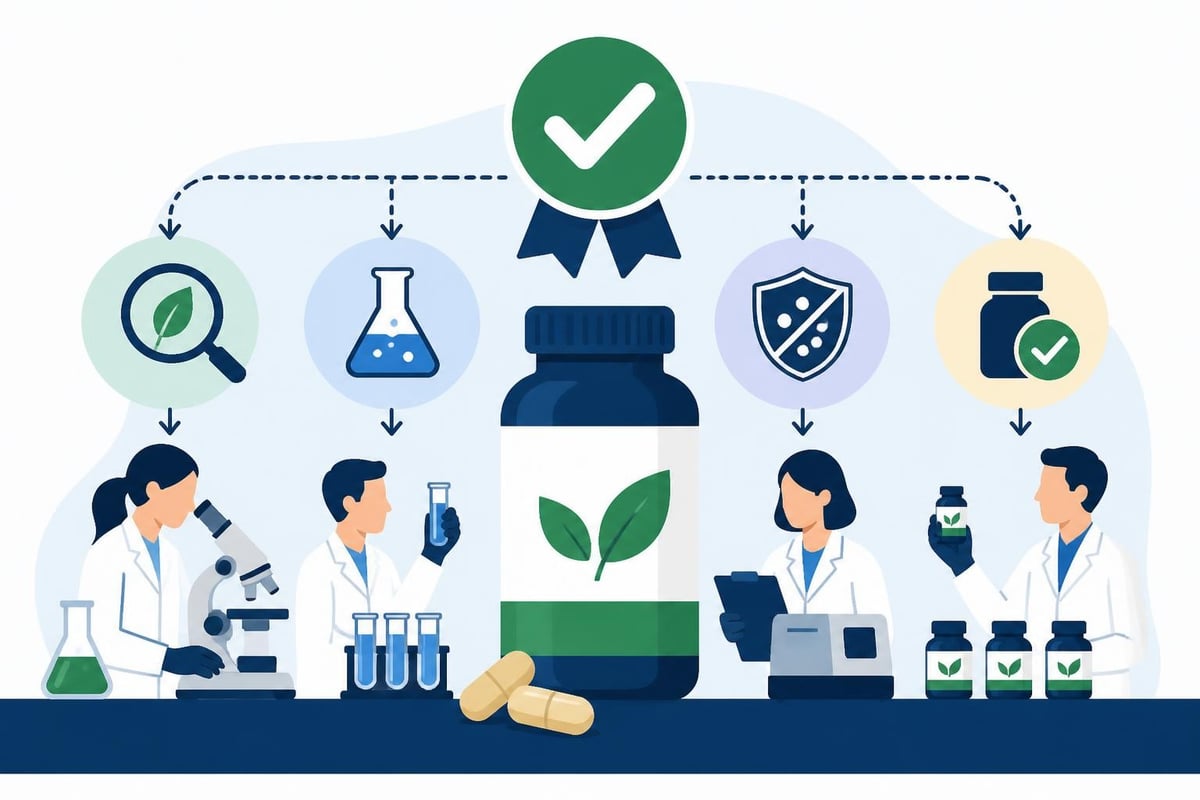
The Six Pillars of Comprehensive Supplement Ratings
Effective ratings for supplements balance scientific rigor with practical consumer needs. DoseRank employs a multi-factor approach that evaluates products across six critical dimensions to help users identify supplements that align with their health goals.
Evidence Strength and Clinical Support
The foundation of any credible rating system rests on scientific evidence. Strong ratings prioritize ingredients with robust human clinical trials showing consistent benefits at specified doses. Meta-analyses and systematic reviews carry more weight than individual studies, while mechanistic or animal research alone provides insufficient support.
For example, magnesium supplementation for muscle function draws on decades of research examining serum levels, retention tests, and functional outcomes. This depth of evidence contrasts sharply with trendy ingredients backed only by manufacturer-funded pilot studies with small sample sizes.
Dose Appropriateness and Bioavailability
Having the right ingredient matters little if the dose falls outside the therapeutic range established by research. Ratings must verify that product formulations contain clinically effective amounts in bioavailable forms. A vitamin D supplement providing only 400 IU will score poorly compared to products offering 1,000-2,000 IU, the range shown to meaningfully improve status markers in most adults.
Form matters as much as quantity. Magnesium oxide offers poor absorption compared to magnesium glycinate or citrate. Curcumin requires piperine or specialized delivery systems to achieve meaningful bioavailability. Superior ratings account for these nuances rather than treating all forms equally.
- Therapeutic dose range: Does the product provide amounts shown effective in human trials?
- Bioavailable forms: Are ingredients in forms that the body can actually absorb and utilize?
- Timing considerations: Does the formulation align with optimal dosing schedules from research?
- Interaction awareness: Are doses appropriate given common medication or nutrient interactions?
Trust Factors and Safety Profile
Consumer trust hinges on manufacturing transparency and safety assurance. Products manufactured in FDA-registered facilities following Good Manufacturing Practices (GMP) demonstrate baseline quality commitments. Third-party testing provides additional verification that companies follow through on their promises.
Safety profiles consider both ingredient-level risks and manufacturing concerns. Research on adulteration in dietary supplements reveals that undeclared substances and contaminants appear more frequently than many consumers realize. Products with extensive testing histories and transparent supply chains earn higher trust scores.
The Federal Trade Commission provides guidance on health product claims, requiring that companies possess competent and reliable scientific evidence before making efficacy statements. Ratings should penalize products making exaggerated claims unsupported by their actual formulations.

Evaluating Value and Cost-Effectiveness
Price alone reveals little about supplement value. A $10 bottle of vitamin C providing minimal bioavailable vitamin C per serving costs more per effective dose than a $30 product using superior forms at therapeutic amounts. Ratings for supplements should calculate cost per standardized serving based on active ingredient content.
Price-Per-Effective-Dose Analysis
Smart value calculations consider how much of each ingredient your body can actually use. A probiotic containing 50 billion CFU sounds impressive until you discover the strains lack research support or fail to survive stomach acid. Meanwhile, a product with 10 billion CFU of well-studied, gastric-resistant strains delivers superior value despite appearing less generous on paper.
Monthly cost comparisons normalize pricing across different serving sizes and concentrations. A supplement requiring three capsules daily at $25 per bottle (30 servings) costs more than a one-per-day formula at $35 (60 servings), even though the upfront price seems lower.
| Product Type | Serving Size | Servings per Container | Monthly Cost | Cost per Effective Dose |
|---|---|---|---|---|
| Budget multivitamin | 1 tablet | 90 | $15 | $0.17 (low bioavailability) |
| Premium multivitamin | 4 capsules | 30 | $45 | $0.38 (high bioavailability) |
| Budget omega-3 | 2 softgels | 60 | $20 | $0.67 per 1000mg EPA+DHA |
| Premium omega-3 | 2 softgels | 60 | $45 | $0.75 per 1000mg EPA+DHA |
Popularity Metrics and User Feedback
While scientific evidence should drive core ratings, real-world usage patterns provide valuable context. Products with extensive user bases and sustained popularity often indicate consistent quality and customer satisfaction. However, ratings must distinguish between genuine feedback and manufactured hype.
Verified purchase reviews from platforms requiring proof of transaction offer more reliability than anonymous testimonials. Long-term rating stability suggests consistent manufacturing quality, while products with volatile scores may indicate batch-to-batch variability or shifting formulations.
Analyzing Review Quality and Authenticity
Sophisticated rating systems account for review manipulation and astroturfing. Patterns suggesting fake reviews include sudden spikes in five-star ratings, generic praise lacking product-specific details, and clusters of reviews posted within short timeframes. Independent investigations like Consumer Reports' supplement transparency assessments help identify companies prioritizing marketing over quality.
Negative reviews deserve equal scrutiny. Digestive discomfort complaints about a probiotic may reflect appropriate die-off reactions rather than product defects. Conversely, multiple reports of allergic reactions or contamination demand immediate investigation and downward rating adjustments.
Availability and Access Considerations
The best-rated supplement provides no value if you cannot purchase it reliably. Comprehensive ratings factor in distribution channels, stock consistency, and geographic availability. Products sold exclusively through multi-level marketing or limited to single retailers score lower than those widely available through pharmacies, health food stores, and reputable online vendors.
Subscription options and bulk pricing affect long-term access and affordability. Some conditions require months of consistent supplementation before benefits emerge. Products offering auto-delivery discounts support adherence better than those requiring repeated full-price purchases.
International Availability and Regulatory Differences
Global supplement regulations vary dramatically. A product approved and widely available in the United States may face restrictions in Canada or the European Union due to different ingredient allowances or dosage limits. Ratings should clarify geographic availability limitations to prevent frustration.
Shipping reliability and customs clearance matter for international orders. Products subject to frequent seizures or extended delays score lower on availability metrics regardless of their inherent quality.

Using Ratings to Match Supplements to Health Goals
Generic "best supplement" lists overlook individual variation in needs, genetics, and health status. The optimal magnesium supplement for someone addressing muscle cramps differs from the best choice for improving stress resilience. Goal-specific ratings narrow thousands of options to products scientifically validated for your particular outcome.
DoseRank's methodology tailors rankings to specific health objectives by weighting rating factors according to what matters most for each goal. When evaluating supplements for sleep quality, evidence for sleep-specific outcomes receives priority over general wellness claims. This targeted approach ensures ratings reflect relevance to your actual needs.
The Quiz-Driven Approach to Personalized Rankings
Matching supplements to individual circumstances requires understanding your current status, health goals, dietary patterns, and potential contraindications. A quick assessment can dramatically narrow the field by eliminating products inappropriate for your situation. If you are unsure where to start, the 60-second quiz helps identify your priorities and guides you toward evidence-matched options.
This personalization prevents common mismatches like choosing immune-boosting formulations when your actual need centers on cognitive function or selecting general multivitamins when targeted support for immune function would prove more effective.
Red Flags That Should Lower Supplement Ratings
Certain characteristics reliably predict poor quality or misleading products. Ratings systems should heavily penalize supplements exhibiting these warning signs, regardless of other positive attributes.
Proprietary blends obscure individual ingredient amounts, preventing verification of effective dosing. Companies using this tactic avoid transparency about whether formulations contain therapeutic doses or mere trace amounts. This practice contradicts evidence-based supplementation and deserves automatic rating reductions.
Exaggerated claims promising rapid dramatic results, cure-all properties, or comparisons to pharmaceutical drugs indicate marketing-driven rather than science-driven products. Legitimate supplements produce modest, gradual improvements in specific markers, not miraculous transformations.
Missing third-party verification in product categories with documented quality concerns raises immediate questions. Given widespread evidence of label inaccuracy and contamination risks, choosing to forgo independent testing suggests cutting corners elsewhere.
- Undisclosed ingredient sources and supply chain opacity
- No clear expiration dates or stability testing data
- Marketing focused on testimonials rather than clinical evidence
- Prices dramatically below market rates for similar formulations
- Companies with histories of FDA warning letters or recalls
Common Pitfalls in Interpreting Supplement Ratings
Even well-designed rating systems can mislead consumers who misunderstand their scope and limitations. Ratings evaluate product quality within defined parameters but cannot predict individual responses or replace professional medical guidance.
Confusing Quality Ratings with Medical Advice
High-quality supplements backed by strong evidence still may not suit your particular situation. Drug interactions, underlying health conditions, genetic variations in metabolism, and individual tolerance differences all affect outcomes. A top-rated vitamin K2 supplement poses risks for people taking blood thinners regardless of its manufacturing excellence.
Ratings for supplements assess product characteristics, not whether you personally should take them. Conditions requiring medical supervision, like kidney function concerns or vitamin B12 status evaluation, demand professional testing and guidance that ratings cannot replace.
Over-Relying on Single Rating Dimensions
Some consumers fixate exclusively on price or popularity while ignoring evidence quality. Others prioritize third-party certification without verifying that certified ingredients actually address their health goals. Balanced decision-making weighs all rating dimensions according to personal priorities.
An inexpensive supplement offering poor bioavailability wastes money despite the low upfront cost. An expensive product with premium certifications provides no value if it contains ingredients irrelevant to your needs.
The Future of Supplement Rating Methodologies
Rating systems continue evolving as research methodologies improve and data accessibility expands. Emerging approaches promise more precise matching between products and individual needs.
Pharmacogenomic insights reveal how genetic variations affect nutrient metabolism and supplement responses. Future ratings may incorporate genetic profiles to identify formulations optimized for specific metabolizer types. Someone with MTHFR gene variants benefits from methylated B vitamins rather than standard forms, information that next-generation ratings could automatically flag.
Real-time quality monitoring through blockchain-verified supply chains may soon provide batch-level transparency. Consumers could scan product codes to access third-party test results for their specific bottle rather than relying on periodic spot checks. This granular verification would dramatically improve trust scores and detect quality drift quickly.
Artificial intelligence analysis of millions of user experiences could identify subtle patterns in supplement responses across populations. Machine learning models might predict likely outcomes based on demographics, health histories, and concurrent supplements with greater accuracy than current broad-category ratings permit.
Integration with Broader Health Optimization Strategies
Supplements function as one component within comprehensive wellness approaches rather than standalone solutions. Ratings should contextualize products within evidence-based health strategies emphasizing nutrition, exercise, sleep, and stress management fundamentals.
A highly-rated probiotic for digestive comfort works best alongside dietary fiber intake and hydration. Omega-3 supplements for arterial stiffness complement cardiovascular exercise and whole-food nutrition. Ratings that acknowledge these synergies help consumers build integrated approaches rather than expecting supplements to compensate for poor lifestyle foundations.
The most sophisticated platforms guide users toward evidence-based combinations while flagging potentially dangerous interactions. Recommending both vitamin E and blood-thinning medications requires explicit warnings. Suggesting calcium and iron supplementation together demands timing separation guidance to prevent absorption interference.
Navigating the complex supplement marketplace requires systematic evaluation across multiple quality dimensions rather than relying on marketing claims or anecdotal recommendations. By understanding how comprehensive ratings for supplements assess evidence strength, dosing accuracy, safety verification, value, and availability, you can make informed choices aligned with your specific health goals. DoseRank simplifies this process by ranking supplements across all six critical factors and matching products to your individual needs through evidence-based assessments, helping you cut through thousands of options to find formulations that actually deliver results.