
DOSERANK guide
Best Whey Protein Ranking: 2026 Evidence-Based Guide
Published

Choosing whey protein in 2026 means wading through thousands of products, each claiming superior absorption, muscle growth, or value. A reliable best whey protein ranking cuts through marketing noise by prioritizing objective criteria like clinical evidence, dosing accuracy, third-party testing, and real-world availability. This guide explains what separates a credible ranking from a sponsored list, which quality markers actually predict performance, and how to match a product to your specific training or health goals using structured evaluation frameworks.
Understanding Modern Whey Protein Rankings
The supplement industry now produces more than 15,000 distinct protein formulations, making unbiased comparison nearly impossible without a systematic framework. A trustworthy best whey protein ranking evaluates products across multiple dimensions rather than relying on a single attribute like price or brand recognition.
Six Core Ranking Dimensions
Robust ranking systems assess whey protein using evidence strength, dose fit, manufacturer trust, cost value, popularity signals, and retail availability. Evidence strength examines whether the protein type and dosing align with peer-reviewed research on muscle synthesis, recovery, or body composition. Dose fit verifies that each serving delivers the amino acid profile and quantity shown effective in clinical trials, typically 20–25 grams of protein with adequate leucine content.
Manufacturer trust encompasses third-party testing, NSF or Informed-Sport certification, and transparent sourcing practices. Products that undergo independent screening for heavy metals and contaminants score higher in this dimension. Cost value calculates price per gram of protein, adjusted for bioavailability and purity, while popularity reflects verified user ratings and sustained sales volume. Retail availability measures how easily you can reorder the product when you run out.
| Ranking Dimension | What It Measures | Why It Matters |
|---|---|---|
| Evidence | Clinical support for protein type, dose, timing | Predicts real outcomes |
| Dose Fit | Alignment with effective research doses | Ensures adequate intake |
| Trust | Third-party testing, certifications | Reduces contamination risk |
| Value | Cost per effective dose | Improves long-term adherence |
| Popularity | Verified reviews, repeat purchases | Signals real-world satisfaction |
| Availability | Distribution channels, stock consistency | Prevents gaps in routine |
Platforms like DoseRank use this multi-dimensional approach to surface whey proteins that balance research backing, dosing precision, and practical considerations. Unlike single-metric lists, comprehensive rankings help you prioritize what matters most for your situation.

Whey Protein Forms and Quality Markers
Not all whey is equivalent in composition or processing. The best whey protein ranking distinguishes between concentrate, isolate, and hydrolysate forms, each with unique protein density, lactose content, and absorption characteristics.
Concentrate vs. Isolate vs. Hydrolysate
Whey concentrate contains 70–80% protein by weight, with the remainder comprising lactose, fat, and bioactive compounds like immunoglobulins. It offers the lowest cost per serving and retains beneficial milk peptides, but may cause digestive discomfort in lactose-sensitive individuals. Whey isolate undergoes additional filtration to reach 90% protein or higher, removing most lactose and fat while increasing leucine density. This form suits those with mild dairy intolerance or anyone maximizing protein intake while controlling calories.
Whey hydrolysate is pre-digested through enzymatic treatment, breaking peptide bonds to accelerate absorption. Research on protein quality metrics shows hydrolysates score highest on Digestible Indispensable Amino Acid Score (DIAAS) tests, though the performance advantage over isolate remains modest in most training contexts. Hydrolysates cost significantly more and often taste bitter due to free amino acids.
- Concentrate: 70–80% protein, lower cost, retains bioactives, higher lactose
- Isolate: 90%+ protein, minimal lactose/fat, higher leucine per serving
- Hydrolysate: Pre-digested peptides, fastest absorption, premium price
Rankings that lump all forms together obscure meaningful quality differences. A top-tier concentrate may outperform a low-grade isolate in total value, while a certified isolate beats a concentrate for lactose intolerance or cutting phases.
Amino Acid Profile and Leucine Content
Muscle protein synthesis hinges on essential amino acid availability, particularly leucine. Effective whey formulations deliver at least 2.5 grams of leucine per serving, the threshold identified in sports nutrition position stands for maximally stimulating mTOR signaling. The best whey protein ranking verifies leucine content through lab assay rather than accepting label claims.
Complete amino acid profiles matter beyond leucine. Whey naturally provides all nine essential amino acids in ratios that mirror human muscle tissue, yielding superior DIAAS scores compared to plant proteins. Rankings that incorporate amino acid testing distinguish products using authentic whey from those spiked with cheaper amino acids to inflate nitrogen content.
Safety Testing and Contamination Screening
Protein powders face minimal pre-market regulation in the United States, placing the burden of safety verification on manufacturers and third-party labs. A credible best whey protein ranking prioritizes products that undergo rigorous contamination screening.
Heavy Metals and Toxin Testing
Independent testing by the Clean Label Project revealed that many popular whey proteins contain measurable levels of lead, cadmium, arsenic, and BPA. Contamination originates from industrial feed, processing equipment, and packaging materials. Products sourced from grass-fed cows in regions with strict agricultural standards show lower heavy-metal loads.
Rankings should flag or exclude products with contaminant levels above California Prop 65 thresholds or EPA daily intake limits. Look for whey proteins that publish batch testing results for:
- Lead (should be <0.5 mcg per serving)
- Cadmium (should be <0.5 mcg per serving)
- Arsenic (should be <1.0 mcg per serving)
- Mercury (should be <0.1 mcg per serving)
- BPA (should be non-detect or <1 ppb)
Third-party certifications like NSF Certified for Sport, Informed-Sport, or USP Verified provide independent confirmation of contamination screening. The U.S. Anti-Doping Agency recommends athletes exclusively use certified products to avoid inadvertent doping violations from undeclared stimulants or anabolic agents.
Protein Spiking and Label Accuracy
Protein spiking involves adding non-protein nitrogen sources like glycine, taurine, or creatine to inflate apparent protein content on amino acid tests. A quality ranking cross-checks label claims against independent assays that distinguish true protein from spiked fillers. Products with discrepancies exceeding 5% between claimed and tested protein should rank lower or carry warnings.

Evidence-Based Dosing for Different Goals
Whey protein serves varied objectives from muscle building to exercise recovery, each requiring specific dosing strategies. The best whey protein ranking accounts for how well a product's serving size aligns with research-backed protocols.
Muscle Growth and Strength Training
For individuals engaged in resistance training, the International Society of Sports Nutrition recommends 1.4–2.0 grams of protein per kilogram of body weight daily, distributed across 4–5 meals. Each serving should provide 20–40 grams of high-quality protein, with the upper range suited to larger athletes or fasted training sessions.
Post-workout timing matters less than total daily intake, but consuming 20–25 grams of whey within two hours of training optimizes muscle protein synthesis when daily totals fall short. Rankings that specify use cases help match products to training frequency and intensity.
| Training Goal | Daily Protein Target | Whey Serving Size | Timing Priority |
|---|---|---|---|
| Muscle gain | 1.6–2.2 g/kg | 25–40 g | Post-workout or spread evenly |
| Maintenance | 1.2–1.6 g/kg | 20–30 g | Any time, with meals |
| Fat loss | 1.8–2.4 g/kg | 25–30 g | Morning or between meals |
| Older adults | 1.2–1.5 g/kg | 30–40 g | With each main meal |
Older Adults and Sarcopenia Prevention
Aging blunts muscle protein synthesis in response to protein intake, a phenomenon called anabolic resistance. Research on whey supplementation in older adults shows that servings of 30–40 grams per meal overcome this resistance more effectively than lower doses. The best whey protein ranking highlights products with larger scoop sizes or suggests doubling servings for users over 65.
Leucine content becomes especially critical in this population. Older adults benefit from at least 3 grams of leucine per serving to trigger maximal muscle synthesis. Fast-digesting whey isolate or hydrolysate may offer marginal advantages over concentrate for this demographic.
Cost-Effectiveness and Long-Term Value
Price per container misleads when comparing whey proteins with different serving sizes, protein concentrations, and scoops per package. A meaningful best whey protein ranking calculates cost per gram of absorbable protein.
Calculating True Cost Per Serving
To determine real value, divide the retail price by the total grams of protein in the container, then adjust for protein type. Isolates and hydrolysates have higher bioavailability than concentrates, so a concentrate priced at $0.035 per gram of protein may deliver similar absorbed amino acids as an isolate at $0.045 per gram.
Rankings that incorporate DoseRank's methodology apply evidence-based weighting to cost calculations. A certified, independently tested isolate priced 20% higher than an uncertified concentrate often represents better value when accounting for contamination risk and dose accuracy.
Bulk purchasing, subscription discounts, and loyalty programs further complicate cost comparisons. The most useful rankings note current promotions and calculate annualized costs for typical usage patterns (e.g., one serving daily, 25 grams of protein).
Matching Whey Protein to Your Specific Needs
Individual goals, dietary restrictions, and training contexts demand tailored product selection. The best whey protein ranking enables filtering by use case rather than presenting a single universal winner.
Lactose Intolerance and Digestive Sensitivity
Individuals with lactose intolerance should prioritize whey isolate or hydrolysate, both of which contain less than 1 gram of lactose per serving. Some concentrates undergo additional processing to reduce lactose to trace levels; these "low-lactose concentrates" balance cost and tolerability.
Digestive enzymes like lactase or proteases added to formulations can improve concentrate tolerance, though evidence for their efficacy in protein powders remains limited. Rankings that note digestive additives help users weigh potential benefits against higher costs.
For those managing digestive comfort issues beyond lactose, hydrolysates may reduce bloating by delivering pre-digested peptides that require less enzymatic breakdown. However, individual responses vary widely, making trial periods necessary.
Flavor, Mixability, and Adherence
The highest-ranked whey protein on paper fails if its taste or texture prevents consistent use. Adherence drives outcomes more than marginal differences in protein quality. A credible ranking considers flavor variety, mixability in cold water, and aftertaste based on verified user feedback.
Unflavored whey isolate offers maximum versatility for cooking, baking, or blending into smoothies without clashing with other ingredients. Flavored options simplify preparation but often contain artificial sweeteners, sugar alcohols, or stevia that some users find objectionable. Rankings should flag sweetener types and note whether flavors mask or enhance the natural whey taste.
- Unflavored isolate: Maximum flexibility, no sweeteners, mild dairy taste
- Natural flavors: Vanilla, chocolate, strawberry with stevia or monk fruit
- Artificially sweetened: Wider flavor range (cookies, cake batter), sucralose or acesulfame-K
- Minimally sweetened: Light flavoring, 1–3g added sugar, whole-food ingredients
Clumping and foam formation frustrate daily use. The best whey protein ranking tests mixability in standard shaker bottles with cold water, rating products on dissolution speed and texture. Instantized whey, treated with soy or sunflower lecithin, mixes more smoothly than non-instantized forms.
Verifying Rankings with Independent Research
Marketing-driven lists dominate search results, making independent verification essential. Cross-checking a best whey protein ranking against peer-reviewed research and third-party testing databases reveals whether recommendations align with evidence.
Consulting Clinical Literature
Pubmed, Cochrane Reviews, and specialized nutrition journals publish trials comparing whey protein types, doses, and timing protocols. A ranking that cites specific studies for its dosing recommendations or product categories carries more weight than one relying on manufacturer white papers or testimonials.
For example, claims about hydrolysate superiority should reference head-to-head trials measuring muscle protein synthesis or performance outcomes, not just theoretical absorption differences. The Frontiers in Nutrition review on DIAAS provides a framework for evaluating protein quality assertions against standardized testing.
Cross-Referencing Third-Party Test Results
Several organizations publish independent protein powder testing results accessible to consumers. The Clean Label Project database allows you to check whether a highly ranked product actually underwent screening or if the ranking assumed compliance based on marketing claims.
Similarly, NSF International and Informed-Sport maintain searchable registries of certified products, complete with batch test dates and scope. A ranking that promotes uncertified products over certified alternatives without explaining the trade-offs warrants skepticism.
Navigating Subscription Services and Auto-Ship Programs
Many whey protein brands offer subscription discounts of 10–20% off retail prices in exchange for recurring shipments. While these programs improve long-term value, they complicate direct cost comparisons in rankings.
Evaluating Subscription Terms
The best whey protein ranking discloses whether featured products offer subscriptions and compares pricing across purchasing models. Key terms to evaluate include:
- Discount percentage (typically 10–20%)
- Shipment frequency (flexibility to adjust, pause, or cancel)
- Commitment period (month-to-month vs. multi-month contracts)
- Cancellation process (online self-service vs. phone-only)
- Shipping costs (free thresholds, expedited options)
Products with restrictive cancellation policies or hidden enrollment fees rank lower in value despite nominal price advantages. Transparent subscription terms indicate customer-focused business practices that correlate with product quality and service.
Emerging Trends in Whey Protein Formulation
The 2026 market shows growing demand for grass-fed whey, cold-processed isolates, and formulations combining whey with collagen or plant proteins. Understanding these trends helps contextualize how the best whey protein ranking may shift over the next 12–24 months.
Grass-Fed and Pasture-Raised Sources
Grass-fed whey comes from cows raised on pasture rather than grain-heavy feedlots, potentially offering higher omega-3 content and lower environmental impact. Testing confirms grass-fed whey contains more conjugated linoleic acid (CLA) and slightly different fatty acid profiles, though protein quality remains comparable to conventional whey isolate.
Premium pricing for grass-fed whey (often 30–50% higher) makes sense for users prioritizing sustainability or trace nutrient differences, but muscle-building outcomes show no significant advantage in clinical trials. Rankings should present grass-fed options without overstating performance benefits unsupported by evidence.
Cold-Processed and Minimally Processed Isolates
Cold-processing uses lower temperatures during filtration to preserve heat-sensitive immunoglobulins and lactoferrin. While these bioactive compounds offer potential immune and gut health benefits, their concentrations in standard whey isolate already fall below therapeutic thresholds established in clinical research.
Cold-processed whey appeals to consumers seeking "natural" or minimally processed options, but evidence for functional superiority over well-manufactured conventional isolate remains limited. A balanced ranking acknowledges consumer preferences while noting when premium processing adds cost without proven outcome advantages.
Building Your Personal Whey Protein Shortlist
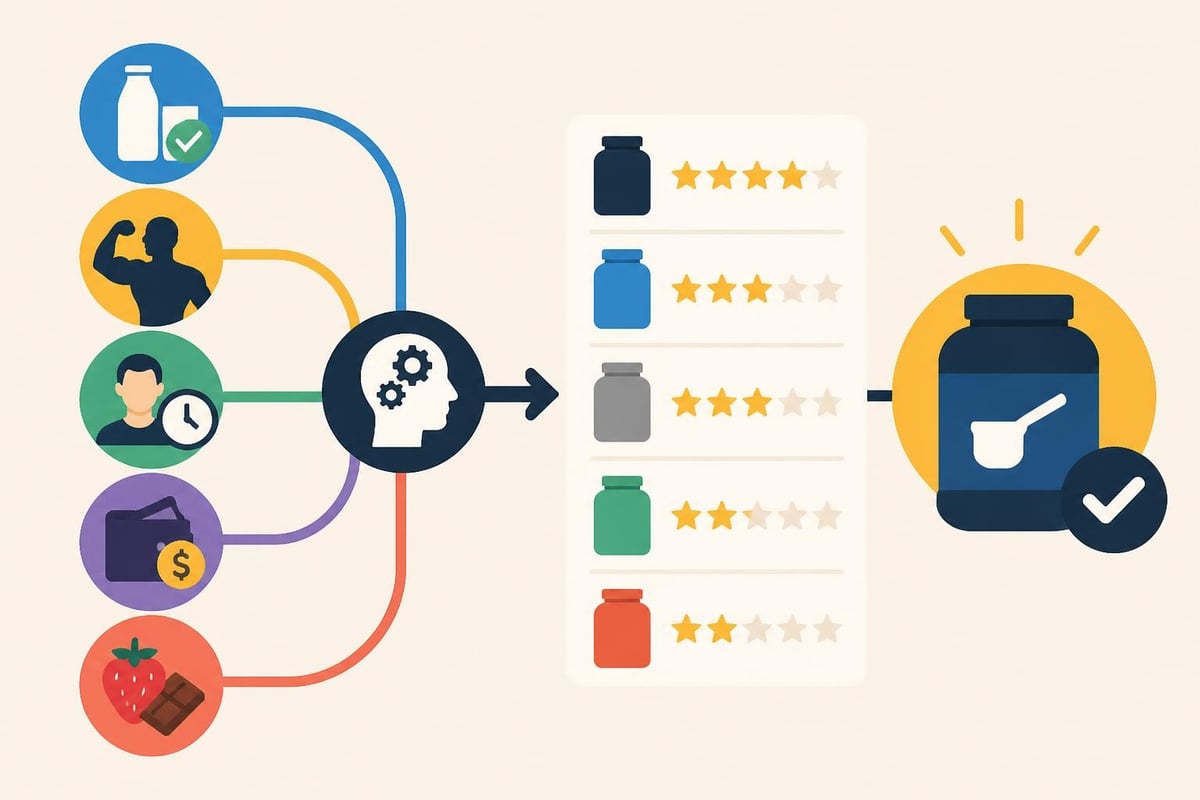
With thousands of products and conflicting rankings, creating a personal shortlist requires clarifying your priorities across the six core dimensions. The best whey protein ranking serves as a starting point, not a rigid prescription.
Start by defining your non-negotiables: certifications required for competitive sport, lactose tolerance limits, budget ceiling, or flavor preferences. Use these filters to narrow a comprehensive ranking to 5–10 candidates. Then compare finalists on secondary factors like ingredient transparency, company reputation, and return policies.
If muscle growth is your primary goal, prioritize rankings that weight evidence and dose fit heavily, accepting higher costs for certified isolates with proven amino acid profiles. If long-term adherence matters most, flavor ratings and mixability should influence your decision more than marginal bioavailability differences between isolate brands.
For individuals aiming to support muscle mass while managing multiple health outcomes, platforms that connect supplement choices to specific goals streamline decision-making. Rather than guessing which whey protein suits your situation, structured tools map product attributes to your unique health and performance targets.
Evaluating whey protein effectively requires balancing evidence strength, dosing precision, safety testing, cost, and practical factors like taste and availability-a complexity that single-metric rankings oversimplify. DoseRank applies this comprehensive framework to surface supplements that align with your specific goals, using a quick quiz to narrow thousands of options to the few that fit your priorities. Instead of second-guessing your choice among conflicting reviews, let evidence-based ranking guide you to the whey protein that actually delivers for your situation.