
DOSERANK guide
Top Ranked Pre Workout Supplements: A Complete Guide
Published

Pre workout supplements have become a staple in fitness routines, promising enhanced energy, improved focus, and better performance. With hundreds of formulations flooding the market, determining which products truly deliver on their promises requires a systematic approach. Understanding how top ranked pre workout supplements are evaluated helps consumers make informed decisions based on evidence rather than marketing claims.
Understanding Pre Workout Supplement Rankings
The supplement industry generates billions in annual revenue, yet quality varies dramatically between products. Top ranked pre workout formulations distinguish themselves through rigorous evaluation across multiple dimensions. Evidence-based rankings consider clinical research supporting ingredient efficacy, appropriate dosing that matches scientific literature, manufacturer transparency and testing protocols, cost effectiveness, consumer feedback, and product accessibility.
Unlike subjective reviews or sponsored recommendations, comprehensive ranking systems analyze objective metrics. This approach reveals which supplements contain scientifically validated ingredients at effective doses rather than proprietary blends with undisclosed amounts. The distinction matters because an ingredient proven effective at 6 grams per serving provides no benefit when included at 500 milligrams.
Key Evaluation Criteria for Top Performers
When assessing pre workout supplements, six core factors determine overall ranking:
- Evidence strength: Clinical studies demonstrating ingredient efficacy for exercise performance
- Dose accuracy: Active ingredients meeting research-supported thresholds
- Manufacturer trust: Third-party testing, GMP certification, transparency
- Value proposition: Cost per serving relative to ingredient quality
- User satisfaction: Verified customer reviews and repeat purchase rates
- Market availability: Consistent stock and distribution accessibility
These criteria create a framework that prioritizes measurable outcomes over marketing hype. Understanding pre workout safety and effectiveness requires examining both short-term benefits and long-term health implications.
Common Ingredients in Top Ranked Pre Workout Formulations
The most effective pre workout supplements share several key ingredients, though formulations vary based on intended outcomes. Caffeine remains the most researched and widely used component, with doses typically ranging from 150 to 300 milligrams. Studies consistently demonstrate caffeine's ability to enhance endurance, strength output, and mental focus during training sessions.
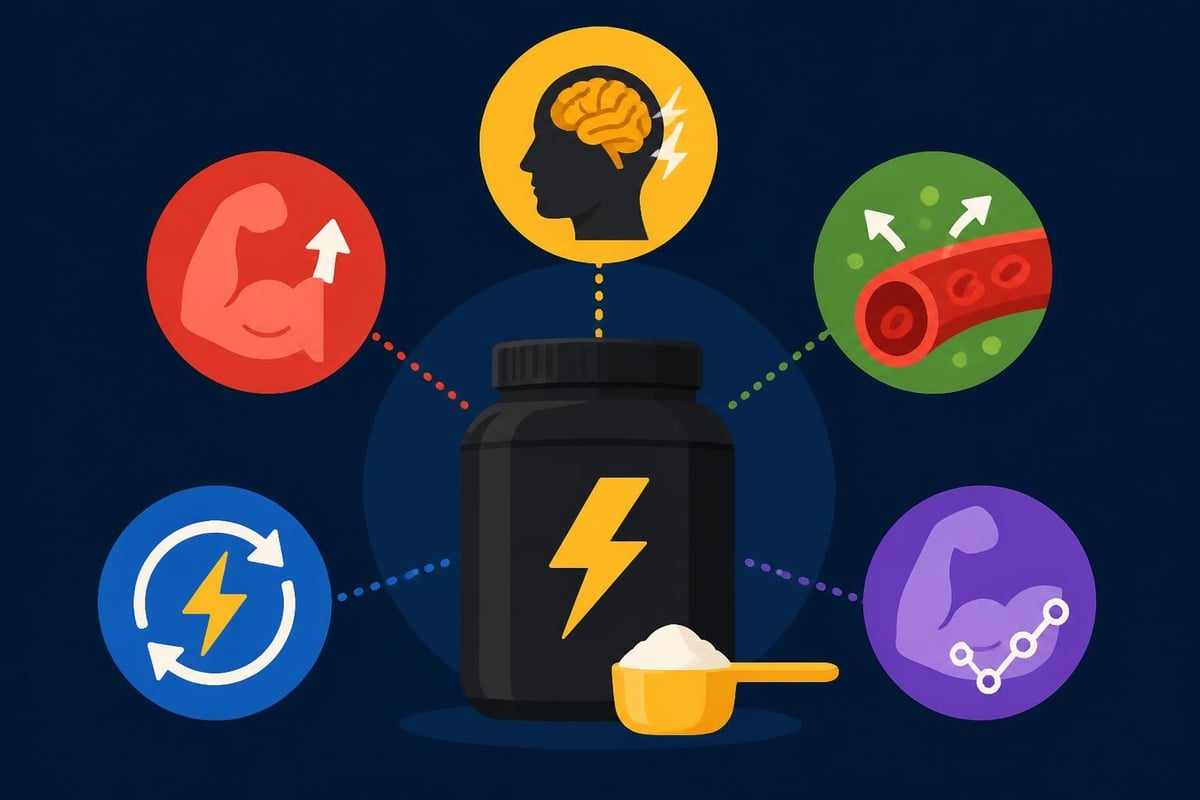
Beta-alanine appears in many top ranked pre workout products at doses of 2 to 5 grams. This amino acid buffers lactic acid accumulation, delaying muscle fatigue during high-intensity exercise. The characteristic tingling sensation, while harmless, signals proper dosing. Citrulline malate, typically dosed at 6 to 8 grams, enhances nitric oxide production, improving blood flow and nutrient delivery to working muscles.
| Ingredient | Effective Dose | Primary Benefit | Research Support |
|---|---|---|---|
| Caffeine | 150-300 mg | Energy, focus, endurance | Extensive |
| Beta-Alanine | 2-5 g | Muscle endurance | Strong |
| Citrulline Malate | 6-8 g | Blood flow, pump | Moderate-Strong |
| Creatine | 3-5 g | Strength, power | Extensive |
| BCAAs | 5-10 g | Recovery, protein synthesis | Moderate |
Creatine monohydrate supports ATP regeneration, crucial for explosive movements and strength training. While often taken separately, its inclusion in pre workout formulations at 3 to 5 grams provides convenience. Cleveland Clinic's analysis of pre workout effectiveness highlights how these ingredients work synergistically when properly dosed.
The Role of Amino Acids and Performance Enhancers
Beyond the foundational ingredients, top ranked pre workout supplements often incorporate targeted amino acids. L-tyrosine supports cognitive function under stress, particularly beneficial during intense training. Taurine aids cellular hydration and may reduce muscle damage. Beetroot extract provides dietary nitrates, offering an alternative pathway for nitric oxide production.
The distinction between effective formulations and underdosed products becomes evident when comparing label claims to clinical research. A supplement listing ten ingredients might appear superior, yet prove inferior if each component falls below therapeutic thresholds. This reality underscores why ranking systems must evaluate dose fit alongside ingredient presence.
Safety Considerations and Potential Risks
While top ranked pre workout supplements undergo rigorous evaluation, safety remains paramount. Understanding appropriate dosage limits prevents adverse effects from excessive consumption. Common side effects include jitters, digestive discomfort, elevated heart rate, and sleep disruption when taken late in the day.
Stimulant sensitivity varies considerably between individuals. Those new to pre workout supplements should begin with half servings to assess tolerance. People with cardiovascular conditions, high blood pressure, or anxiety disorders should consult healthcare providers before use. Pregnant or nursing women should avoid most pre workout formulations due to high caffeine content and understudied ingredients.
Understanding Proprietary Blends and Label Transparency
Proprietary blends represent a significant concern when evaluating pre workout quality. These formulations list multiple ingredients under a single total dose without disclosing individual amounts. While protecting formulas from competitors, this practice prevents consumers from verifying effective dosing. Top ranked pre workout products typically avoid proprietary blends, instead providing full ingredient transparency.
Third-party testing through organizations like NSF Certified for Sport or Informed-Sport adds credibility. These certifications verify label accuracy and screen for banned substances, particularly important for competitive athletes. WebMD's overview of pre workout benefits emphasizes the importance of choosing tested products.
Several warning signs indicate potentially problematic formulations:
- Proprietary blends hiding ingredient amounts
- Unrealistic performance claims without scientific backing
- Absence of third-party testing or certification
- Undisclosed caffeine content or excessive stimulants
- Inclusion of banned or questionable ingredients
- Limited manufacturer information or contact details
Evaluating Evidence and Clinical Research
The foundation of any top ranked pre workout supplement lies in scientific validation. Robust evidence requires randomized controlled trials examining performance outcomes in relevant populations. Studies should measure objective markers such as time to exhaustion, one-repetition maximum strength, sprint performance, or cognitive testing scores.
Publication bias favors positive results, making independent research particularly valuable. Manufacturer-funded studies, while not inherently flawed, warrant additional scrutiny. The strongest evidence comes from multiple independent research teams reaching consistent conclusions across diverse populations and training protocols.

Ingredient synergy adds complexity to evidence evaluation. While individual components may demonstrate efficacy, their combined effects in multi-ingredient formulations require specific study. Some top ranked pre workout products invest in proprietary research examining their complete formulation rather than relying solely on ingredient-level evidence.
Dose Response Relationships
The relationship between dose and effect rarely follows a linear pattern. Caffeine exemplifies this principle, where benefits plateau around 3 to 6 milligrams per kilogram of body weight. Exceeding this threshold increases side effects without proportional performance gains. Similarly, beta-alanine requires several weeks of loading to maximize muscle carnosine stores before performance benefits emerge.
Understanding these nuances separates sophisticated ranking systems from simplistic comparisons. DoseRank's methodology evaluates supplements across multiple dimensions including evidence strength and dose appropriateness, helping users identify products where ingredients meet research-supported thresholds.
Value Assessment Beyond Price Comparison
Cost per serving provides a starting point for value assessment, but top ranked pre workout supplements justify pricing through quality indicators. A twenty-dollar product with clinically effective doses and third-party testing delivers better value than a ten-dollar alternative with underdosed ingredients and no quality verification.
Calculating true value requires examining several factors:
- Active ingredient costs based on raw material prices
- Manufacturing quality and testing protocols
- Container size and servings per package
- Ingredient bioavailability and absorption
- Brand reputation and consistency
| Price Point | Typical Characteristics | Best For |
|---|---|---|
| Budget ($0.50-$0.80/serving) | Basic ingredients, minimal testing | Cost-conscious beginners |
| Mid-Range ($0.80-$1.50/serving) | Effective doses, some testing | Regular gym-goers |
| Premium ($1.50-$2.50/serving) | Complete formulas, certified testing | Serious athletes |
| Elite ($2.50+/serving) | Maximum doses, extensive research | Competitive performance |
Subscription models and bulk purchasing reduce per-serving costs while ensuring consistent availability. However, commitment to a single product before verifying individual response and tolerance carries risk. Sample sizes or smaller containers allow testing before larger investments.
Comparing Formulation Approaches
Pre workout supplements generally follow one of three formulation philosophies. Stimulant-focused products maximize energy and alertness through high caffeine content and additional stimulants. Pump-oriented formulas prioritize blood flow and muscle fullness through nitric oxide precursors. Balanced formulations combine moderate stimulation with endurance and strength-supporting ingredients.
The optimal approach depends on individual goals, training style, and personal response. Morning training sessions may benefit from higher stimulant content, while evening workouts require stimulant-free alternatives to prevent sleep disruption. For those struggling with sleep quality, understanding how pre workout timing affects rest becomes crucial.
The Impact of Individual Variation
Genetic differences, training status, diet quality, and lifestyle factors all influence pre workout supplement response. Caffeine metabolism varies dramatically based on CYP1A2 gene variants, causing some individuals to process caffeine rapidly while others remain sensitive for hours. This genetic variation explains why identical doses produce vastly different experiences.
Training experience modulates response to performance supplements. Beginners often experience pronounced effects from basic formulations, while advanced athletes require higher doses or specific ingredient combinations. Diminishing returns become evident as training status improves, with supplements providing smaller performance increments above what proper programming and nutrition already deliver.
Dietary intake affects baseline nutrient status, influencing supplement needs. Athletes consuming adequate dietary creatine through meat sources may notice less dramatic effects from supplemental creatine. Similarly, high-caffeine consumers develop tolerance, requiring larger pre workout doses to achieve desired stimulation.
Timing and Administration Strategies
Optimal pre workout timing balances ingredient absorption with workout scheduling. Most formulations recommend consumption 20 to 30 minutes before training, allowing caffeine and other rapidly absorbed ingredients to reach peak blood levels during exercise. Amino acids like citrulline and beta-alanine benefit from slightly earlier consumption given their slower absorption profiles.
The dangerous trend of "dry scooping," consuming powder without water, poses serious health risks including choking, cardiovascular stress, and digestive problems. Proper hydration enhances ingredient absorption and prevents concentrated powder from irritating the digestive tract.
Cycling strategies prevent tolerance development, particularly for stimulant-heavy formulations. Common approaches include:
- Five days on, two days off matching typical training schedules
- Four weeks on, one week off for periodic resets
- Alternating between stimulant and stimulant-free formulations
- Reducing dose by half every fourth week
Navigating Marketing Claims and Hype
The supplement industry's competitive nature drives aggressive marketing often disconnected from scientific reality. Terms like "explosive energy," "insane pumps," and "maximal performance" create expectations that products cannot consistently deliver. Top ranked pre workout supplements distinguish themselves through measured claims supported by research rather than hyperbolic promises.

Influencer endorsements and sponsored content complicate consumer decision-making. Athletes and fitness personalities often promote products through financial arrangements rather than genuine preference or results. Recognizing these relationships helps consumers separate authentic recommendations from paid promotions.
The Los Angeles Times examination of pre workout efficacy highlights the gap between marketing claims and scientific evidence, emphasizing the importance of critical evaluation before purchasing decisions.
Red Flags in Product Marketing
Several warning signs suggest products prioritizing sales over substance:
- Guaranteed results or money-back promises without trial periods
- Before-and-after photos showing dramatic transformations
- Celebrity endorsements without disclosed compensation
- Claims of "pharmaceutical-grade" or "medical-grade" ingredients
- Comparisons to illegal substances or prescription medications
- Limited-time offers creating artificial urgency
Legitimate top ranked pre workout supplements present realistic expectations, acknowledge individual variation, and provide scientific references supporting their formulations. Transparency regarding funding sources, study limitations, and appropriate use cases demonstrates respect for consumer intelligence.
Practical Selection Guidelines
Choosing a pre workout supplement requires aligning product characteristics with personal goals, preferences, and constraints. Athletes training for endurance events prioritize different ingredients than those focused on strength development or body composition. Understanding these distinctions guides effective product selection.
Training goals should drive ingredient priorities:
| Primary Goal | Key Ingredients | Secondary Considerations |
|---|---|---|
| Endurance Performance | Caffeine, Beta-Alanine, Beetroot | Electrolytes, B-Vitamins |
| Strength Development | Creatine, Caffeine, Citrulline | Beta-Alanine, Betaine |
| Fat Loss | Caffeine, Green Tea Extract, L-Carnitine | Appetite Control Ingredients |
| General Fitness | Balanced Caffeine, Citrulline, BCAAs | Comprehensive Vitamin Blend |
Sensitivity to specific ingredients requires careful label review. Those experiencing beta-alanine tingles may prefer formulations without this ingredient despite its proven benefits. Digestive sensitivity might necessitate avoiding certain amino acids or artificial sweeteners common in flavored powders.
Budget constraints demand strategic prioritization. Rather than accepting low-quality products at reduced prices, consider using pre workout supplements selectively for most challenging training sessions while relying on coffee or other caffeine sources for routine workouts. This approach maintains financial sustainability while preserving pre workout effectiveness for when it matters most.
Testing and Personal Experimentation
Individual response variation makes personal testing invaluable. University Hospitals' evaluation of pre workout necessity emphasizes trying products systematically to identify optimal formulations. Maintaining a training log documenting supplement use, workout performance, and subjective feelings helps identify patterns and preferences.
Controlled testing requires changing only one variable at a time. Introducing a new pre workout supplement while simultaneously adjusting training program, sleep schedule, or diet makes attributing changes impossible. Ideally, test new products during consistent training blocks with stable external factors.
Platforms like DoseRank streamline the selection process by ranking supplements based on evidence, dose fit, trust, value, popularity, and availability, helping users identify top ranked pre workout options matching their specific requirements without extensive personal research.
Long-Term Considerations and Sustainability
Supplement effectiveness over extended periods depends on realistic expectations and strategic use. The novelty effect common with new pre workout products often fades as psychological and physiological adaptation occurs. Top ranked pre workout supplements maintain effectiveness through properly dosed ingredients with established mechanisms rather than relying on placebo effects.
Building supplement dependence creates psychological challenges where training feels impossible without pre workout consumption. This pattern suggests overreliance rather than strategic enhancement. Periodic breaks reset both physiological tolerance and psychological dependence, preserving long-term effectiveness.
Financial sustainability matters for consistent use. Premium formulations costing three dollars per serving become prohibitively expensive for daily training. Balancing quality with affordability ensures pre workout supplementation enhances rather than strains overall fitness budget. Alternatives include making custom pre workout blends from bulk ingredients, though this approach requires knowledge of proper dosing and ingredient compatibility.
Health Monitoring and Adjustment
Regular health monitoring helps identify potential issues from pre workout supplementation before they become serious. Blood pressure checks, resting heart rate tracking, and sleep quality assessment provide objective markers of how supplements affect overall health. Sauk Prairie Healthcare's safety guidelines emphasize consulting healthcare providers, particularly when using supplements long-term.
Age-related considerations become relevant as metabolic function and cardiovascular health change over decades. Pre workout formulations appropriate for twenty-year-olds may prove excessive for fifty-year-old athletes. Adjusting doses downward and prioritizing ingredients with cardiovascular benefits over pure stimulation supports sustainable long-term use.
Selecting effective pre workout supplements requires moving beyond marketing hype to evaluate products based on evidence, dosing, quality, and value. Understanding how top ranked pre workout formulations distinguish themselves through clinical research, transparent labeling, and appropriate ingredient doses empowers informed decisions aligned with individual goals and physiology. DoseRank simplifies this process by systematically ranking supplements across multiple dimensions, helping you identify the best options for your specific training needs without sorting through hundreds of products yourself.