
DOSERANK guide
Optimal Supplements: Evidence-Based Selection Guide
Published

The supplement market has grown into a $150 billion industry worldwide, yet many consumers struggle to identify which products deliver genuine benefits. With thousands of formulations claiming miraculous results, finding optimal supplements requires a systematic approach grounded in scientific evidence, proper dosing, quality standards, and individual needs. Understanding how to evaluate supplements across multiple dimensions empowers you to make informed decisions that align with your specific health objectives while avoiding unnecessary expense and potential risks.
Understanding What Makes Supplements Optimal
Optimal supplements share several core characteristics that distinguish them from mediocre or ineffective products. These attributes extend beyond simple ingredient lists to encompass dosing accuracy, bioavailability, manufacturing quality, and alignment with established research.
Evidence Quality as the Foundation
The strongest supplements are backed by robust clinical trials demonstrating efficacy for specific health outcomes. Dietary supplements vary widely in scientific support, with some nutrients showing consistent benefits across multiple studies while others lack credible evidence. When evaluating research, consider study design, sample size, duration, and whether findings have been replicated by independent researchers.
Randomized controlled trials provide the highest level of evidence, followed by observational studies and mechanistic research. Meta-analyses that synthesize data from multiple trials offer particularly valuable insights into a supplement's true effectiveness. Be cautious of products promoted primarily through testimonials or animal studies, as these don't reliably predict human outcomes.
Key evidence markers include:
- Publication in peer-reviewed journals
- Studies conducted on human subjects
- Replication across independent research groups
- Transparent reporting of both positive and negative results
- Appropriate statistical analysis and control groups
Dose Fit and Bioavailability
Even evidence-backed ingredients fail to deliver results when formulated at ineffective doses. Optimal supplements contain ingredients at levels shown to produce measurable benefits in clinical research, not symbolic amounts included purely for marketing purposes.
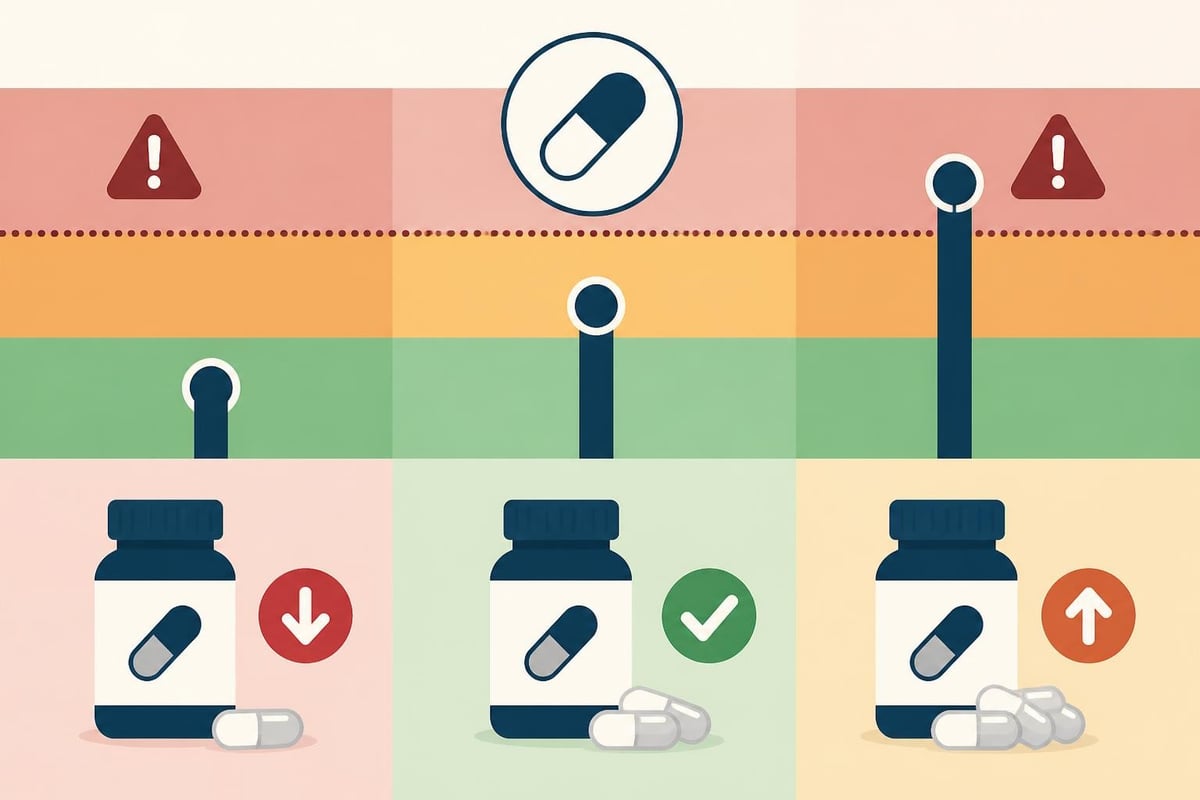
Bioavailability also plays a crucial role in determining whether a supplement can deliver promised benefits. Some nutrients exist in multiple chemical forms with vastly different absorption rates. For instance, omega-3 supplements come in triglyceride, ethyl ester, and phospholipid forms, each with distinct bioavailability profiles.
| Nutrient | Highly Bioavailable Form | Poorly Absorbed Form | Typical Dose Range |
|---|---|---|---|
| Magnesium | Glycinate, citrate | Oxide | 200-400 mg elemental |
| Vitamin D | D3 (cholecalciferol) | D2 (ergocalciferol) | 1000-4000 IU |
| Curcumin | Liposomal, with piperine | Standard extract | 500-1500 mg |
| Iron | Bisglycinate | Sulfate | 25-65 mg elemental |
Evaluating Manufacturer Trust and Quality Standards
The supplement industry operates under different regulatory frameworks than pharmaceuticals, placing greater responsibility on manufacturers to ensure quality and consumers to verify credibility. Optimal supplements come from companies that voluntarily exceed minimum requirements through third-party testing and transparent manufacturing practices.
Third-Party Certification Programs
Independent verification provides assurance that supplements contain labeled ingredients at stated potencies without harmful contaminants. Several respected organizations offer certification programs that test products and audit manufacturing facilities.
NSF International certifies supplements for both content accuracy and absence of banned substances. USP Verification confirms ingredient identity, strength, purity, and dissolution. ConsumerLab conducts independent testing and publishes detailed reports on product quality. Informed-Choice and Informed-Sport specifically test for athletic banned substances.
Products bearing these certifications have undergone rigorous analysis, though certification costs mean many high-quality supplements from smaller manufacturers may lack these marks. Choosing supplements wisely requires considering both certified products and evaluating manufacturer transparency when certifications aren't present.
Manufacturing Practices and Transparency
Current Good Manufacturing Practices (cGMP) represent minimum standards for supplement production. Leading manufacturers go beyond these requirements by maintaining detailed documentation, conducting regular quality audits, and making testing results publicly available.
Look for companies that:
- Publish certificates of analysis for specific batches
- Source ingredients from traceable suppliers
- Test raw materials before production
- Conduct stability testing to ensure potency throughout shelf life
- Clearly disclose all ingredients including inactive components
Vertical integration, where manufacturers control ingredient sourcing and production, often correlates with higher quality control. However, many excellent brands work with contract manufacturers who specialize in supplement production and maintain exceptional standards.
Matching Supplements to Individual Goals
Generic supplement recommendations rarely account for individual variation in nutrient status, health conditions, medications, dietary patterns, and genetic factors. Optimal supplements for one person may be unnecessary or even contraindicated for another.
Assessing Personal Nutrient Needs
Understanding whether you actually need dietary supplements begins with honest evaluation of your diet, lifestyle, and health status. Many Americans obtain adequate nutrition through food alone, while others have specific gaps warranting supplementation.
Common scenarios where targeted supplementation provides clear benefits include:
- Documented deficiencies confirmed through laboratory testing
- Restrictive dietary patterns such as veganism requiring B12 supplementation
- Life stages including pregnancy, lactation, and older age
- Medical conditions affecting nutrient absorption or increasing requirements
- Medications that deplete specific nutrients

Rather than adopting popular supplement regimens, effective personalization starts with identifying specific health outcomes you want to address. Platforms like DoseRank help users match supplements to defined goals through structured assessment tools, ensuring recommendations align with individual circumstances rather than generic advice.
The Role of Diagnostic Testing
While not always necessary, strategic laboratory testing can reveal hidden deficiencies and establish baselines for monitoring supplementation effectiveness. Certain nutrients like vitamin D, vitamin B12, iron, and magnesium have well-established testing protocols that inform appropriate supplementation strategies.
Testing proves particularly valuable when:
- Symptoms suggest possible deficiency
- High-dose supplementation is being considered
- Medical conditions affect nutrient metabolism
- You want to verify that current supplements are working
Standard blood tests measure circulating nutrient levels, though some assessments like vitamin B12 status may require specialized markers beyond total serum values. Functional markers that measure how nutrients operate within cells sometimes provide more accurate pictures than simple concentration measurements.
Value Considerations Beyond Price Per Bottle
Determining supplement value requires looking past sticker prices to calculate cost per effective dose while factoring in quality, bioavailability, and likelihood of achieving desired outcomes. The cheapest option frequently proves most expensive when it fails to deliver results.
Calculating True Cost Per Dose
A $10 supplement providing 30 servings appears economical compared to a $40 product with the same count, but meaningful comparison requires examining actual ingredient doses and forms. The expensive product may contain three times the active ingredient in a more bioavailable form, delivering superior value despite higher upfront cost.
| Product | Retail Price | Servings | Active Ingredient | Form | Cost Per Effective Dose |
|---|---|---|---|---|---|
| Budget Brand | $15 | 60 | 200 mg magnesium | Oxide | $0.25 (needs 2 caps) |
| Mid-Tier | $28 | 60 | 400 mg magnesium | Citrate | $0.47 |
| Premium | $42 | 60 | 400 mg magnesium | Glycinate | $0.70 |
While the premium product costs nearly three times the budget option, its superior bioavailability means it actually delivers absorbed magnesium more efficiently. The budget product requires double dosing due to both lower elemental content and poor absorption, narrowing the real price gap considerably.
Opportunity Costs of Ineffective Supplementation
Money spent on supplements that don't work represents not just wasted dollars but also lost opportunity to address health concerns effectively. Six months of ineffective supplementation costs both the product price and the value of delayed solutions.
Comprehensive nutrition information helps consumers understand which supplements have solid evidence for specific applications and which lack credible support. Investing in proven interventions, even at higher prices, typically provides better value than experimenting with cheap products of questionable efficacy.
Popularity and Availability as Practical Factors
While evidence and quality should drive supplement selection, practical considerations around availability and peer validation play legitimate roles in optimal supplement choices. Products that effectively balance evidence with accessibility serve users better than theoretically superior options that prove difficult to obtain consistently.
Market Availability and Supply Reliability
Optimal supplements must be accessible when you need them. Boutique formulations available only through single retailers create vulnerability to stock issues and shipping delays. Products distributed through multiple channels provide backup options and often reflect established market demand indicating some level of customer satisfaction.
Consider both online and local availability, particularly for supplements you plan to take long-term. International shipping restrictions, import regulations, and customs delays can disrupt supplementation routines. Domestic manufacturers with broad distribution networks typically ensure more reliable access.
Informed Popularity Versus Marketing Hype
Supplement popularity stems from two distinct sources: effective marketing campaigns and genuine user satisfaction based on results. Distinguishing between these requires looking beyond sales rankings to examine user feedback, return rates, and independent reviews.
Red flags for hype-driven popularity:
- Celebrity endorsements without scientific backing
- Extreme claims about rapid results
- Proprietary blends hiding ingredient amounts
- Heavy reliance on before/after photos
- Absence from evidence-based medical resources
Indicators of merit-based popularity:
- Consistent recommendations from healthcare practitioners
- Sustained sales over multiple years
- Detailed user reviews describing specific outcomes
- Recognition in clinical practice guidelines
- Professional endorsements from relevant medical specialties
For complex health goals like improving cognitive function or supporting stress resilience, supplements with established track records typically provide more reliable results than trendy newcomers making bold promises.
Specialized Considerations for Different Supplement Categories
Different supplement types require distinct evaluation approaches. Optimal supplements within each category meet specific criteria relevant to their intended purposes and mechanisms of action.
Foundational Nutrients
Vitamins and minerals that address common deficiencies or support basic physiological functions represent foundational supplementation. These nutrients have well-established roles, clear deficiency syndromes, and documented optimal intake ranges.
For foundational nutrients, optimal supplements provide:
- Forms matching those used in successful clinical trials
- Doses within established safe and effective ranges
- Minimal unnecessary additives or fillers
- Appropriate cofactors that enhance utilization
The American Heart Association's perspective on vitamin supplements emphasizes that supplementation should complement rather than replace healthy dietary patterns. Foundational nutrients work best when filling genuine gaps rather than attempting to compensate for poor nutrition.
Targeted Functional Ingredients
Herbs, botanicals, and specialty compounds designed to address specific health concerns require more nuanced evaluation. Unlike vitamins with defined deficiency states, these ingredients operate through various mechanisms and may benefit some individuals while providing little value to others.
Optimal functional supplements demonstrate:
- Standardization to active compounds
- Research using the specific extract formulation
- Appropriate dosing schedules matching study protocols
- Realistic claims aligned with evidence
When evaluating products for outcomes like memory support or exercise recovery, look for ingredients with multiple positive trials rather than single promising studies awaiting confirmation.
Combination Formulas Versus Single Ingredients
Multi-ingredient supplements promise convenient comprehensive support but often compromise effectiveness through suboptimal doses of individual components. Combination products work well when ingredients synergize at the provided doses, but many formulas spread their budgets too thin across numerous ingredients.
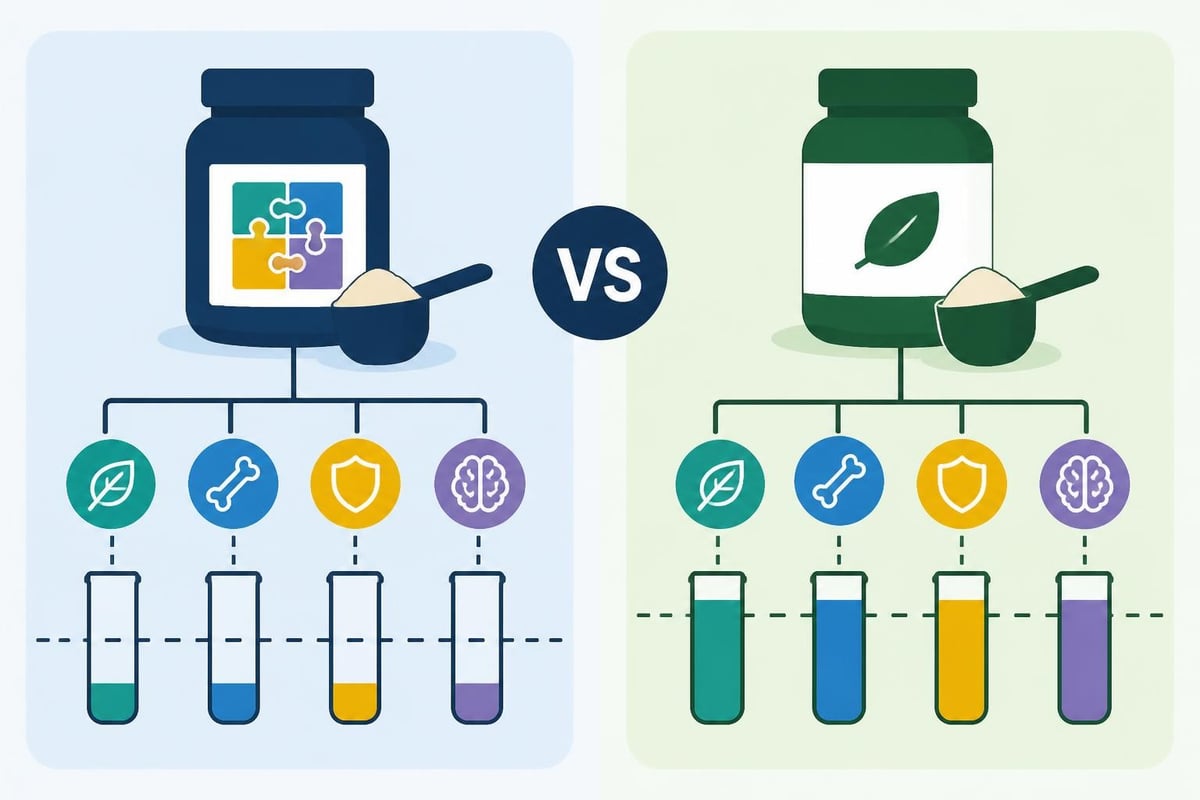
Advantages of combination formulas:
- Simplified regimens with fewer pills
- Synergistic ingredient interactions
- Cost savings when well-formulated
- Coordinated nutrient ratios
Advantages of single-ingredient supplements:
- Precise dose control for individual needs
- Easier identification of effective ingredients
- Flexibility to adjust specific nutrients
- Avoidance of unnecessary components
The optimal approach often combines both strategies, using well-designed combinations for synergistic nutrients while supplementing individual ingredients at therapeutic doses for specific goals.
Creating a Sustainable Supplementation Strategy
Optimal supplementation represents an ongoing process rather than a one-time decision. Effective strategies balance initial goals with long-term sustainability, periodic reassessment, and adaptation as needs evolve.
Establishing Baseline and Monitoring Progress
Before starting any supplement regimen, document your current status through symptom tracking, relevant laboratory tests, and clear definition of expected outcomes. This baseline enables you to objectively evaluate whether supplements deliver promised benefits.
Set realistic timelines for assessment. Most supplements require 8-12 weeks of consistent use before producing measurable effects. Some nutrients like vitamin D status may take even longer to optimize. Premature evaluation often leads to abandoning effective supplements or continuing ineffective ones.
Monitoring approaches include:
- Symptom journals tracking frequency and severity
- Follow-up laboratory testing at appropriate intervals
- Performance metrics relevant to your goals
- Side effect documentation
- Adherence tracking
If a supplement shows no measurable benefit after adequate trial duration at proper doses, discontinuation makes more sense than indefinite continuation based on hope rather than evidence.
Periodic Reassessment and Adjustment
Health status, life circumstances, dietary patterns, and scientific understanding all evolve over time. Supplement regimens that were optimal at one point may become unnecessary, insufficient, or suboptimal as conditions change.
Schedule comprehensive supplement reviews every six to twelve months, evaluating:
- Whether original goals remain relevant
- If dietary improvements have eliminated deficiency risks
- New research affecting recommendations
- Changes in medications or health conditions
- Cost-effectiveness of current regimen
This reassessment process helps prevent supplement accumulation, where products are continually added but never removed, resulting in expensive, complicated regimens delivering diminishing returns.
Integration with Lifestyle and Dietary Improvements
The most effective supplementation occurs within a broader context of health optimization. Supplements work best when supporting rather than attempting to override poor lifestyle choices. Prioritizing sleep quality, stress management, physical activity, and nutritious eating creates a foundation where supplements can enhance already positive health trajectories.
Consider supplements as targeted tools addressing specific gaps rather than primary health interventions. When whole-food dietary improvements can address nutrient needs, they generally provide superior benefits compared to isolated nutrient supplementation. Supplements excel when bridging unavoidable gaps or providing therapeutic doses difficult to achieve through diet alone.
Navigating Common Supplementation Mistakes
Understanding frequent errors in supplement selection and use helps you avoid wasting time and money on ineffective approaches. Many well-intentioned supplement users undermine their results through preventable mistakes.
Chasing Trends Over Evidence
Supplement trends cycle rapidly, with new "miracle" ingredients regularly capturing public attention before fading into obscurity. Optimal supplements typically aren't the newest, most exciting products but rather well-established nutrients with decades of research support.
Before trying trendy supplements, ask:
- How many independent research groups have studied this ingredient?
- Are positive findings from animal or human trials?
- Does the product contain doses matching successful research?
- What percentage of studies show positive versus neutral results?
Established supplements like vitamin D, magnesium, and omega-3 fatty acids may seem boring compared to exotic botanical extracts, but their evidence bases far exceed newer alternatives for most common health goals.
Ignoring Interactions and Contraindications
Supplements interact with medications, other supplements, medical conditions, and even foods. These interactions sometimes reduce effectiveness, increase side effects, or create serious health risks. Optimal supplementation requires understanding potential interactions relevant to your specific situation.
Common interaction categories include:
- Nutrient competition where high doses of one mineral impair absorption of others
- Medication interference affecting drug metabolism or efficacy
- Additive effects where supplements and medications work through similar mechanisms
- Condition contraindications making certain supplements inappropriate for specific diagnoses
Healthcare providers and pharmacists can identify relevant interactions, but many remain unaware of all supplements patients take unless specifically asked. Maintaining a complete list of all supplements and medications enables more accurate interaction screening.
Expecting Unrealistic Results or Timelines
Supplement marketing often creates expectations that exceed realistic outcomes. While some nutrients produce noticeable effects relatively quickly, many work subtly over extended periods without dramatic subjective changes despite measurable physiological improvements.
Setting appropriate expectations prevents premature discontinuation of effective supplements and continuation of ineffective ones based on placebo effects or coincidental improvements. Understanding typical response timelines and likely magnitude of effects helps you accurately evaluate whether supplements are working.
Selecting optimal supplements demands a systematic evaluation across evidence quality, dosing accuracy, manufacturing standards, personalization, value, and practical accessibility rather than relying on marketing claims or popularity alone. DoseRank simplifies this complex process by ranking supplements based on these exact criteria, helping you identify products that genuinely match your specific health goals. Whether you're addressing nutrient deficiencies, supporting specific health outcomes, or optimizing overall wellness, starting with a structured approach to supplement selection ensures your investment delivers meaningful results.