
DOSERANK guide
Nutrition Supplements: Evidence-Based Guide for 2026
Published
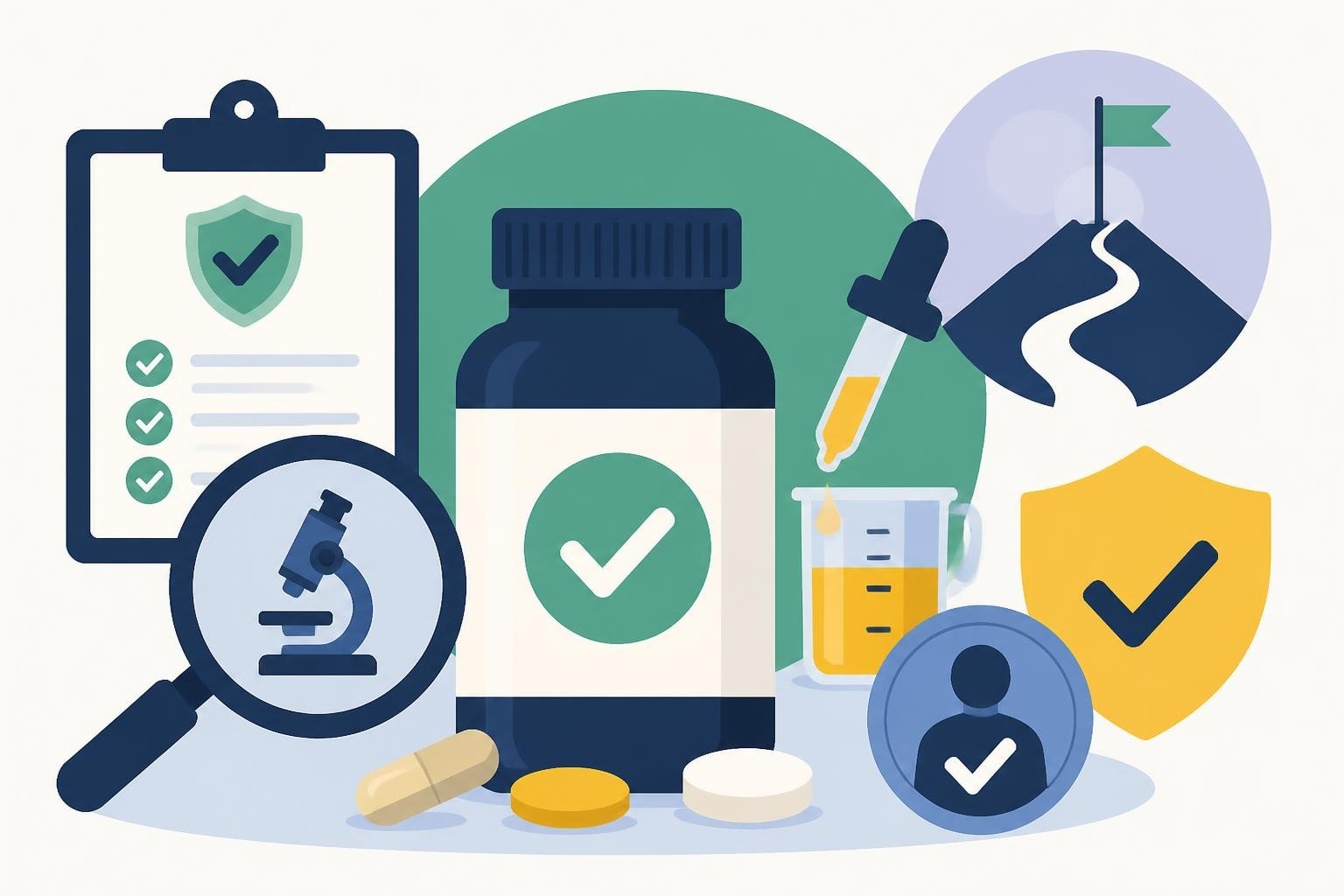
The market for nutrition supplements has grown into a multi-billion dollar industry, with Americans spending over $50 billion annually on vitamins, minerals, botanicals, and performance products. Yet despite this massive investment, many consumers struggle to identify which products actually deliver measurable benefits backed by rigorous science. The sheer volume of options, combined with conflicting marketing claims and variable quality standards, makes informed decision-making exceptionally challenging for anyone seeking to optimize their health through supplementation.
Understanding the Landscape of Nutrition Supplements
Nutrition supplements encompass a broad category of products designed to complement dietary intake and support specific health outcomes. These products range from single-nutrient formulations like vitamin D capsules to complex multi-ingredient blends targeting athletic performance or cognitive function.
Regulatory Framework and Consumer Protection
The Dietary Supplement Health and Education Act of 1994 established the current regulatory structure in the United States, defining supplements as a distinct category from pharmaceuticals. Unlike prescription medications, which must demonstrate safety and efficacy before market approval, nutrition supplements are generally recognized as safe until proven otherwise. This fundamental difference places greater responsibility on manufacturers to self-regulate and on consumers to evaluate evidence independently.
Key regulatory considerations include:
- Manufacturers must ensure products are safe before marketing
- Structure-function claims are permitted without FDA pre-approval
- Disease treatment claims require drug approval pathways
- Good Manufacturing Practices (GMP) certification is mandatory
- Third-party testing remains voluntary but increasingly expected
The World Health Organization has outlined frameworks for integrating traditional and complementary products into health systems globally, recognizing both their cultural significance and the need for evidence-based evaluation standards.

Evidence Hierarchy for Supplement Efficacy
Not all research carries equal weight when evaluating whether nutrition supplements deliver on their promises. Understanding the hierarchy of evidence helps consumers distinguish between marketing hype and legitimate scientific support.
Types of Research and Their Reliability
| Study Type | Reliability | Strengths | Limitations |
|---|---|---|---|
| Systematic reviews & meta-analyses | Highest | Combines multiple studies, identifies patterns | Quality depends on included studies |
| Randomized controlled trials | Very high | Controls for confounding variables | May not reflect real-world use |
| Cohort studies | Moderate | Tracks outcomes over time | Cannot prove causation |
| Case-control studies | Moderate | Efficient for rare outcomes | Susceptible to recall bias |
| In vitro & animal studies | Low | Explores mechanisms | Poor translation to humans |
| Anecdotal reports | Lowest | Highlights possibilities | No statistical validity |
The NIH coordinates research priorities across multiple institutes to advance understanding of how nutrition supplements interact with human physiology, metabolism, and disease processes. Recent coordination efforts have emphasized precision nutrition-tailoring recommendations to individual genetic, metabolic, and lifestyle factors rather than applying population-wide guidelines uniformly.
Interpreting Clinical Outcomes
Strong evidence requires more than statistical significance. Meaningful clinical outcomes demonstrate real-world impact on quality of life, functional capacity, or measurable biomarkers. For example, a supplement that raises serum vitamin D levels (a surrogate marker) matters only if those changes correlate with reduced fracture risk, improved immune function, or other tangible health benefits.
When evaluating study quality, consider sample size, duration, dropout rates, conflict-of-interest disclosures, and whether outcomes match your personal health goals. A product with robust evidence for one application may lack support for others. Omega-3 fatty acids demonstrate strong cardiovascular benefits in certain populations but show minimal impact on cognitive decline in healthy adults.
Critical Factors in Supplement Selection
Choosing effective nutrition supplements requires evaluating multiple dimensions beyond marketing claims. Five core criteria determine whether a product will deliver measurable results.
Dosing Accuracy and Bioavailability
The gap between label claims and actual delivered doses represents one of the industry's most persistent quality issues. Independent testing by Consumer Reports has repeatedly found products containing significantly more or less than stated amounts, with some failing to deliver even 50% of claimed ingredients.
Bioavailability-the proportion of an ingested nutrient that reaches systemic circulation-varies dramatically based on chemical form, delivery mechanism, and co-factors. Magnesium oxide offers poor absorption compared to magnesium glycinate or citrate. Curcumin requires piperine or lipid formulations to achieve meaningful blood levels. Vitamin D3 outperforms D2 for raising serum 25-hydroxyvitamin D.
- Verify the active form listed on labels
- Check for absorption enhancers or inhibitors
- Compare doses to those used in clinical research
- Consider timing relative to meals and other supplements
- Account for individual factors affecting absorption
Manufacturing Quality and Contamination Risk
Third-party certification programs provide independent verification that products contain what labels claim without harmful contaminants. NSF International, USP, and ConsumerLab represent the most rigorous testing protocols, analyzing for heavy metals, microbial contamination, pesticide residues, and undeclared pharmaceutical ingredients.
Recent investigations have uncovered heavy metal contamination in protein powders and fish oil rancidity at levels that may pose health risks with long-term use. Botanical supplements face particular challenges with species misidentification, geographic origin fraud, and adulteration with cheaper fillers.
Common Categories and Their Applications
Different types of nutrition supplements serve distinct physiological functions and health objectives. Understanding these categories helps narrow selection to products aligned with your specific needs.
Foundational Nutrients
Vitamins and minerals form the backbone of supplementation strategies, addressing documented deficiencies or supporting increased requirements during specific life stages. Vitamin D deficiency affects nearly 40% of American adults, while many following plant-based diets require B12 supplementation to prevent neurological complications.
Harvard Health Publishing offers guidance on who benefits most from foundational supplementation:
- Pregnant women need folate to prevent neural tube defects
- Older adults often require vitamin B12 due to reduced absorption
- People with limited sun exposure may need vitamin D
- Menstruating women frequently benefit from iron supplementation
- Vegans typically require B12, potentially D3, and sometimes iron or zinc
The key principle: supplement to correct identified gaps, not as insurance against an undefined diet.

Performance and Recovery Products
Athletes and physically active individuals often turn to nutrition supplements to enhance training adaptations, reduce recovery time, or improve competition performance. The evidence base varies considerably across this category.
Tier 1 evidence supports:
- Creatine monohydrate for strength and power output
- Caffeine for endurance and cognitive alertness
- Beta-alanine for high-intensity exercise capacity
- Protein supplementation when dietary intake falls short
Tier 2 evidence suggests possible benefits:
- Beetroot juice/nitrate for endurance performance
- HMB for muscle preservation during caloric restriction
- Tart cherry for exercise recovery
- Collagen peptides for connective tissue support
Many popular pre-workout formulations combine multiple ingredients at doses below those shown effective in research, relying on stimulant content rather than performance-enhancing compounds to create a perceived effect.
Targeted Health Outcomes
Specialized nutrition supplements address specific health concerns ranging from joint comfort to cardiovascular support. These products require particularly careful vetting since marketing often outpaces evidence.
Omega-3 fatty acids from fish oil demonstrate cardiovascular benefits in meta-analyses, though recent large trials have questioned universal recommendations. For individuals seeking to improve their essential fatty acid status, testing omega-3 index provides objective measurement rather than relying on assumed benefit.
Curcumin shows anti-inflammatory properties in controlled studies but suffers from poor bioavailability in standard formulations. Probiotics demonstrate benefits for specific digestive conditions but lack evidence as general wellness products. Adaptogens like ashwagandha and rhodiola have preliminary support for stress resilience, with ongoing research needed to establish optimal dosing and duration.
Personalization and Individual Response
The same nutrition supplement affects different individuals variably based on genetics, existing nutrient status, gut microbiome composition, medication interactions, and lifestyle factors. This biological individuality explains why population-level recommendations often fail to predict individual outcomes.
Genetic and Metabolic Factors
Single nucleotide polymorphisms in genes encoding nutrient transport proteins, metabolic enzymes, and receptor binding sites alter supplement effectiveness. MTHFR variants affect folate metabolism, making methylfolate superior to folic acid for some individuals. Vitamin D receptor polymorphisms influence calcium absorption and bone density responses to supplementation.
Rather than expensive genetic testing of uncertain clinical utility, functional assessment through biomarker measurement provides actionable data. Serum 25-hydroxyvitamin D directly indicates vitamin D status. Red blood cell magnesium better reflects tissue stores than standard serum testing. Omega-3 index quantifies EPA and DHA incorporation into cell membranes.
Timing and Combination Effects
When you take nutrition supplements matters as much as what you take. Fat-soluble vitamins (A, D, E, K) require dietary fat for absorption. Iron absorption decreases when taken with calcium, coffee, or tea but increases with vitamin C. Magnesium and calcium compete for absorption when taken simultaneously in high doses.
| Supplement | Optimal Timing | Avoid Combining With | Take With |
|---|---|---|---|
| Vitamin D | Morning with fat | None specific | Fatty meal |
| Iron | Empty stomach | Calcium, coffee, tea | Vitamin C |
| Magnesium | Evening | High-dose calcium | Light meal |
| Omega-3 | With meals | None specific | Fat-containing food |
| Probiotics | Before bed | Antibiotics (separate by 2 hours) | Small snack |
Quality Assessment and Product Selection
Identifying high-quality nutrition supplements requires systematic evaluation across multiple criteria. Marketing claims and price points correlate poorly with actual product quality or effectiveness.
Critical Evaluation Framework
Start by defining your health objective in measurable terms. "More energy" lacks specificity; "reduce afternoon fatigue sufficient to eliminate caffeine after 2 PM" provides a clear target. Match that objective to supplements with clinical evidence demonstrating benefits for your specific goal.
Verification checklist:
- Does research support this ingredient for my specific goal?
- Are doses comparable to effective research doses?
- Has independent testing verified label claims?
- Does the manufacturer follow GMP standards?
- Are there documented interactions with my medications?
- What biomarkers could track progress objectively?
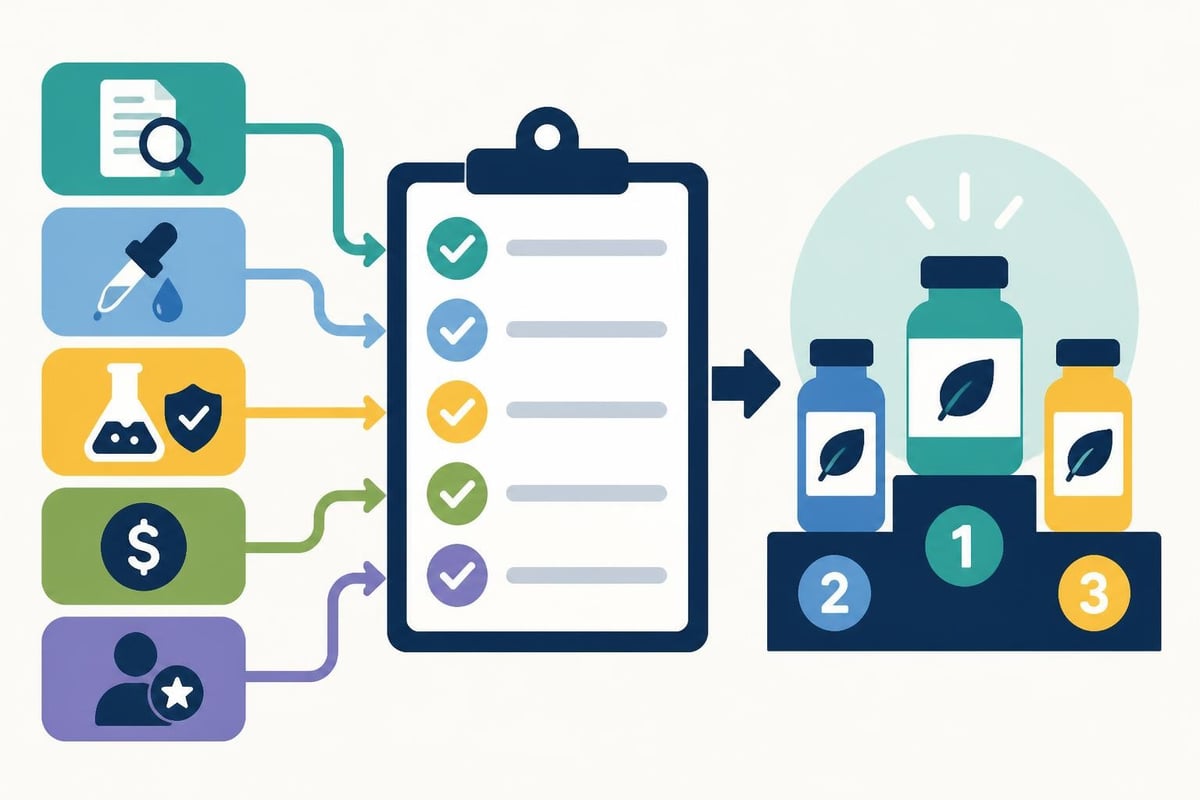
Platforms like DoseRank systematically evaluate nutrition supplements across these dimensions, ranking options based on evidence strength, dose appropriateness, third-party verification, cost-effectiveness, and user ratings. Rather than spending hours researching individual products, structured evaluation tools help identify top choices aligned with your specific health outcomes.
The methodology behind evidence-based ranking considers study quality, effect sizes, consistency across research, and translation from clinical trials to real-world use. This approach moves beyond simple "yes/no" recommendations to quantify relative effectiveness across competing products.
Safety Considerations and Risk Management
While nutrition supplements generally carry lower risk than pharmaceutical medications, they are not without potential adverse effects, particularly when used inappropriately or in combination with certain drugs.
Common Interaction Patterns
Drug-supplement interactions occur through several mechanisms: altered absorption, metabolic competition, receptor binding effects, and pharmacokinetic changes. St. John's wort induces liver enzymes that metabolize numerous medications, potentially reducing effectiveness of birth control, anticoagulants, and immunosuppressants.
High-dose vitamin K interferes with warfarin's anticoagulant effects. Calcium and iron reduce absorption of certain antibiotics. Vitamin E and fish oil increase bleeding risk when combined with antiplatelet drugs or anticoagulants. Even seemingly benign products like grapefruit extract inhibit drug-metabolizing enzymes, raising blood levels of statins, calcium channel blockers, and other common medications.
Before starting any nutrition supplement regimen, review potential interactions with current medications using reliable databases or pharmacist consultation. This step becomes especially critical for individuals managing chronic conditions or taking multiple medications.
Upper Limits and Toxicity Risk
Water-soluble vitamins generally carry low toxicity risk since excess amounts are excreted in urine, though megadoses of B6 can cause peripheral neuropathy and excess niacin causes flushing and liver stress. Fat-soluble vitamins accumulate in tissues, making chronic excess intake problematic. Vitamin A toxicity produces liver damage, bone loss, and birth defects. Excess vitamin D can elevate blood calcium to dangerous levels despite its popular image as a harmless supplement.
Minerals present narrow therapeutic windows between sufficiency and toxicity. Iron overload damages organs in individuals with hemochromatosis or those taking unnecessary supplements. Selenium toxicity causes hair loss, brittle nails, and neurological symptoms at doses only several-fold above recommended intakes. Even beneficial compounds like fish oil produce adverse effects at very high doses: increased bleeding tendency, immune suppression, and potential elevation of LDL cholesterol.
Practical Implementation Strategies
Successfully incorporating nutrition supplements into a health optimization plan requires systematic planning, consistent execution, and objective progress tracking.
Starting and Adjusting Your Regimen
Begin with one or two foundational supplements addressing documented deficiencies or clear evidence-based applications for your situation. Avoid the common mistake of starting five products simultaneously, which makes isolating effects or identifying adverse reactions nearly impossible.
- Establish baseline measurements for relevant biomarkers when possible
- Document subjective symptoms you aim to improve with specific metrics
- Start new supplements individually with at least two weeks between additions
- Use a tracking system to monitor adherence and subjective responses
- Schedule follow-up testing at 8-12 weeks to assess objective changes
Many people benefit from taking a quick quiz that matches their specific health goals to supplements with the strongest supporting evidence, rather than guessing which of hundreds of products might prove beneficial.
Cost-Benefit Analysis
Premium pricing does not guarantee superior quality or effectiveness. Some expensive proprietary blends deliver less active ingredient than cheaper generic alternatives. Conversely, bargain-basement supplements sometimes contain inadequate doses or poorly absorbed forms that provide minimal benefit despite low cost.
Calculate cost per effective dose rather than cost per bottle. A $40 bottle providing 120 days of properly dosed, highly bioavailable nutrients delivers better value than a $15 bottle of poorly absorbed compounds requiring three times the dose to achieve comparable effects. Third-party testing adds production costs but reduces the risk of purchasing ineffective or contaminated products.
Emerging Research and Future Directions
The field of nutrition supplements continues evolving as research methodologies improve and precision medicine approaches enable more targeted interventions.
Precision Nutrition Applications
Advances in metabolomics, genomics, and gut microbiome profiling are beginning to enable truly personalized supplement recommendations. Rather than population-wide advice, future approaches will likely integrate genetic variants affecting nutrient metabolism, baseline nutritional status from comprehensive biomarker panels, microbiome composition affecting synthesis and absorption, and real-time metabolic feedback.
Companies are developing algorithms that analyze multiple data streams to predict individual responses to specific nutrition supplements. While still in early stages, these approaches promise to reduce trial-and-error supplementation and improve outcomes by matching products to individual biological profiles.
Novel Delivery Systems
Nanotechnology, liposomal encapsulation, and time-release formulations aim to overcome bioavailability limitations that plague many promising compounds. Curcumin formulated in lipid nanoparticles achieves blood levels orders of magnitude higher than standard powder forms. Liposomal vitamin C provides higher tissue concentrations than oral ascorbic acid at equivalent doses.
These innovations increase costs but may improve effectiveness sufficiently to justify premium pricing for compounds with otherwise poor absorption. Critical evaluation remains essential, as some "advanced delivery" claims lack independent verification or clinical outcome data despite impressive laboratory results.
Building a Sustainable Approach
Long-term success with nutrition supplements requires integration into broader lifestyle patterns rather than viewing products as isolated interventions disconnected from diet, exercise, sleep, and stress management.
Supplements as Complements, Not Replacements
No amount of supplementation compensates for consistently poor dietary choices, chronic sleep deprivation, sedentary behavior, or unmanaged stress. Nutrition supplements function most effectively when supporting an already solid health foundation. Protein powder enhances recovery when training and total caloric intake are appropriate but cannot overcome inadequate stimulus or chronic overtraining. Vitamin D supplementation supports bone health alongside adequate calcium intake, weight-bearing exercise, and sufficient protein consumption.
The hierarchy places food quality and quantity first, followed by lifestyle factors including sleep, physical activity, and stress management, with targeted supplementation addressing specific gaps or supporting increased requirements. This framework prevents the common mistake of overemphasizing supplements while neglecting more impactful foundational behaviors.
Regular Reassessment
Health needs change with age, activity levels, medical conditions, medications, and life circumstances. A supplement regimen appropriate at age 25 may require modification at 45 or 65. Cognitive function support becomes increasingly relevant with advancing age. Nutritional requirements shift during pregnancy, breastfeeding, or periods of intense athletic training.
Schedule annual reviews of your nutrition supplement strategy, reassessing whether products still align with current goals, whether biomarkers have normalized allowing discontinuation, and whether new evidence has emerged supporting different approaches. This periodic reevaluation prevents indefinite use of products no longer needed while ensuring you benefit from emerging research.
Selecting effective nutrition supplements requires systematic evaluation of evidence quality, dose appropriateness, manufacturing standards, and alignment with your specific health objectives. Rather than relying on marketing claims or guesswork, leverage structured assessment tools that rank products across multiple quality and effectiveness dimensions. DoseRank provides exactly this service, evaluating supplements based on clinical evidence, optimal dosing, third-party verification, cost-effectiveness, and real-world results to help you identify the best options for your individual goals.