
DOSERANK guide
Melatonin Tablets: Evidence-Based Guide for 2026
Published

Melatonin tablets have become one of the most widely used supplements for sleep support, with millions of Americans turning to this hormone-based intervention each year. As a naturally occurring hormone produced by the pineal gland, melatonin regulates the sleep-wake cycle and signals darkness to the body. The synthetic version packaged in tablet form aims to replicate this biological function, but understanding when, how, and at what dose to use melatonin tablets requires careful consideration of the evidence. This guide examines the science behind melatonin supplementation, explores dosing protocols supported by clinical research, and helps you navigate the complex landscape of formulations and safety considerations.
Understanding Melatonin's Biological Role
Melatonin functions as the body's primary circadian signal, with levels rising in the evening and falling in the morning. The pineal gland synthesizes melatonin from serotonin in response to darkness, creating a hormonal cascade that promotes sleepiness and maintains the 24-hour rhythm.
When you introduce melatonin tablets into this system, you're essentially providing an external signal that mimics the body's natural nocturnal hormone surge. The key distinction lies in timing and dose: endogenous melatonin follows a precise schedule tied to environmental light cues, while exogenous tablets deliver a bolus dose at a time you determine.
Circadian Phase Shifting vs. Sleep Promotion
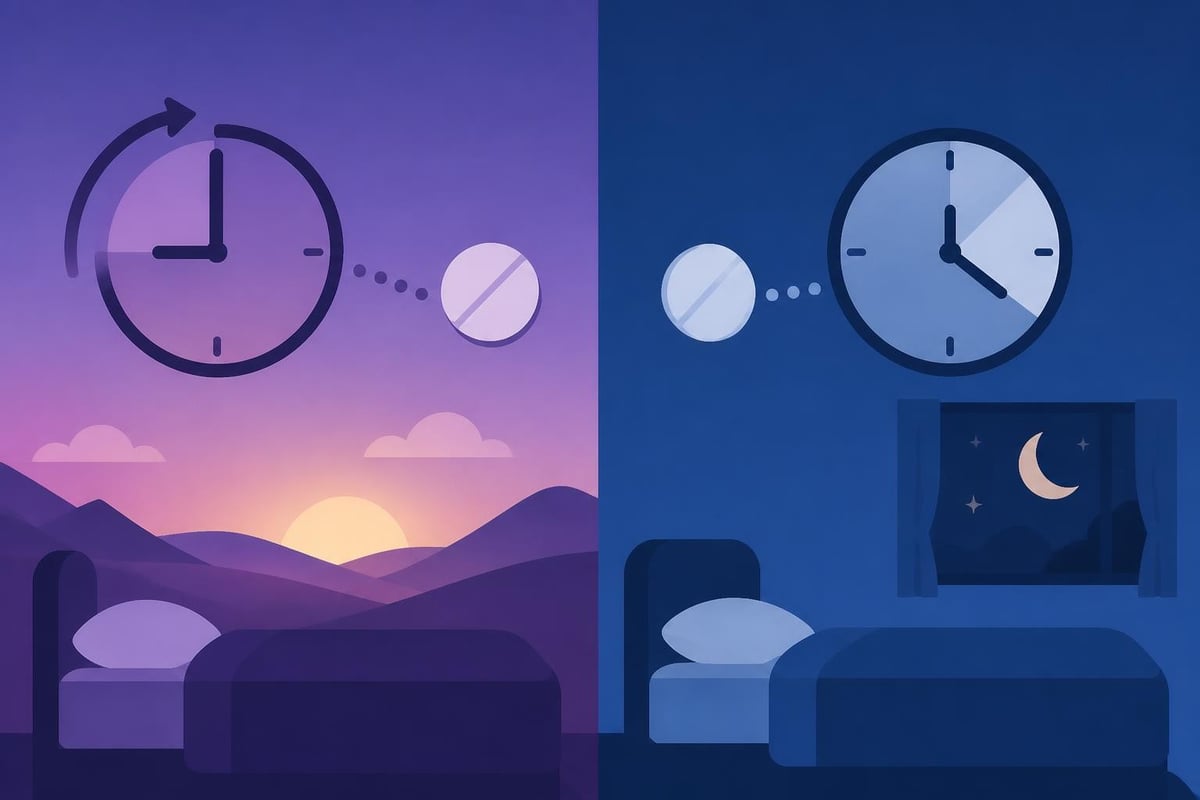
Melatonin tablets serve two distinct functions that often get conflated. Phase shifting involves taking melatonin to adjust your internal clock, useful for jet lag or shift work. Sleep promotion uses melatonin's sedative properties to facilitate sleep onset.
The timing dictates the outcome:
- 3–5 hours before habitual bedtime: Advances circadian phase (shifts sleep earlier)
- 30–60 minutes before desired sleep time: Promotes sleep onset
- Morning or afternoon doses: Delays circadian phase (shifts sleep later)
Research protocols distinguish between these applications, and clinical practice guidelines from the American Academy of Sleep Medicine reflect this nuance when evaluating melatonin for different conditions.
Evidence-Backed Dosing Strategies
Dosing represents one of the most controversial aspects of melatonin tablets. Commercial products range from 0.3 mg to 10 mg, yet physiologic doses (those that mimic natural nighttime levels) sit between 0.3 mg and 0.5 mg.
The Low-Dose vs. High-Dose Debate
Physiologic dosing (0.3–1 mg) achieves blood concentrations similar to natural nocturnal levels and may preserve normal receptor sensitivity. This approach aligns with the principle that more isn't necessarily better when dealing with hormones.
Pharmacologic dosing (3–10 mg) creates supraphysiologic blood levels that may overwhelm receptors and potentially lead to tolerance or altered endogenous production over time.
| Dose Range | Blood Level | Primary Use | Evidence Quality |
|---|---|---|---|
| 0.3–0.5 mg | Physiologic | Circadian adjustment | Moderate |
| 1–3 mg | Low pharmacologic | Sleep onset, jet lag | High |
| 5–10 mg | High pharmacologic | Investigational uses | Low |
The Sleep Foundation's dosage guidance suggests starting with the lowest effective dose and titrating upward only if needed, an approach that balances efficacy with long-term safety considerations.
Formulation Differences Matter
Melatonin tablets come in multiple release profiles:
- Immediate-release: Quick absorption, peaks within 30–60 minutes, useful for sleep onset
- Extended-release: Gradual delivery over 6–8 hours, targets sleep maintenance
- Combined formulations: Biphasic release targeting both onset and maintenance
Your choice should match your specific sleep challenge. If you fall asleep easily but wake at 3 AM, extended-release formulations make more sense than immediate-release versions.
Clinical Applications and Supporting Evidence
The evidence base for melatonin tablets varies significantly across different applications. Some uses rest on solid randomized controlled trial data, while others remain speculative or poorly studied.
Jet Lag and Circadian Rhythm Disorders
Jet lag represents melatonin's strongest evidence base. Multiple systematic reviews demonstrate that appropriately timed melatonin tablets (0.5–5 mg taken at destination bedtime) reduce jet lag symptoms when crossing five or more time zones eastward.
The protocol is straightforward:
- Take melatonin 30 minutes before target bedtime at your destination
- Continue for 2–4 days after arrival
- Combine with morning bright light exposure for faster adaptation
- Avoid doses above 5 mg, which show no additional benefit
For delayed sleep-wake phase disorder (DSWPD), where your natural sleep time runs several hours late, taking melatonin tablets 2–3 hours before your current sleep onset can gradually advance your rhythm. This application requires consistent timing and patience, as phase shifts accumulate slowly.
Primary Insomnia in Adults
The evidence for melatonin tablets in chronic primary insomnia shows modest effects. A Cochrane review examining intensive care unit patients found improvements in sleep quality, though the magnitude varied across studies.
For many adults struggling with sleep, addressing underlying issues often matters more than adding supplementation. Evaluating your supplement strategy holistically matters, which is why platforms like DoseRank evaluate sleep quality improvement through evidence-based rankings that consider dose fit, clinical outcomes, and individual needs.
Key considerations for primary insomnia:
- Response rates vary from 30% to 60% depending on the study
- Effects may diminish over time in some users
- Combining with cognitive behavioral therapy for insomnia (CBT-I) often produces better outcomes
- Melatonin tablets work best for sleep-onset insomnia rather than maintenance insomnia
Pediatric Use and Special Populations
Children with neurodevelopmental disorders, particularly autism spectrum disorder (ASD) and ADHD, show higher response rates to melatonin tablets than typically developing children with insomnia. A comprehensive systematic review examining pediatric use found that short-term benefits appear consistent, but long-term safety data remain limited.
Parents should note several important points:
- Use the lowest effective dose (often 1–3 mg)
- Reserve melatonin for persistent sleep problems affecting daytime function
- Implement behavioral sleep strategies alongside supplementation
- Monitor for next-day sedation or mood changes
- Consult a pediatrician before starting, especially for children under 3 years
Older adults represent another population where melatonin tablets may offer particular benefit, as endogenous melatonin production declines with age. Lower doses (0.3–1 mg) often suffice in this group.

Safety Profile and Adverse Effects
Melatonin enjoys a reputation as exceptionally safe, and short-term studies support this perception. However, long-term safety data remain surprisingly sparse given how widely these tablets are used.
Short-Term Safety Data
A systematic review of adverse events in long-term studies found that serious adverse events directly attributable to melatonin were rare. The most commonly reported side effects include:
- Daytime drowsiness (5–10% of users)
- Headache (3–7% of users)
- Dizziness (2–5% of users)
- Nausea (1–3% of users)
These effects typically occur at doses above 3 mg and resolve when the dose is reduced or discontinued. Vivid dreams or nightmares represent another frequently mentioned side effect, though formal studies document this less consistently than anecdotal reports suggest.
Long-Term Considerations and Knowledge Gaps
The absence of evidence isn't evidence of absence. While acute toxicity appears minimal, several theoretical concerns warrant attention:
Endocrine disruption: As an exogenous hormone, melatonin tablets could theoretically affect reproductive hormones, thyroid function, or glucose metabolism. Limited long-term studies make it difficult to confirm or refute these possibilities.
Receptor downregulation: Chronic high-dose exposure might reduce melatonin receptor sensitivity, potentially requiring escalating doses to maintain effects.
Suppression of endogenous production: Some researchers worry that regular supplementation might signal the pineal gland to reduce natural synthesis, creating dependence.
Current evidence doesn't strongly support these concerns, but prudent users limit continuous use to periods when benefits clearly outweigh theoretical risks.
Drug Interactions and Contraindications
Melatonin tablets interact with several medication classes:
| Medication Type | Interaction Mechanism | Clinical Significance |
|---|---|---|
| Anticoagulants (warfarin) | May enhance effects | Monitor INR more closely |
| Immunosuppressants | May counteract intended effect | Avoid without medical supervision |
| Sedatives/CNS depressants | Additive sedation | Use lower melatonin doses |
| Diabetes medications | May affect glucose control | Monitor blood sugar |
| Blood pressure drugs | Potential interference | Evening dosing considerations |
Individuals with autoimmune conditions should exercise particular caution, as melatonin demonstrates immune-modulating properties that could theoretically exacerbate disease activity.
Choosing Quality Products
The supplement market's minimal regulation creates significant quality variability among melatonin tablets. Independent testing has revealed products containing 83% less to 478% more melatonin than labeled, alongside contamination with serotonin precursors.
Third-Party Testing and Verification
Look for products bearing certifications from:
- USP Verified: Confirms identity, strength, purity, and dissolution
- NSF Certified for Sport: Tests for banned substances and label accuracy
- ConsumerLab.com approved: Independent testing for quality and contamination
These seals indicate that the stated dose on the label reflects the actual content reasonably well.
Reading Labels Effectively
Active ingredients: Should list "melatonin" with a specific milligram amount
Other ingredients: Watch for unnecessary fillers, allergens, or additives that may affect absorption or cause reactions
Release mechanism: Understand whether you're purchasing immediate-release or extended-release formulations
Expiration date: Melatonin degrades over time; expired products may contain significantly less active ingredient
For those evaluating multiple supplement options beyond melatonin, using an evidence-based ranking system helps cut through marketing claims. Platforms that assess supplements based on clinical evidence, appropriate dosing, and third-party verification provide valuable decision support.

Implementation Strategies for Optimal Results
Simply swallowing a melatonin tablet rarely delivers optimal results. Contextual factors significantly influence effectiveness.
Timing Precision and Light Exposure
Take melatonin tablets at the same time each evening to reinforce circadian regularity. Consistency matters more than the exact hour chosen, though aligning with your target bedtime makes physiological sense.
Coordinate light exposure with melatonin timing:
- Dim lights 60–90 minutes before taking your tablet
- Reduce blue light from screens (or use blue-blocking glasses)
- Create a dark sleep environment once in bed
- Expose yourself to bright light soon after waking
This light-dark contrast amplifies melatonin's circadian signal and may reduce the dose needed for effect.
Combining with Sleep Hygiene Practices
Melatonin tablets work best when integrated into comprehensive sleep hygiene:
- Consistent sleep schedule: Same bedtime and wake time, even on weekends
- Cool bedroom temperature: 60–67°F (15–19°C) optimizes sleep onset
- Quiet environment: White noise or earplugs if necessary
- Limited caffeine: Avoid after 2 PM to prevent interference with adenosine signaling
- Physical activity: Regular exercise, but not within 3 hours of bedtime
Many people use melatonin as a band-aid for poor sleep habits. Addressing foundational behaviors often reduces or eliminates the need for supplementation.
When to Reassess or Discontinue
Consider adjusting your approach if:
- No improvement occurs after 2 weeks at an appropriate dose
- Morning grogginess persists despite timing adjustments
- Vivid dreams or other side effects prove bothersome
- Sleep problems resolve and you've maintained good habits for several weeks
Periodic breaks (one week every 1–2 months) may help maintain sensitivity and allow assessment of whether you still need supplementation.
Regulatory Status and Future Directions
In the United States, melatonin tablets are classified as dietary supplements rather than drugs, meaning manufacturers don't need FDA approval before marketing. This lighter regulatory framework contributes to quality variability but also maintains broad access.
Other countries take different approaches:
- European Union: Melatonin requires prescription in most member states above 2 mg
- Australia: Available over-the-counter but with pharmacist guidance
- Canada: Natural health product regulations apply, requiring product licensing
- Japan: Generally unavailable without prescription
These international differences reflect ongoing debate about whether melatonin should face stricter oversight given its hormonal nature.
Emerging Research Directions
Current research is exploring melatonin's potential beyond sleep:
Antioxidant properties: Studies examine whether melatonin's free-radical scavenging abilities offer neuroprotective benefits
Metabolic effects: Investigation into glucose metabolism, insulin sensitivity, and body composition continues
Immune modulation: Both potential benefits for immune function and concerns about autoimmune disease warrant further study
Cancer adjuvant therapy: Preliminary research suggests possible roles in oncology, though clinical evidence remains early-stage
While these applications generate scientific interest, the evidence supporting melatonin tablets for non-sleep indications remains insufficient for routine recommendation in 2026.
Practical Decision Framework
Deciding whether to use melatonin tablets involves weighing your specific situation against the evidence profile.
Strong candidates for melatonin tablets:
- Travelers crossing multiple time zones
- Shift workers adjusting to new schedules
- Individuals with delayed sleep-wake phase disorder
- Older adults with documented low endogenous melatonin
- Children with neurodevelopmental disorders and persistent insomnia (under medical guidance)
Weaker candidates:
- People with normal sleep patterns looking for "optimization"
- Individuals who haven't addressed basic sleep hygiene
- Those expecting melatonin to compensate for inadequate sleep duration
- Users seeking solutions for stress-related sleep problems without addressing underlying stress resilience
Questionable or contraindicated:
- Pregnant or breastfeeding women (insufficient safety data)
- People with autoimmune conditions (without medical consultation)
- Individuals on multiple medications without pharmacist review
- Those with severe liver impairment (altered melatonin metabolism)
Monitoring Your Response
Track these parameters for 2–4 weeks:
- Sleep onset latency: Minutes from lights out to sleep
- Night awakenings: Frequency and duration
- Total sleep time: Hours actually sleeping
- Next-day function: Energy, mood, cognitive performance
- Side effects: Any unwanted symptoms
Objective data beats subjective impressions when evaluating whether melatonin tablets are working for you. If you're not seeing measurable improvement, either your dose, timing, or fundamental approach may need adjustment.
Comparing to Alternative Interventions
Melatonin tablets represent just one tool in a broader sleep-support toolkit. Understanding alternatives helps contextualize their role.
Non-Pharmacologic Approaches
Cognitive behavioral therapy for insomnia (CBT-I) shows better long-term outcomes than any supplement or medication, with benefits persisting years after treatment ends. This structured approach addresses thought patterns and behaviors maintaining insomnia.
Light therapy can shift circadian rhythms without supplementation, using bright light exposure (10,000 lux) at strategic times to advance or delay sleep timing.
Relaxation techniques including progressive muscle relaxation, meditation, and breathing exercises activate parasympathetic nervous system responses conducive to sleep.
Other Supplement Options
Several supplements compete with or complement melatonin tablets:
- Magnesium: May improve sleep quality through GABA modulation and muscle relaxation
- L-theanine: Promotes relaxation without sedation, often combined with melatonin
- Glycine: Small studies suggest sleep-quality benefits at 3-gram doses
- Valerian: Traditional sleep herb with mixed evidence
When considering multiple supplements, evaluating them against standardized criteria helps prevent wasteful stacking. Understanding how different options rank based on evidence quality, appropriate dosing, and third-party testing informs better choices.
Prescription Sleep Medications
For severe or treatment-resistant insomnia, prescription options may be appropriate:
- Benzodiazepine receptor agonists: Fast-acting but risk dependence
- Orexin receptor antagonists: Newer class with different mechanism
- Sedating antidepressants: Off-label use for persistent insomnia
MedlinePlus guidance on sleep medicines provides reliable information about when medical-grade interventions become necessary versus when over-the-counter options like melatonin tablets suffice.
Special Considerations for Specific Goals
Your reason for considering melatonin tablets should guide your implementation strategy.
Shift Work and Irregular Schedules
Rotating shift workers face particular challenges, as their required sleep times constantly change. Melatonin tablets can facilitate adaptation, but the protocol differs from standard use:
- Take 0.5–3 mg before your planned sleep period, regardless of clock time
- Use blackout curtains and white noise to create daytime sleep conditions
- Consider splitting sleep into two periods if a single block proves difficult
- Avoid taking melatonin if you must drive or operate machinery within 5–6 hours
Traveling Across Time Zones
For eastward travel (advance sleep timing):
- Begin taking melatonin 1–2 days before departure at your destination's bedtime
- Continue for 2–4 days after arrival
- Seek morning light exposure at your destination
- Use doses between 0.5–5 mg (higher doses don't improve outcomes)
For westward travel (delay sleep timing), melatonin tablets prove less helpful. Focus instead on delaying sleep through evening light exposure.
Age-Related Sleep Changes
Older adults often experience earlier sleep timing (advanced phase), more fragmented sleep, and reduced total sleep time. Melatonin tablets may help, particularly if endogenous production has declined markedly.
Special considerations for seniors:
- Start with very low doses (0.3–0.5 mg)
- Watch for interactions with multiple medications
- Monitor for balance issues or falls risk from nighttime sedation
- Consider extended-release formulations for sleep maintenance issues
Melatonin tablets offer evidence-backed benefits for specific sleep and circadian challenges when used appropriately, though distinguishing marketing hype from clinical reality requires careful evaluation of dose, timing, and individual context. If you're exploring melatonin alongside other supplement options or trying to match interventions to your specific health goals, DoseRank provides evidence-based rankings across multiple supplements, helping you identify the best options based on clinical outcomes, appropriate dosing, quality verification, and your personal needs.