
DOSERANK guide
Melatonin Prices: What's Driving Costs in 2026?
Published
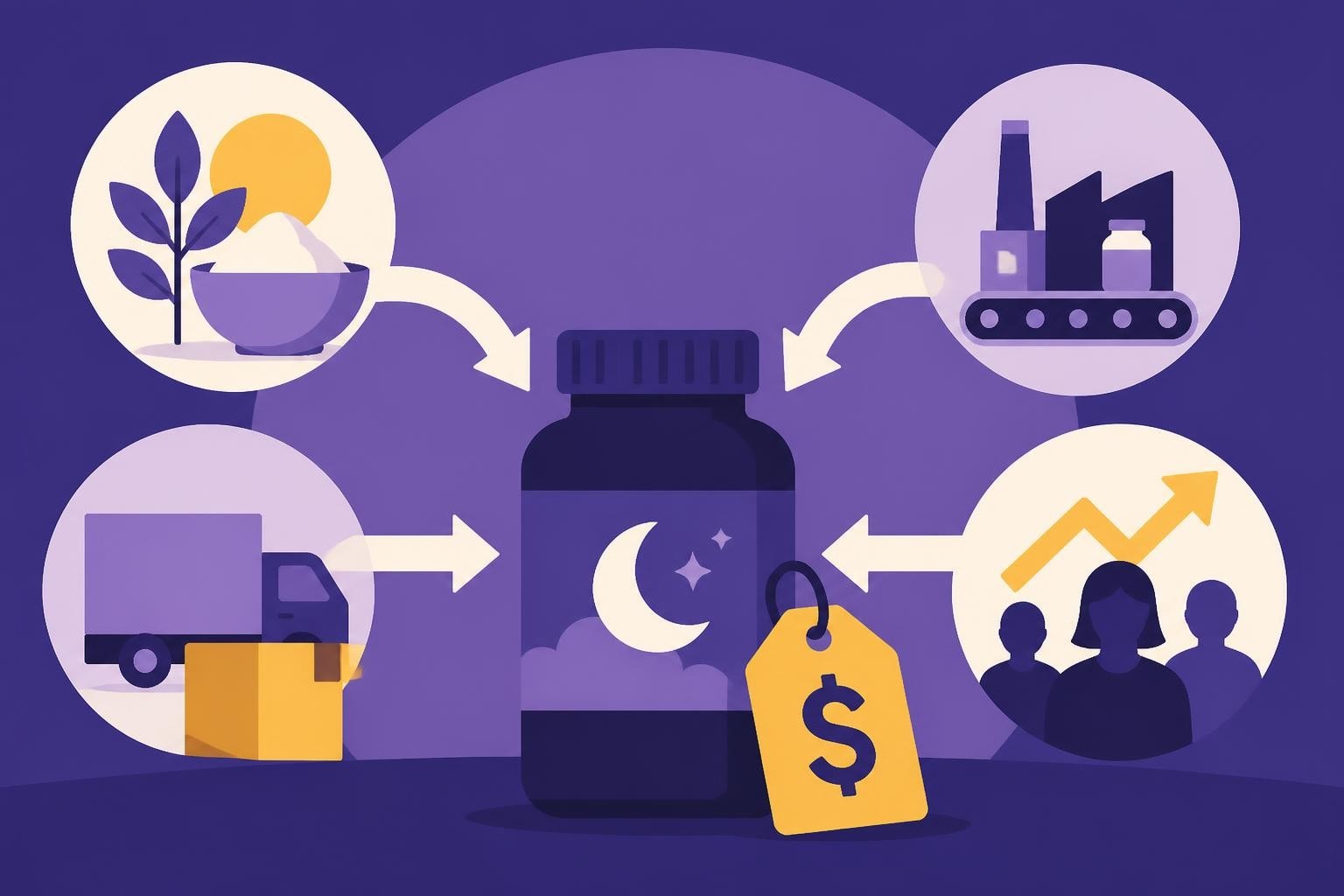
Melatonin supplements have become a fixture in millions of American households, yet understanding what drives their cost remains a mystery to most consumers. In 2026, melatonin prices reflect a complex web of manufacturing processes, market dynamics, regulatory environments, and consumer preferences. Whether you're a regular user looking to optimize your supplement budget or someone evaluating melatonin for the first time, knowing the factors behind pricing empowers better purchasing decisions and helps you identify genuine value rather than marketing hype.
Manufacturing Processes Shape Base Costs
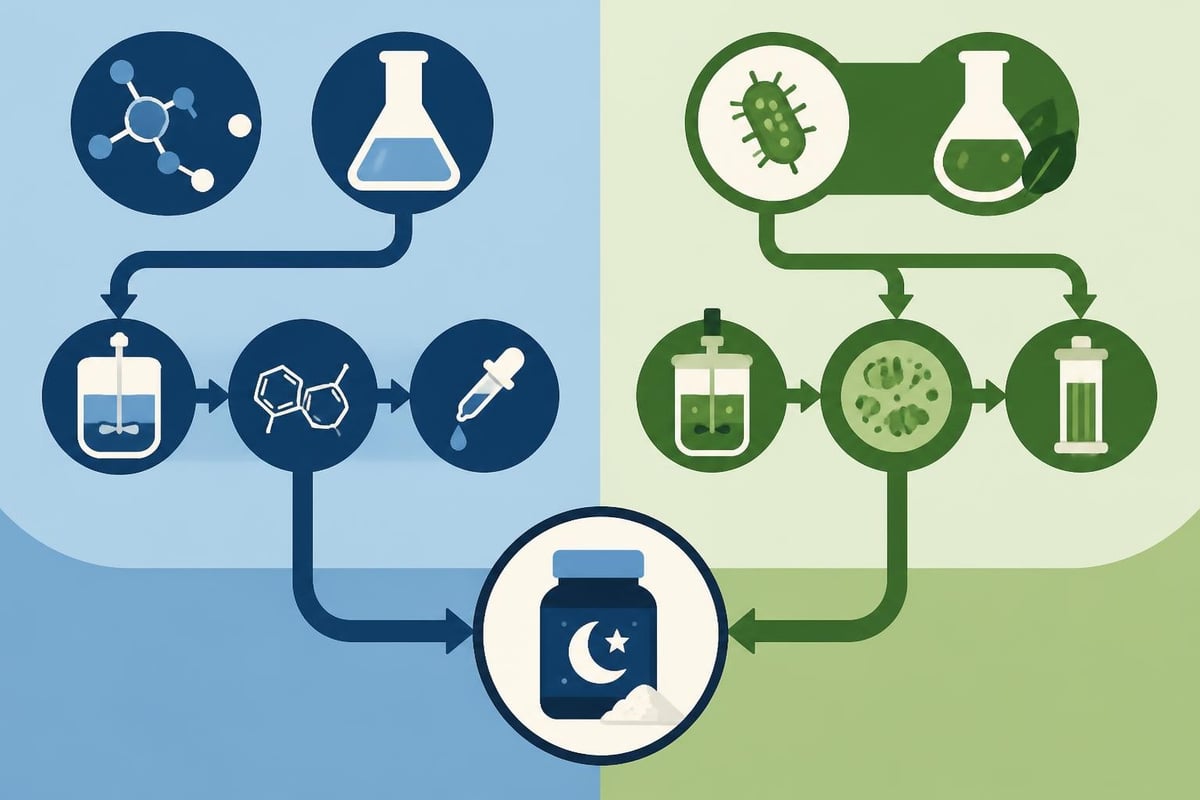
The foundation of melatonin prices begins at the molecular level with production methods. Two primary manufacturing approaches dominate the market: chemical synthesis and microbial fermentation. Chemical synthesis typically involves multi-step reactions starting from tryptophan or other precursors, requiring specific catalysts, solvents, and controlled conditions. This method offers predictability and scale but carries environmental considerations and reagent costs that flow through to final pricing.
Microbial fermentation, increasingly favored by manufacturers seeking "natural" labeling claims, uses engineered bacteria or yeast to produce melatonin through biological pathways. According to research on industrial-scale melatonin production, fermentation yields have improved dramatically in recent years, yet the process demands specialized equipment, sterile conditions, and downstream purification that adds expense. The choice between these methods creates a cost differential that manufacturers pass along to retailers and ultimately consumers.
Raw Material and Feedstock Volatility
Regardless of production method, feedstock costs represent a significant variable in melatonin prices. Chemical synthesis relies on tryptophan or serotonin precursors, whose availability fluctuates with agricultural commodity markets and pharmaceutical ingredient supply chains. Fermentation processes require growth media, sugars, and nitrogen sources that respond to agricultural market conditions.
In 2026, global supply chain stabilization has helped moderate some raw material volatility, yet regional variations persist. Asian manufacturers, particularly in China and India, benefit from proximity to feedstock sources and established chemical infrastructure, creating geographic cost advantages that influence global pricing benchmarks.
Dosage Forms and Formulation Costs
The physical form of melatonin supplements significantly impacts pricing structures. Tablets, capsules, gummies, sublingual formulas, and liquid preparations each carry distinct manufacturing requirements and cost profiles.
Common melatonin formats and cost drivers:
- Tablets require compression equipment, binding agents, and coating materials
- Capsules demand gelatin or vegetarian shells plus encapsulation machinery
- Gummies involve sugar matrices, flavoring systems, and extended production times
- Sublingual tablets need rapid-dissolve technology and specialized excipients
- Liquids require preservatives, flavoring, and specialized bottling lines
Gummy formulations typically command premium pricing due to multiple processing steps, flavor masking challenges, and the inclusion of sugars or sugar alternatives. Market analysis of melatonin supplement forms indicates that gummies now represent a substantial revenue segment despite higher per-dose costs, driven by consumer preference for palatability over economy.
Quality Testing and Certification
Third-party testing, purity verification, and certification programs add measurable costs that responsible manufacturers incorporate into pricing. NSF International, USP Verification, and ConsumerLab certifications require regular audits, batch testing, and documentation that can increase per-unit costs by 15-30% compared to uncertified products.
| Certification Type | Typical Cost Impact | What It Verifies |
|---|---|---|
| USP Verification | 10-15% increase | Identity, strength, purity, dissolution |
| NSF Certified | 12-18% increase | Label claims, contaminants, GMP compliance |
| Non-GMO Project | 5-8% increase | Genetic modification absence |
| Organic Certification | 15-25% increase | Agricultural standards, processing methods |
These quality assurances directly affect melatonin prices but provide consumers with documented evidence of product integrity. Supplements without certification may appear cheaper but often lack independent verification of label accuracy or purity.
Market Dynamics and Pricing Trends
The melatonin supplement market has experienced significant growth over the past decade, with global market forecasts projecting continued expansion through 2034. This growth trajectory influences pricing through economies of scale, competitive pressure, and retailer dynamics.
Recent analysis of melatonin prices through mid-2026 shows relative stability in wholesale costs despite monthly fluctuations, suggesting that supply and demand have reached a temporary equilibrium. However, retail pricing exhibits greater variability based on brand positioning, distribution channels, and value-added features.
Brand Positioning and Price Segmentation
The melatonin supplement category segments into distinct price tiers that reflect brand strategies rather than necessarily proportional quality differences:
- Economy brands focus on basic formulations with minimal additional ingredients
- Mid-tier brands add complementary compounds like magnesium or chamomile
- Premium brands emphasize organic sourcing, sustained-release technology, or proprietary blends
- Specialty formulations target specific sleep patterns with time-release or biphasic delivery
Price differences between these segments can span 300-400% for functionally similar melatonin doses. Understanding whether premium features deliver proportional value requires examining the evidence base for specific formulations rather than assuming higher prices guarantee better outcomes.
Distribution Channels and Retail Markup
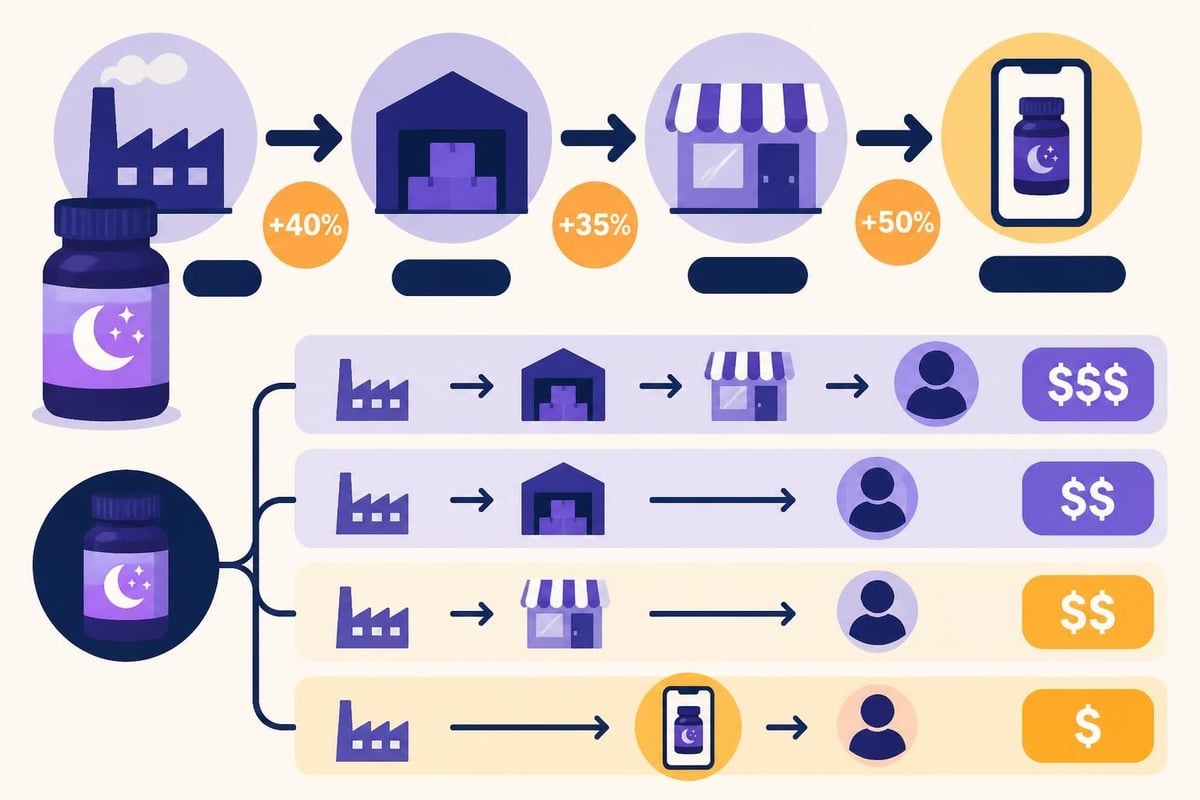
Where you purchase melatonin substantially affects the final price you pay. Distribution channel economics create distinct cost structures that retailers pass to consumers.
Retail channel pricing characteristics:
- Big-box retailers leverage volume purchasing for competitive pricing but limited selection
- Pharmacy chains offer mid-range pricing with promotional cycles
- Natural food stores carry premium brands with higher baseline prices
- Online direct-to-consumer eliminates middleman markup but adds shipping considerations
- Subscription services provide consistency discounts ranging from 10-20%
Historical retail price data for melatonin supplements reveals that unit prices have remained relatively stable when adjusted for inflation, though pack sizes and promotional strategies create the perception of greater volatility. Smart consumers compare price-per-milligram across channels rather than fixating on bottle prices.
Dose Strength and Value Calculations
Melatonin supplements span an extraordinary dose range from 0.3 mg to 10 mg or higher per serving. This variation creates pricing complexity that obscures true value comparisons.
Research suggests that lower doses (0.3-1 mg) often prove as effective for improving sleep quality as higher doses, yet manufacturers frequently price high-dose products at premiums despite potentially using more active ingredient. This counterintuitive pricing reflects consumer perception that "more is better" rather than cost-based pricing.
Cost Per Effective Dose
Calculating melatonin prices on a per-effective-dose basis reveals value opportunities that bottle prices conceal. A 120-count bottle of 1 mg tablets at $12 delivers 120 effective doses ($0.10 per dose), while a 60-count bottle of 10 mg tablets at $18 provides potentially 600 equivalent doses if users split tablets ($0.03 per 1 mg equivalent).
| Product Example | Bottle Price | Dose per Tablet | Count | Cost per 1mg Equivalent |
|---|---|---|---|---|
| Budget 1mg | $8 | 1 mg | 100 | $0.08 |
| Premium 3mg | $22 | 3 mg | 60 | $0.12 |
| High-dose 10mg | $18 | 10 mg | 60 | $0.03 |
| Gummy 5mg | $15 | 5 mg | 50 | $0.06 |
This analysis assumes dose divisibility, which works for tablets but not time-release or gummy formulations. It also presumes that higher doses don't provide additional benefits, a consideration that varies by individual response and underlying sleep challenges.
Regulatory Environment and Compliance Costs
In the United States, melatonin occupies regulatory space as a dietary supplement rather than a drug, creating a distinct cost structure compared to pharmaceutical sleep medications. The FDA's Current Good Manufacturing Practice (cGMP) regulations for dietary supplements mandate specific quality controls, facility standards, and documentation that add to manufacturing costs.
Manufacturers must conduct identity testing, strength verification, and contaminant screening for each batch. These regulatory compliance activities represent fixed costs that benefit from economies of scale, explaining why larger manufacturers often achieve better pricing efficiency. Market reports examining melatonin pricing confirm that regulatory compliance contributes 8-12% of total production costs for established manufacturers.
International Regulatory Variations
Global regulatory differences create price disparities across markets. European Union regulations classify melatonin under different frameworks depending on dose and intended use, affecting approval pathways and associated costs. Some countries restrict melatonin to prescription status, eliminating the supplement market entirely and shifting all costs to pharmaceutical pricing models.
These international variations matter for US consumers primarily through their impact on global manufacturing scale and ingredient sourcing. Manufacturers serving multiple regulatory jurisdictions spread development and compliance costs across larger volumes, potentially lowering per-unit prices in all markets.
Evaluating Price-Quality Relationships
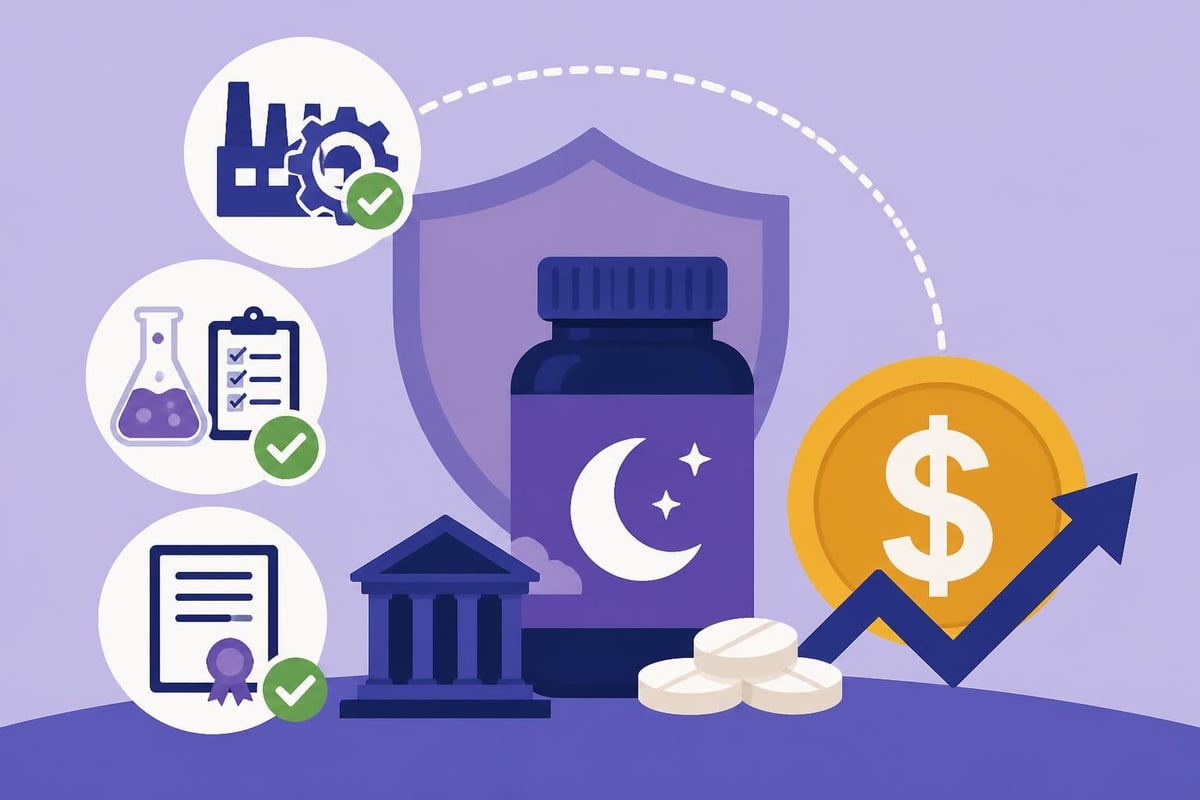
Higher melatonin prices don't automatically signal superior quality or efficacy. However, rock-bottom pricing may indicate corners cut in testing, sourcing, or manufacturing oversight. Identifying the optimal price-quality balance requires examining specific product attributes rather than assuming linear relationships.
Quality indicators worth premium pricing:
- Independent third-party testing with published certificates of analysis
- Transparent sourcing disclosure for active and inactive ingredients
- Manufacturing in NSF or GMP-certified facilities
- Clear labeling of melatonin form (synthetic vs. animal-derived vs. plant-sourced)
- Appropriate dosing guidance based on research rather than maximizing dose per serving
Conversely, premium pricing justified solely by marketing claims like "pharmaceutical grade" (a term without regulatory definition in supplements), proprietary blends that hide ingredient amounts, or celebrity endorsements represents cost without proportional value.
Strategic Purchasing Approaches
Smart consumers optimize melatonin prices through strategic purchasing behaviors that balance cost, quality, and convenience. Several approaches deliver measurable savings without compromising product integrity.
Value-maximizing strategies:
- Compare price per milligram across brands and retailers using unit pricing
- Purchase larger counts when you've established a product works for your needs
- Monitor promotional cycles at major retailers, typically quarterly
- Consider subscription discounts for consistent use patterns
- Evaluate whether high-dose products can be divided for lower effective cost
Platforms like DoseRank help consumers evaluate supplements based on evidence, dose appropriateness, trust factors, value, and availability, providing structured comparisons that cut through marketing noise to identify products offering genuine benefits at fair prices.
Seasonal and Promotional Pricing Patterns
Melatonin prices exhibit predictable seasonal fluctuations tied to consumer demand patterns and retail promotional calendars. Understanding these cycles enables strategic purchasing for budget-conscious consumers.
January typically sees elevated promotional activity as retailers target New Year's health resolutions. Back-to-school periods in August and September show increased marketing but less aggressive pricing. November through December brings holiday promotions but also elevated baseline prices at some retailers capitalizing on seasonal demand.
Subscribe-and-Save Economics
Subscription models from online retailers typically offer 10-20% discounts on melatonin prices in exchange for automated recurring purchases. For consumers with established preferences and consistent usage patterns, these programs deliver reliable savings. However, they reduce flexibility and may lock users into specific products even if better alternatives emerge.
The break-even analysis for subscriptions depends on individual consumption rates and the flexibility to pause or cancel without penalties. Most major retailers now offer easy subscription management, reducing the risk of unwanted recurring charges.
Comparing Natural Versus Synthetic Pricing
Marketing frequently emphasizes "natural" or "plant-derived" melatonin at premium prices compared to synthetic alternatives. Industry analysis of melatonin types shows that source differentiation drives significant price variation, yet chemical identity remains identical regardless of origin.
Synthetic melatonin produced through chemical synthesis or microbial fermentation achieves purity levels of 99%+ and molecular identity indistinguishable from melatonin isolated from biological sources. The premium for "natural" sources primarily reflects extraction inefficiency and consumer willingness to pay for source-based marketing rather than functional superiority.
Animal-derived melatonin from pineal glands, once common, has largely disappeared from the US market due to cost inefficiency and contamination concerns. Contemporary "natural" claims typically reference plant sources like certain rice varieties or fermentation processes using non-GMO organisms.
Future Pricing Trajectories
Looking beyond 2026, several trends will likely influence melatonin prices over the next several years. Advances in fermentation technology continue improving yields and reducing costs, potentially lowering baseline ingredient prices. However, increasing consumer demand for sustainability documentation, clean labeling, and enhanced testing may offset manufacturing efficiencies.
Consolidation in the supplement industry typically exerts upward pressure on prices as fewer competitors control larger market shares. Conversely, direct-to-consumer brands bypassing traditional retail markups create pricing pressure that benefits consumers willing to purchase online.
Regulatory evolution represents the wild card in future pricing. Increased FDA oversight, mandatory testing requirements, or reclassification of melatonin would fundamentally alter cost structures across the industry. Current regulatory proposals show no imminent changes, but the landscape remains potentially volatile.
Understanding what drives melatonin prices empowers consumers to make informed purchasing decisions that balance cost, quality, and effectiveness. Rather than defaulting to the cheapest option or assuming premium pricing guarantees superior results, evaluate supplements based on evidence, appropriate dosing, third-party verification, and price-per-effective-dose calculations. DoseRank helps you navigate these decisions by ranking supplements across multiple dimensions including value, providing clarity in a market often obscured by marketing claims and confusing pricing structures.