
DOSERANK guide
Melatonin Mg: Finding the Right Dosage for Your Needs
Published

Choosing the right melatonin mg dosage can feel overwhelming when you walk down a supplement aisle and see bottles ranging from 0.3 mg to 10 mg or higher. Melatonin is one of the most widely used sleep supplements in the United States, yet confusion about proper dosing persists among consumers and even healthcare providers. Unlike prescription medications with standardized dosing protocols, melatonin supplements occupy a gray area where "more" is not necessarily better, and individual needs vary dramatically based on age, sleep disorder type, and physiological factors. Understanding the science behind melatonin mg options helps you make informed decisions that align with your body's natural rhythms rather than simply guessing or following marketing claims.
Understanding Melatonin Dosage Fundamentals
Melatonin is a hormone naturally produced by the pineal gland in response to darkness, signaling to your body that it's time to prepare for sleep. When you supplement with melatonin, you're introducing exogenous melatonin to either shift your circadian rhythm or amplify a signal your body may be producing weakly.
The effective melatonin mg range spans a surprisingly wide spectrum. Research has explored doses from as low as 0.1 mg up to 10 mg or more for various conditions. Your body naturally produces roughly 0.1 to 0.3 mg of melatonin per night at peak levels, which helps explain why lower doses often prove effective.
Physiological vs. Pharmacological Doses
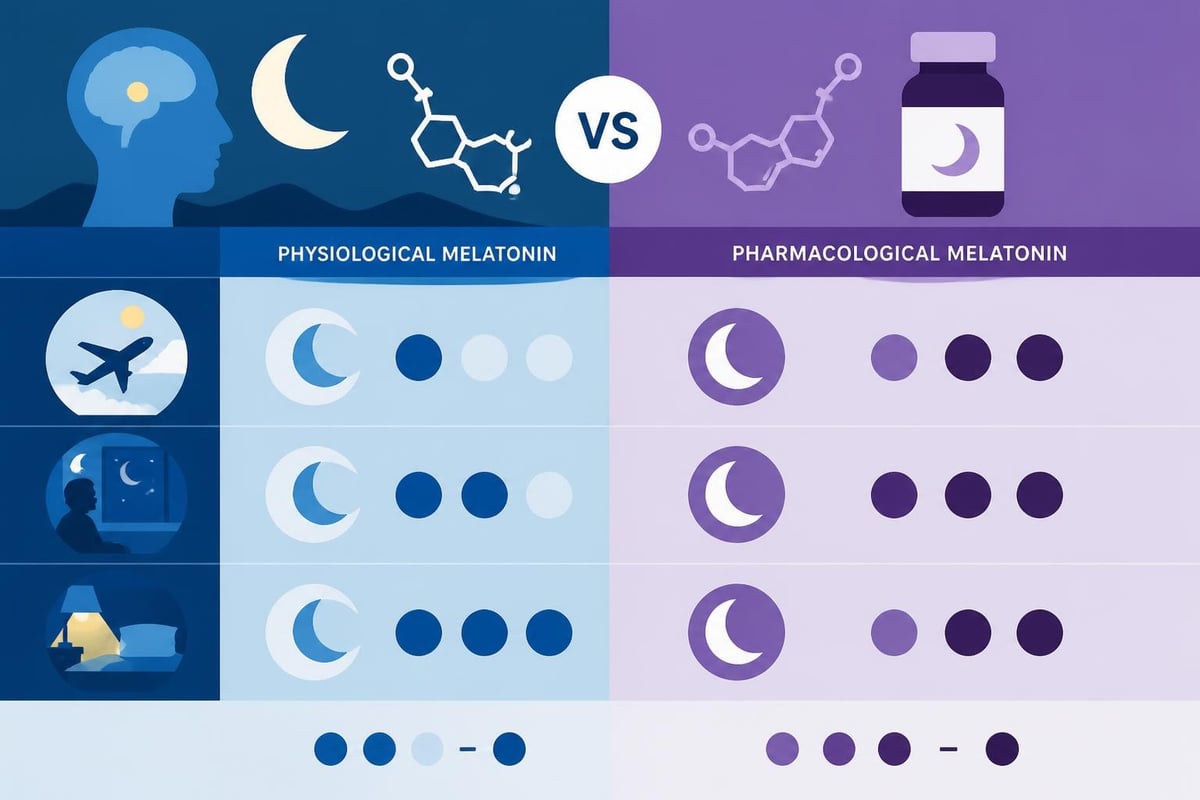
Physiological doses (0.3 to 1 mg) mimic the amount your body naturally produces. These lower melatonin mg options work by gently nudging your circadian system without overwhelming it. Research suggests that physiological doses may be sufficient for many people dealing with mild circadian rhythm disruption or occasional sleep onset delays.
Pharmacological doses (3 to 10 mg) far exceed natural production levels. These higher melatonin mg formulations create a stronger signal that may help with more severe sleep disorders or specific medical conditions. However, more is not always better, and higher doses come with increased risk of side effects and next-day grogginess.
| Dose Category | Melatonin Mg Range | Primary Applications | Typical Users |
|---|---|---|---|
| Physiological | 0.3 - 1 mg | Jet lag, mild sleep onset delay | Adults seeking gentle support |
| Low pharmacological | 1 - 3 mg | Moderate insomnia, shift work | Most adult users |
| High pharmacological | 3 - 10 mg | Severe disorders, specific conditions | Clinical supervision recommended |
| Very high | Above 10 mg | Rare clinical scenarios | Specialized medical use only |
The National Center for Complementary and Integrative Health notes that melatonin supplements are widely available but vary significantly in quality and actual melatonin content, making dose accuracy a genuine concern.
Age-Specific Melatonin Mg Guidelines
Melatonin dosing requirements change significantly across the lifespan. What works for a teenager differs substantially from an appropriate dose for a senior adult.
Dosing for Children and Adolescents
Pediatric melatonin use has increased dramatically in recent years, yet evidence-based dosing guidelines remain limited. The International Pediatric Sleep Association's expert consensus recommends starting with the lowest possible dose.
For typically developing children:
- Ages 3-5: Start at 0.5 to 1 mg, given 30-60 minutes before bedtime
- Ages 6-12: Begin with 1 to 3 mg
- Adolescents: Initial doses of 1 to 3 mg, with potential titration to 5 mg if needed
Research published in systematic reviews examining melatonin's safety profile in children suggests that while short-term use appears relatively safe, long-term effects remain understudied. Parents should view melatonin as a tool to reset sleep schedules rather than a nightly necessity, ideally combined with behavioral interventions.
Adult Dosing Strategies
For adults aged 18 to 64, the optimal melatonin mg depends heavily on the specific sleep issue being addressed.
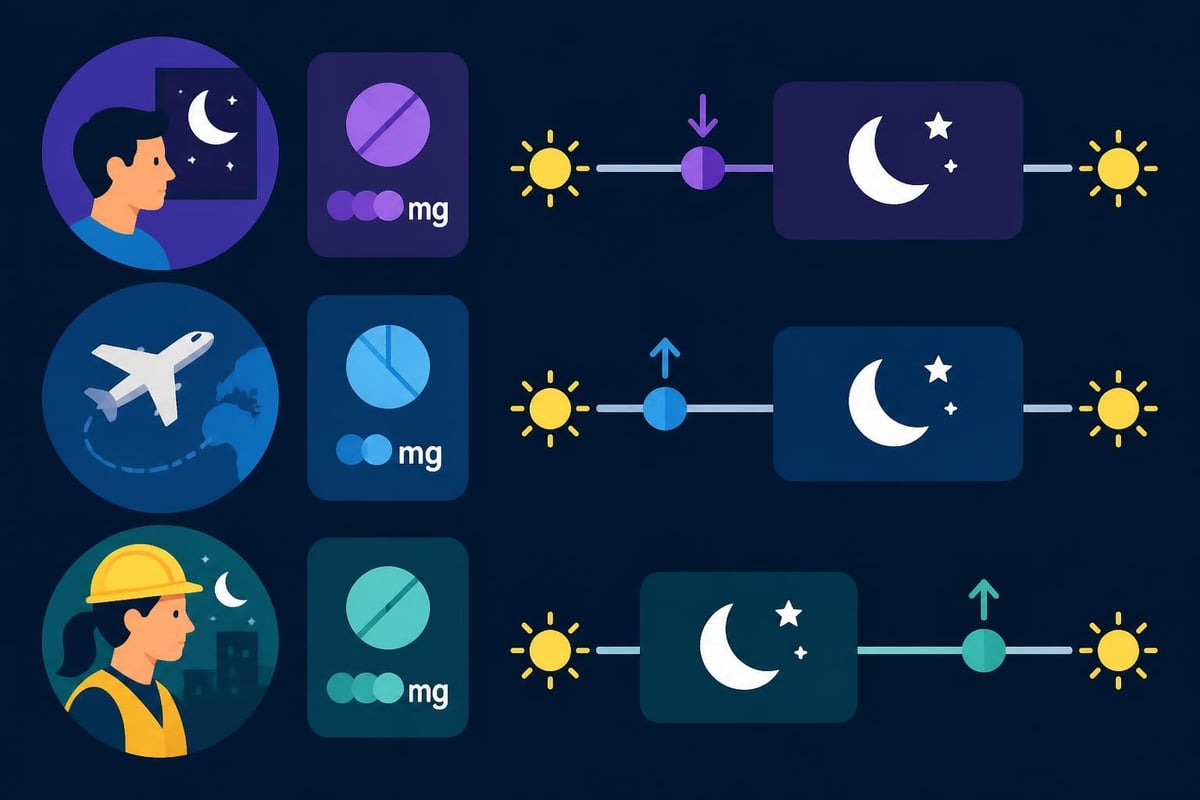
For jet lag prevention: 0.5 to 5 mg taken at the target bedtime in the new time zone, starting on the day of travel and continuing for 2-5 days. Lower doses (0.5 to 1 mg) often prove just as effective as higher doses for this application.
For delayed sleep phase disorder: 0.5 to 5 mg taken 2-3 hours before the desired bedtime, gradually shifting earlier over several weeks. The timing matters more than the melatonin mg in this scenario.
For general insomnia: The American Academy of Sleep Medicine guidelines note weak evidence for melatonin's efficacy in chronic insomnia, but when used, doses of 2 to 5 mg taken 30-60 minutes before bed are typical.
Older Adults and Melatonin
Natural melatonin production declines with age, which has led some researchers to theorize that supplementation might be particularly beneficial for seniors. Older adults often respond well to lower doses due to changes in metabolism and drug clearance.
Recommended approaches for adults over 65:
- Start with 0.3 to 1 mg to minimize next-day sedation
- Consider extended-release formulations approved in some countries
- Monitor for interactions with blood pressure medications and anticoagulants
The European Medicines Agency has approved a 2 mg prolonged-release melatonin formulation specifically for adults 55 and older with primary insomnia, reflecting recognition of age-specific needs.
Matching Melatonin Mg to Sleep Disorders
Different sleep conditions respond to different dosing strategies. Understanding your specific sleep challenge helps determine the appropriate melatonin mg and timing.
Circadian Rhythm Disorders
These conditions involve a mismatch between your internal clock and your desired or required sleep schedule.
Delayed Sleep-Wake Phase Disorder: Characterized by chronic inability to fall asleep at conventional times, this condition often responds to 0.5 to 3 mg of melatonin taken several hours before the current sleep onset time. The key is gradually advancing the timing, not simply increasing the dose.
Advanced Sleep-Wake Phase Disorder: Less common and involving very early sleep onset, this may respond to small morning doses or light therapy rather than bedtime melatonin.
Non-24-Hour Sleep-Wake Disorder: Primarily affecting blind individuals, this condition may require 0.5 to 10 mg taken at a consistent time each day to entrain the circadian rhythm.
Sleep Onset Insomnia vs. Sleep Maintenance Issues
Melatonin primarily helps with falling asleep rather than staying asleep. If your challenge is sleep onset, standard immediate-release melatonin at 1 to 3 mg may help. For middle-of-the-night awakenings or early morning awakening, melatonin typically offers limited benefit, and other approaches deserve consideration.
DoseRank's methodology evaluates supplements like melatonin across multiple dimensions, including dose fit for specific outcomes such as improved sleep quality, helping you identify whether melatonin's dosing profile aligns with your particular sleep challenges.
Safety Considerations Across Dosage Ranges
While melatonin enjoys a generally favorable safety profile, dose-dependent effects and individual variability mean that higher melatonin mg formulations carry increased risk considerations.
Common Side Effects by Dose
At low doses (0.3 to 1 mg):
- Minimal side effects reported
- Rare instances of vivid dreams
- Occasional next-day drowsiness in sensitive individuals
At moderate doses (1 to 5 mg):
- Headache (affecting 5-10% of users)
- Dizziness
- Daytime sleepiness
- Mood changes
At high doses (above 5 mg):
- Increased risk of morning grogginess
- Potential circadian rhythm disruption if timing is incorrect
- Greater likelihood of headache and nausea
Drug Interactions and Contraindications
Melatonin can interact with several medication classes, with interaction risk potentially increasing at higher melatonin mg doses:
- Anticoagulants: Melatonin may enhance effects of warfarin and antiplatelet drugs
- Immunosuppressants: Potential interference with medications like cyclosporine
- Diabetes medications: May affect blood sugar levels
- Birth control pills: Can increase melatonin levels in the body
- Sedatives: Additive effects increasing drowsiness risk
The FDA's regulatory information on melatonin clarifies that it's sold as a dietary supplement in the United States rather than a drug, meaning manufacturers are not required to prove safety or efficacy before marketing, making informed dosage selection even more critical.
Special Populations
Pregnancy and breastfeeding: According to LactMed data, safety data remains limited. Most experts recommend avoiding melatonin during pregnancy unless the benefits clearly outweigh unknown risks. Small amounts pass into breast milk, though short-term use at low doses appears relatively safe.
Autoimmune conditions: Since melatonin can stimulate immune function, individuals with autoimmune diseases should consult healthcare providers before supplementing.
Seizure disorders: Some evidence suggests high-dose melatonin might lower seizure threshold in susceptible individuals.
Quality and Accuracy of Melatonin Mg Labels
A critical consideration when selecting any melatonin mg formulation is whether the bottle actually contains what the label claims.
The Supplement Accuracy Problem
Research examining melatonin supplement accuracy has revealed concerning variability. One comprehensive analysis found:
- Actual content ranged from 83% less to 478% more than labeled melatonin mg
- 26% of products contained serotonin, an unlabeled contaminant
- Lot-to-lot variability meant different bottles of the same product contained vastly different amounts
This variability makes precise dosing nearly impossible with some products. A person thinking they're taking 3 mg might actually be getting anywhere from 0.5 to 14 mg, explaining why effects can vary unpredictably.
Choosing Reliable Products
When selecting a melatonin supplement, prioritize products that:
- Carry third-party certification (USP, NSF, ConsumerLab)
- Provide batch-specific testing data
- Come from manufacturers with transparent quality practices
- List all ingredients clearly, including inactive components
Platforms like DoseRank evaluate supplements not only on evidence and dose appropriateness but also on trust factors including manufacturing quality, helping you identify products where the labeled melatonin mg accurately reflects the contents.
Time-Release vs. Immediate-Release Formulations
Beyond the melatonin mg, the formulation type significantly impacts how the dose affects your body.
| Formulation Type | Release Pattern | Best For | Typical Melatonin Mg |
|---|---|---|---|
| Immediate-release | Complete absorption in 20-60 min | Sleep onset problems | 0.3 - 5 mg |
| Extended-release | Gradual release over 4-8 hours | Sleep maintenance | 2 - 6 mg |
| Sublingual | Rapid absorption under tongue | Quick onset needs | 1 - 3 mg |
| Liquid | Fast, adjustable dosing | Children, dose titration | Variable |
Extended-release formulations attempt to mimic the body's natural melatonin curve, which rises in the evening and remains elevated through the night. Some users find these helpful for staying asleep, though evidence supporting superiority over immediate-release remains mixed.
Titration and Finding Your Optimal Dose
Rather than immediately jumping to high melatonin mg formulations, a systematic approach to finding your effective dose reduces side effects and helps identify the minimum effective amount.
Step-by-Step Titration Protocol
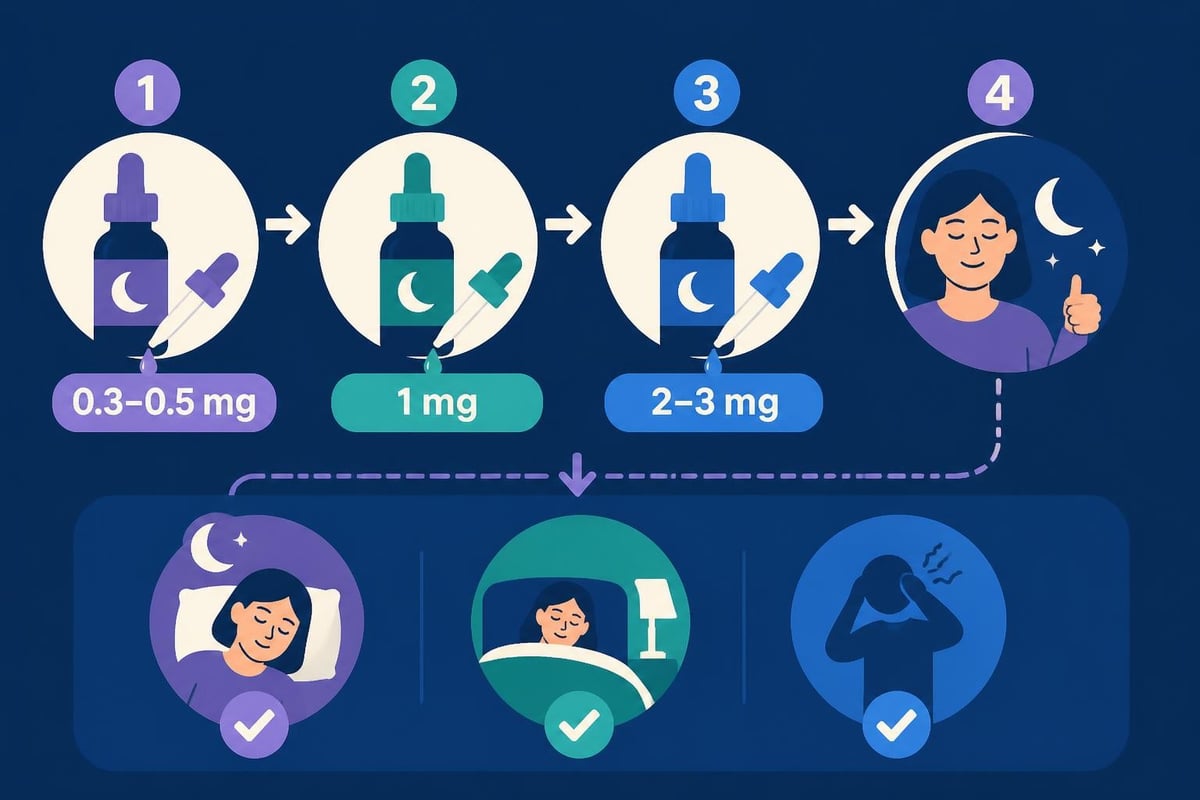
Week 1: Start low Begin with 0.3 to 0.5 mg taken 30-60 minutes before your desired bedtime. Track sleep onset time, sleep quality, and next-day effects. If no benefit appears after 3-4 nights, proceed to the next step.
Week 2: Modest increase Increase to 1 mg. Continue tracking. Many people find their effective dose in this range. If sleep improves significantly, maintain this dose. If minimal improvement occurs, continue titration.
Week 3: Moderate dose Increase to 2-3 mg. At this point, most adults will have found a beneficial dose. If no improvement appears, consider whether melatonin is addressing your actual sleep issue or whether other factors (stress, sleep hygiene, medical conditions) deserve attention.
Beyond 3 mg: Increases beyond 3 mg should ideally occur with healthcare provider guidance, particularly if you're taking other medications or have underlying health conditions.
Signs You've Found the Right Melatonin Mg
- You fall asleep within 30-60 minutes of lying down
- You wake feeling refreshed rather than groggy
- No significant side effects appear
- Sleep improvement persists across multiple nights
- The dose consistently produces the desired effect
Regulatory Status and International Differences
Melatonin's regulatory classification varies dramatically worldwide, affecting available melatonin mg options and quality standards.
United States: Classified as a dietary supplement. Available over-the-counter in doses from 0.3 mg to 10 mg or higher. No pre-market approval required, contributing to quality variability.
European Union: Generally requires a prescription, though regulations vary by country. The approved Circadin formulation provides 2 mg extended-release melatonin for adults 55 and older. Stricter quality controls apply to pharmaceutical-grade products.
Canada: Available as both a natural health product (over-the-counter) and prescription medication depending on dose and indication. Products require Natural Product Numbers (NPNs) ensuring some quality oversight.
Australia: Available only by prescription for certain conditions. Dose ranges are more restricted than in the United States.
These international differences reflect ongoing debates about whether melatonin should be treated as a hormone requiring pharmaceutical oversight or a relatively benign supplement suitable for self-administration.
Long-Term Use Considerations
Most melatonin research examines short-term use spanning days to weeks. Long-term safety data, particularly at higher melatonin mg doses, remains limited.
Potential Long-Term Effects
Theoretical concerns about chronic melatonin supplementation include:
- Tolerance development: Your body might produce less natural melatonin or become less responsive to endogenous melatonin
- Circadian disruption: Incorrect timing or dosing might paradoxically worsen sleep patterns
- Hormonal effects: Melatonin interacts with reproductive hormones, though clinical significance remains unclear
Current evidence suggests short-term use (up to several months) appears safe for most adults at typical doses. For children and adolescents, more caution applies given limited long-term safety data during critical developmental periods.
When to Cycle Off
Rather than using melatonin indefinitely, consider it a tool to reset your sleep schedule. Once you've established a consistent pattern, try:
- Gradually reducing the melatonin mg over 1-2 weeks
- Switching to every-other-night dosing
- Maintaining good sleep hygiene to preserve improvements
- Reserving melatonin for periods of disruption (travel, stress, schedule changes)
Special Applications and Conditions
Beyond typical sleep disorders, specific melatonin mg protocols have been studied for other conditions.
Seasonal Affective Disorder
Some research suggests 0.5 to 5 mg in the afternoon (not evening) may help with seasonal mood changes by adjusting circadian phase. This application requires careful timing distinct from sleep dosing.
Preoperative Anxiety
Studies have examined 3 to 10 mg given before surgery as an alternative to benzodiazepines for reducing anxiety. Results show modest benefit with fewer side effects than conventional anxiolytics.
Migraine Prevention
Daily doses of 2 to 4 mg have shown promise in reducing migraine frequency in some studies, though melatonin is not a primary migraine treatment.
Shift Work Sleep Disorder
Workers rotating shifts or working nights face unique challenges. Protocols typically involve 0.5 to 5 mg taken before the daytime sleep period, though consistency proves difficult with rotating schedules. The goal is supporting sleep during unconventional hours rather than resetting circadian rhythm completely.
Combining Melatonin with Other Sleep Strategies
Melatonin works best as part of a comprehensive sleep improvement plan rather than a standalone solution.
Sleep Hygiene Fundamentals
No melatonin mg will overcome poor sleep habits. Essential practices include:
- Consistent sleep and wake times, even on weekends
- Bedroom temperature between 60-67°F
- Complete darkness or eye mask use
- Elimination of screens 1-2 hours before bed
- Avoidance of caffeine after early afternoon
Complementary Supplements
Some people combine melatonin with other supplements, though interactions warrant consideration:
- Magnesium: May support sleep through muscle relaxation and GABA activity. Generally compatible with melatonin.
- L-theanine: Promotes relaxation without sedation. Can be combined but start with low doses of each.
- Valerian root: Another GABAergic supplement. Combining with melatonin increases sedation risk.
When exploring combinations, platforms that rank supplements based on evidence and dose fit help ensure you're choosing complementary rather than redundant or conflicting options. The DoseRank methodology considers these factors when evaluating supplement stacks.
Behavioral Therapies
Cognitive Behavioral Therapy for Insomnia (CBT-I) represents the gold-standard treatment for chronic insomnia. Using melatonin alongside CBT-I may provide short-term relief while behavioral changes take effect, then gradually phasing out supplementation as natural sleep patterns strengthen.
Melatonin Mg for Specific Demographics
Certain groups have unique considerations when selecting melatonin dosages.
Athletes and Performance
Athletes may use melatonin for recovery, jet lag from competition travel, or sleep disruption from late-evening events. Doses of 2 to 5 mg taken after travel or competition show some benefit. However, melatonin's antioxidant properties, while potentially beneficial for recovery, might theoretically blunt training adaptations if used immediately post-exercise, though research remains inconclusive.
Night Shift Workers
Approximately 15 million Americans work night shifts or rotating schedules. For these individuals:
- Take 1 to 5 mg before attempting daytime sleep
- Use blackout curtains to create a dark sleep environment
- Consider whether melatonin helps or hinders, as some shift workers report feeling groggy during subsequent work periods
Individuals with ADHD
Children and adults with ADHD often experience delayed sleep phase and benefit from 0.5 to 6 mg melatonin taken 1-2 hours before desired bedtime. This population appears particularly responsive to melatonin, though stimulant medications can complicate timing and dosing decisions.
Reading Research and Evidence Quality
When evaluating claims about any melatonin mg recommendation, understanding research quality helps separate evidence from marketing.
Study Design Hierarchy
Meta-analyses and systematic reviews: Synthesize multiple studies. Most reliable when well-conducted.
Randomized controlled trials: Gold standard for establishing efficacy and appropriate dosing.
Observational studies: Can reveal patterns but cannot prove cause and effect.
Case reports and expert opinion: Weakest evidence; useful for generating hypotheses only.
Many commercially-motivated websites cite research selectively. Look for dose-specific findings rather than general claims that "melatonin works for sleep."
Critical Questions for Any Dosing Claim
- What specific condition was studied?
- What melatonin mg was actually used?
- How does the study population match your demographics?
- Was the study funded by supplement manufacturers?
- Have findings been replicated independently?
Understanding how to evaluate supplement evidence empowers better decision-making. Resources like the DoseRank blog break down research findings and help translate scientific studies into practical guidance.
Practical Tips for Effective Use
Maximizing melatonin's benefits involves more than just selecting the right melatonin mg.
Timing matters more than you think: Take melatonin 30-60 minutes before bed for sleep onset issues. For circadian phase advancement, timing may need to be 2-3 hours earlier.
Consistency creates patterns: Use melatonin at the same time each night to reinforce circadian regularity.
Light exposure coordination: Minimize blue light exposure after taking melatonin. Bright light exposure can suppress melatonin's effects, even at higher doses.
Food interactions: Take on an empty stomach when possible. Food, particularly high-fat meals, can delay absorption.
Storage considerations: Keep melatonin in a cool, dark place. Heat and light degrade melatonin, potentially reducing the effective melatonin mg below labeled amounts.
Track your response: Maintain a simple sleep log noting dose, timing, sleep onset, and next-day effects to identify your optimal protocol.
Selecting the appropriate melatonin mg requires balancing research evidence, individual factors, and practical considerations rather than simply defaulting to the highest dose available. Starting low, titrating carefully, and paying attention to formulation quality and timing typically yields better results than aggressive dosing approaches. DoseRank helps cut through supplement confusion by ranking products based on evidence, dose appropriateness, and trust factors, guiding you toward melatonin options that match your specific needs and goals.