
DOSERANK guide
Melatonin Dosage: Evidence-Based Recommendations
Published

Understanding the right melatonin dosage can make the difference between restful sleep and wasted money. Despite melatonin's popularity as an over-the-counter sleep aid, most people take far more than they need, and many don't know when to take it for maximum effectiveness. This guide examines the evidence behind melatonin supplementation, explores recommended doses for different age groups and sleep concerns, and explains how timing and formulation influence outcomes. Whether you're addressing jet lag, shift work, or general sleep difficulty, getting the dose right matters more than most people realize.
Understanding Melatonin's Role in Sleep Regulation
Melatonin is a hormone your pineal gland produces in response to darkness, signaling to your body that it's time to prepare for sleep. Natural melatonin levels rise about two hours before your usual bedtime, peak during the night, and drop as morning approaches. Supplemental melatonin doesn't work like a sleeping pill that forces unconsciousness. Instead, it provides a signal that helps synchronize your circadian rhythm and may modestly advance sleep onset.
The dose, timing, and pharmacokinetic properties of melatonin influence how effectively it works. Unlike many supplements where higher doses generally produce stronger effects, melatonin operates differently. Blood levels of melatonin after oral supplementation can reach 10 to 100 times higher than natural nighttime levels, even with modest doses. This creates a bell-shaped dose-response curve where too little may be ineffective, but excessive amounts don't necessarily work better and may cause next-day grogginess.
How Dose Affects Circadian Timing vs. Sleep Onset
Melatonin dosage influences two distinct mechanisms: circadian phase shifting and direct sleep promotion. Phase shifting refers to melatonin's ability to adjust your internal clock forward or backward. This effect is most pronounced at very low doses (0.3 to 0.5 mg) taken at strategic times relative to your natural rhythm.
The direct sedative effect, which helps you fall asleep faster on a given night, typically requires slightly higher doses but still remains modest by most standards. Research suggests that doses between 1 and 3 mg effectively reduce sleep onset latency for many adults without significantly increasing side effects.
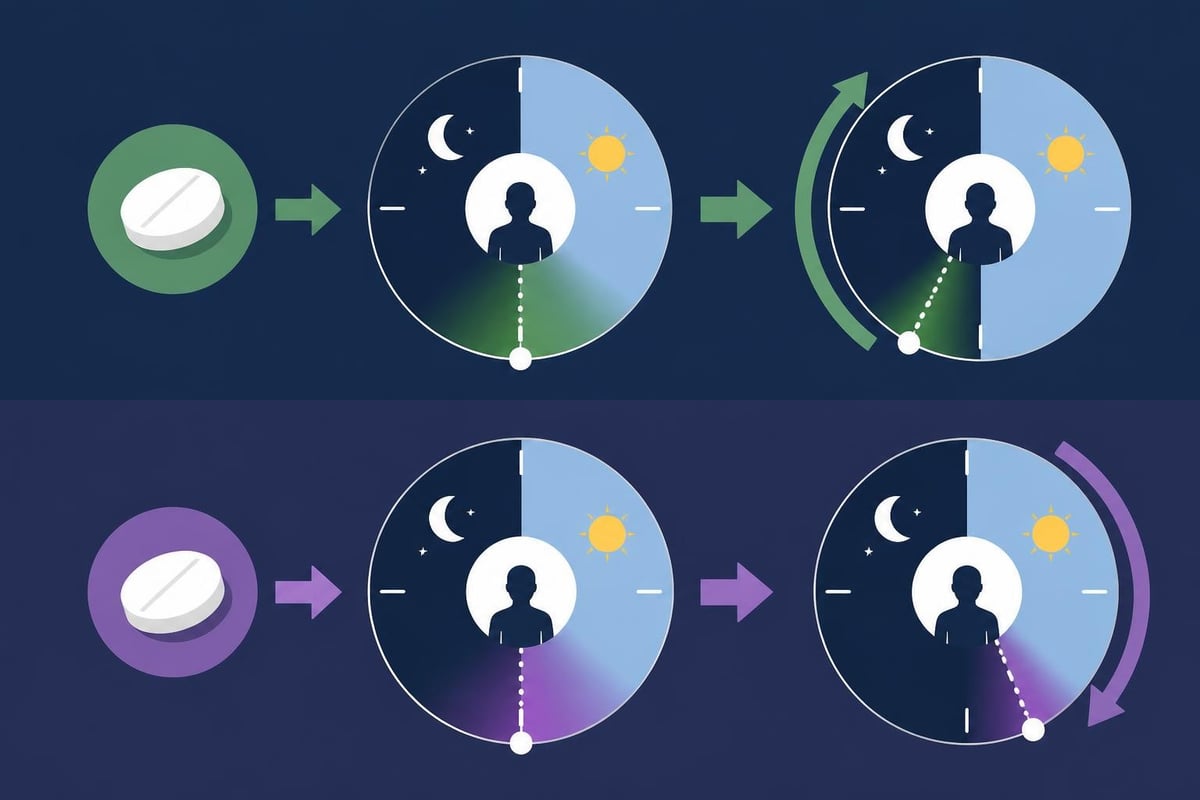
Higher doses (5 to 10 mg) don't proportionally improve sleep outcomes compared to moderate doses. In fact, excessively high melatonin dosage may disrupt sleep architecture, cause vivid dreams, or lead to tolerance over time. For improving sleep quality, starting with the minimum effective dose makes physiological and practical sense.
Evidence-Based Melatonin Dosage for Adults
Adult melatonin dosage recommendations vary based on the specific sleep challenge being addressed. For general sleep onset difficulty, clinical evidence supports starting with 0.5 to 1 mg taken 30 to 60 minutes before bedtime. If this proves insufficient after several nights, gradual increases to 2 or 3 mg may provide additional benefit.
| Sleep Concern | Recommended Dosage | Optimal Timing | Duration |
|---|---|---|---|
| Jet lag | 0.5-5 mg | At target bedtime | 2-5 days |
| Delayed sleep phase | 0.5-3 mg | 2-3 hours before desired sleep time | Several weeks |
| Shift work disorder | 1-3 mg | Before daytime sleep period | As needed |
| General insomnia | 1-3 mg | 30-60 minutes before bed | Short-term use |
The American Academy of Sleep Medicine clinical practice guideline notes that evidence for melatonin in treating chronic insomnia remains limited compared to other interventions. The guideline suggests melatonin may be appropriate for specific circadian rhythm disorders but not as a first-line treatment for general chronic insomnia in adults.
Timing Matters More Than You Think
When you take melatonin influences effectiveness as much as how much you take. For advancing your sleep schedule (going to bed earlier), take melatonin 2 to 3 hours before your desired bedtime. For jet lag traveling eastward, take it at the destination bedtime for several days. Westward travel typically requires less intervention, but if needed, take melatonin at the new local bedtime.
Taking melatonin too early can shift your rhythm in unintended ways. Taking it too late may result in next-morning grogginess as the supplement's effects extend into your wake time. Consistency matters: taking melatonin at the same time each evening helps entrain your circadian system more effectively than sporadic use.
Pediatric Melatonin Dosage Considerations
Children metabolize melatonin differently than adults, and their developing circadian systems may respond more sensitively to supplementation. According to guidance from the American Academy of Pediatrics, melatonin should not be the first intervention for childhood sleep problems. Behavioral approaches, consistent sleep schedules, and proper sleep hygiene deserve priority.
When melatonin is appropriate for children, starting doses should be considerably lower than adult doses:
- Ages 3-5 years: 0.5 to 1 mg
- Ages 6-12 years: 1 to 2 mg
- Adolescents: 1 to 3 mg
These ranges represent starting points. NHS Scotland's pediatric guideline recommends careful titration under medical supervision, beginning with the lowest dose and increasing gradually only if insufficient response occurs after one to two weeks. Maximum doses for children rarely need to exceed 6 mg, and most respond adequately to 2 to 3 mg.
Special Populations Requiring Medical Supervision
Children with neurodevelopmental conditions such as autism spectrum disorder or ADHD often experience significant sleep disturbances. These populations may benefit from melatonin, but dosing should occur under healthcare provider guidance. The same applies to children taking medications that affect melatonin metabolism or circadian function.
Pregnant or breastfeeding individuals should avoid melatonin supplementation unless specifically recommended by their healthcare provider, as safety data remains limited. People with autoimmune conditions, seizure disorders, or those taking immunosuppressants or blood thinners should consult medical professionals before starting melatonin, regardless of the intended dose.

Formulation Types and Absorption Differences
Melatonin dosage effectiveness depends partly on formulation type. Immediate-release preparations deliver melatonin quickly, producing peak blood levels within 30 to 60 minutes. These work well for sleep onset problems but may not maintain levels throughout the night.
Extended-release or sustained-release formulations release melatonin gradually over several hours, mimicking natural overnight melatonin secretion patterns more closely. These may benefit people who fall asleep easily but wake frequently during the night. However, they also carry higher risk of morning grogginess if release extends too far into the wake period.
Sublingual tablets and liquid forms may produce faster absorption than standard oral tablets, potentially working within 15 to 20 minutes. This faster onset can be advantageous when taking melatonin closer to bedtime, though the total dose absorbed remains similar to oral tablets of equivalent strength.
Bioavailability and Individual Variation
Oral melatonin bioavailability varies dramatically between individuals, ranging from 10% to 56% in different studies. First-pass metabolism in the liver breaks down much of the ingested melatonin before it reaches circulation. This variation explains why two people taking identical melatonin dosage amounts may experience different effects.
Factors influencing bioavailability include:
- Age: Older adults may metabolize melatonin more slowly
- Body composition: Higher body fat may alter distribution
- Liver function: Reduced metabolism in liver disease
- Medication interactions: Fluvoxamine and other CYP1A2 inhibitors dramatically increase melatonin levels
- Food intake: Taking melatonin with food may slow absorption
Because of this variability, individualized dose-finding makes more sense than rigidly following population averages. Starting low and adjusting based on response produces better outcomes than immediately jumping to higher doses.
Safety Profile and Side Effects Across Doses
Melatonin demonstrates a favorable safety profile at recommended doses, with side effects generally mild and transient. The most common adverse effects include:
- Daytime drowsiness or grogginess (especially with evening doses above 3 mg)
- Headache
- Dizziness
- Nausea
- Vivid dreams or nightmares
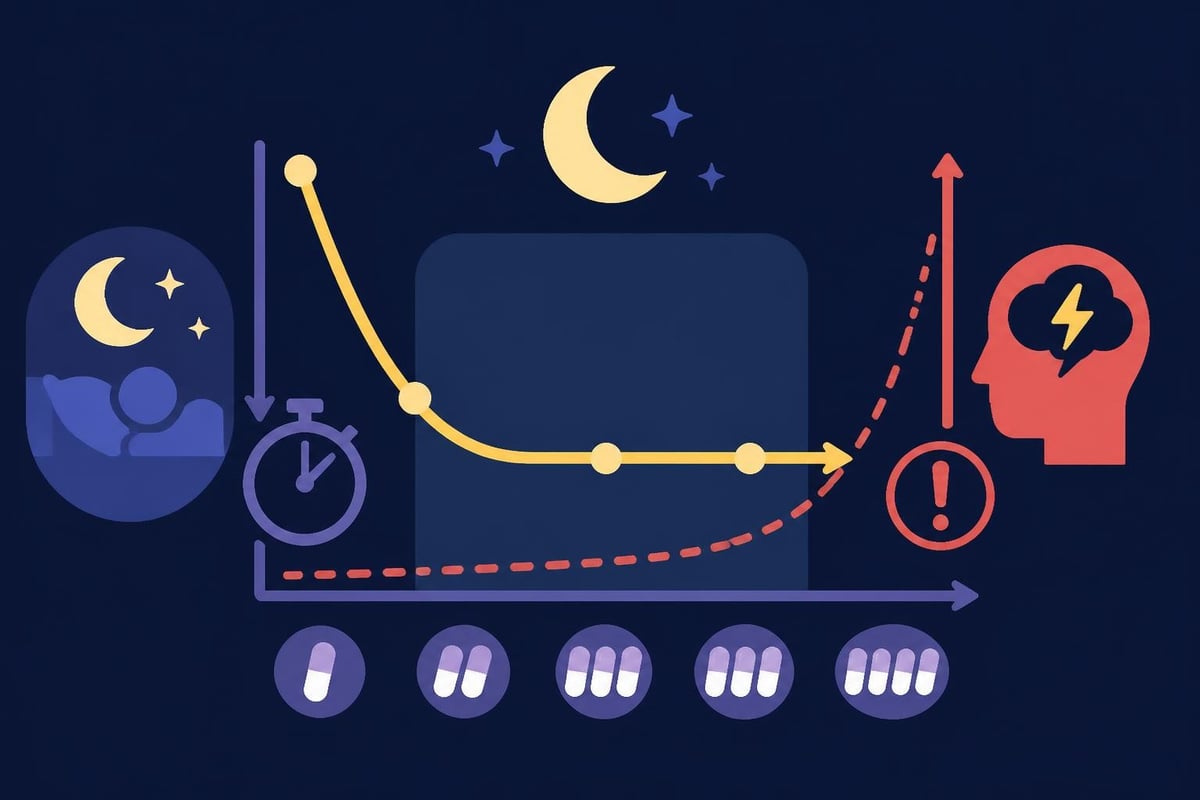
These effects appear more frequently at higher doses, though individual sensitivity varies. Taking excessively high melatonin dosage (above 5 mg for most adults) increases the likelihood of next-day impairment without proportional sleep benefits.
| Dose Range | Common Effects | Risk Level |
|---|---|---|
| 0.3-1 mg | Minimal side effects, effective circadian signaling | Very low |
| 1-3 mg | Mild drowsiness possible, good sleep onset effect | Low |
| 3-5 mg | Increased drowsiness, vivid dreams more common | Moderate |
| 5-10 mg | Morning grogginess likely, diminishing returns | Higher |
Long-term safety data for continuous melatonin use remains limited. Most clinical trials run for several weeks to a few months. While short-term use appears safe for most people, chronic nightly supplementation for years has not been extensively studied. If you find yourself needing melatonin every single night for extended periods, exploring underlying causes of sleep difficulty with DoseRank's evidence-based approach or a healthcare provider makes sense.
Drug Interactions and Contraindications
Melatonin can interact with several medication classes. Blood thinners like warfarin may have enhanced effects when combined with melatonin. Diabetes medications require monitoring as melatonin may affect blood sugar regulation. Immunosuppressants may be antagonized by melatonin's immune-modulating properties.
Combining melatonin with other sedating substances-including alcohol, benzodiazepines, or antihistamines-increases drowsiness and impairment risk. This applies regardless of melatonin dosage but becomes more pronounced at higher amounts.
Optimizing Melatonin Supplementation Beyond Dosage
Getting the melatonin dosage right represents just one piece of effective supplementation. Several complementary strategies enhance melatonin's effectiveness:
Light exposure timing profoundly influences both natural melatonin production and supplemental effectiveness. Bright light exposure in the morning helps anchor your circadian rhythm and improves nighttime melatonin responsiveness. Conversely, reducing bright light exposure in the evening (particularly blue wavelengths from screens) prevents suppression of natural melatonin.
Consistency in sleep-wake timing amplifies melatonin's circadian benefits. Irregular schedules disrupt the body's ability to anticipate and prepare for sleep, making supplemental melatonin less effective regardless of dose.
Sleep environment optimization should accompany any sleep supplement. Cool room temperature (65-68°F), complete darkness, and noise reduction all support melatonin's sleep-promoting effects. Even perfect melatonin dosage can't overcome a poorly optimized sleep environment.
If you've tried various doses and timing adjustments without success, the issue may extend beyond circadian misalignment. Sleep difficulties often involve multiple factors including stress resilience, nutrient status, or underlying health conditions. Platforms like DoseRank evaluate supplements across multiple dimensions-including proper dosing-to identify options that match your specific situation.
Quality and Purity Concerns in Melatonin Products
A 2017 analysis of commercial melatonin supplements found that actual melatonin content varied from 83% below to 478% above labeled amounts. Some products contained unlabeled serotonin, a controlled substance with significant pharmacological effects. This variability means the melatonin dosage you think you're taking may differ substantially from what you're actually consuming.
Third-party testing provides some assurance. Look for products certified by:
- USP (United States Pharmacopeia)
- NSF International
- ConsumerLab.com
- Informed Choice/Informed Sport
These organizations verify that products contain labeled ingredients at stated amounts and test for contaminants. When comparing options, DoseRank's trust scoring considers third-party testing alongside other quality indicators to identify reliable products.
Synthetic vs. Natural Sources
Nearly all commercial melatonin supplements use synthetic production methods, creating melatonin identical to the hormone your body produces. "Natural" melatonin derived from animal pineal glands poses contamination risks and offers no absorption or effectiveness advantages.
Synthetic melatonin's molecular structure matches endogenous melatonin precisely, making the "natural vs. synthetic" distinction meaningless from a pharmacological standpoint. Focus instead on verified purity and accurate dosage labeling when selecting products.
Finding Your Optimal Dose Through Systematic Testing
Individual melatonin dosage needs vary enough that systematic personal testing often works better than following generic recommendations. Start with 0.5 mg for three to five nights, taking it at the same time each evening (60 minutes before desired sleep time). Track sleep onset time, number of night wakings, morning alertness, and any side effects.
If results seem insufficient after this trial period, increase to 1 mg for another three to five nights. Continue this gradual increase (1 mg → 2 mg → 3 mg) until you achieve satisfactory results or reach 3 mg. Most people find their effective dose somewhere in this range. Moving beyond 3 mg typically provides diminishing returns unless you have specific medical conditions warranting higher amounts under professional supervision.
Monitoring and Adjustment Strategies
Keep a simple sleep log during your dose-finding period:
- Time melatonin taken
- Time attempted to sleep
- Estimated sleep onset time
- Number of awakenings
- Wake time
- Morning alertness rating (1-10)
- Side effects noted
This data reveals patterns that subjective assessment alone might miss. If you experience persistent morning grogginess, your dose may be too high or taken too late. If sleep onset shows no improvement after two weeks at 3 mg, melatonin may not address your specific sleep challenge, and exploring other health outcomes or consulting a sleep specialist makes sense.
When Melatonin Dosage Adjustments Won't Solve the Problem
Melatonin works best for circadian rhythm disorders, jet lag, and mild sleep onset delays. It shows limited effectiveness for sleep maintenance insomnia (frequent waking after initially falling asleep) and generally doesn't address the root causes of chronic sleep difficulty.
If you've optimized melatonin dosage, timing, and formulation without meaningful improvement, consider whether other factors deserve attention:
- Sleep apnea or other breathing disorders
- Restless legs syndrome or periodic limb movements
- Chronic pain affecting sleep continuity
- Anxiety or depression disrupting sleep
- Medication side effects causing insomnia
- Nutrient deficiencies affecting sleep regulation
A comprehensive approach examines these possibilities rather than endlessly adjusting melatonin dosage. Taking the 60-second quiz can help identify whether supplements beyond melatonin might support your specific health goals more effectively.
Finding the right melatonin dosage involves understanding your specific sleep challenge, starting with conservative amounts (0.5-1 mg for most adults), and adjusting systematically based on response. Higher doses rarely work better than moderate ones, and timing matters as much as amount. When you need evidence-based guidance on melatonin or any supplement-complete with proper dosing, quality verification, and personalized recommendations-DoseRank ranks options across evidence, dose fit, trust, value, and availability to match supplements with your unique goals.