
DOSERANK guide
Melatonin Capsules: Evidence-Based Guide for 2026
Published
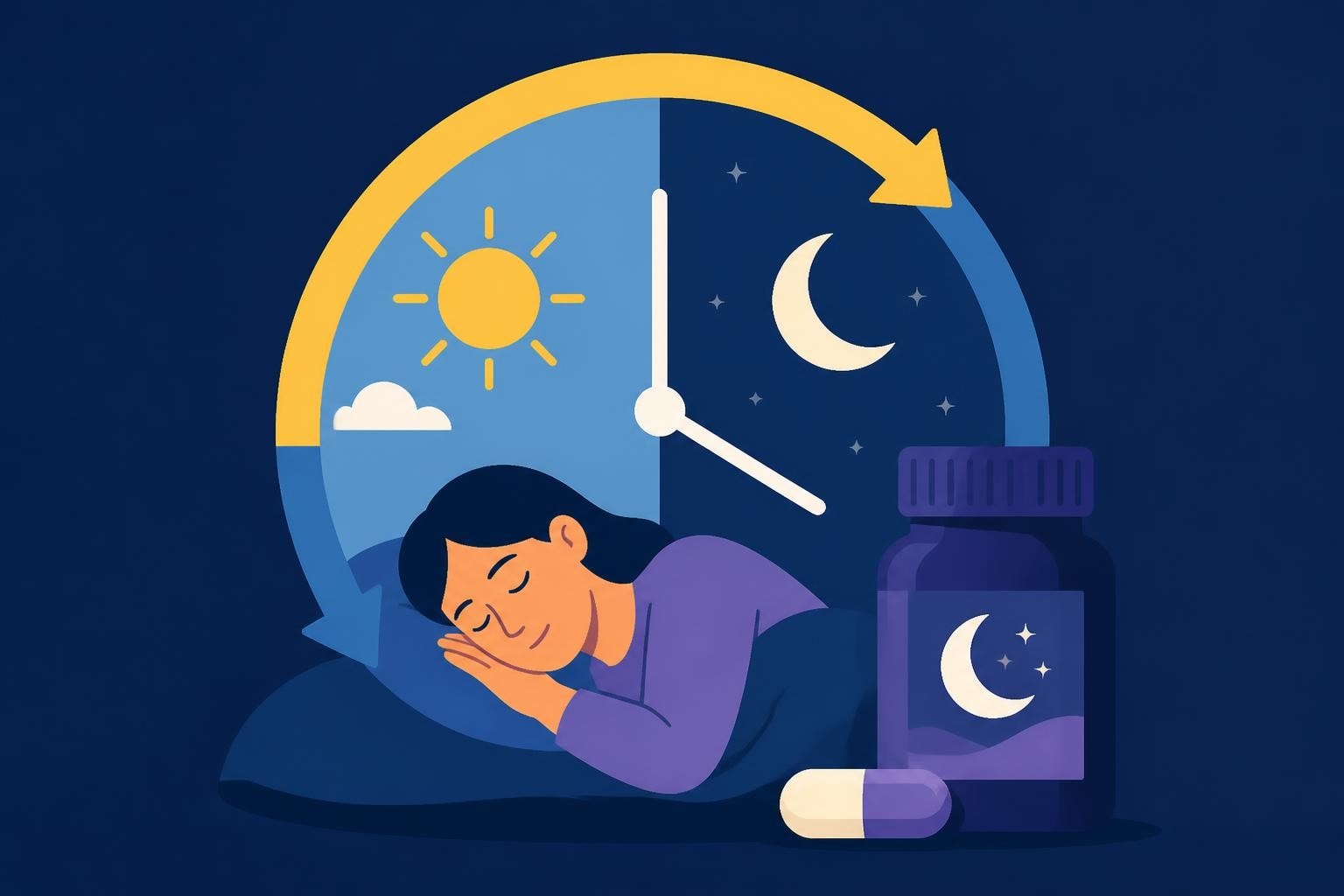
Melatonin capsules have become one of the most widely used sleep supplements in the United States, with millions of adults turning to this hormone-based intervention to address circadian rhythm disruptions, jet lag, and sleep onset difficulties. As a naturally occurring hormone produced by the pineal gland, melatonin signals the body that nighttime has arrived, helping regulate the sleep-wake cycle. However, the supplement market offers hundreds of formulations with varying doses, release mechanisms, and quality standards. Understanding how to evaluate and select melatonin capsules requires examining the evidence behind optimal dosing, timing protocols, regulatory landscape, and quality metrics that distinguish effective products from inconsistent formulations.
Understanding Melatonin as a Supplement
Melatonin functions as a chronobiotic agent rather than a traditional sedative, meaning it helps synchronize internal biological clocks with external light-dark cycles. The endogenous production of melatonin typically begins rising about two hours before habitual bedtime, reaches peak levels in the middle of the night, and declines toward morning. Supplemental melatonin capsules aim to either augment this natural rise or shift its timing to address specific circadian challenges.
The National Center for Complementary and Integrative Health provides comprehensive guidance on melatonin's uses and limitations, noting that while short-term use appears safe for most adults, long-term safety data remain limited. Research has established melatonin's effectiveness for several conditions, but the dose-response relationship proves more complex than initially assumed.
Regulatory Status and Market Reality
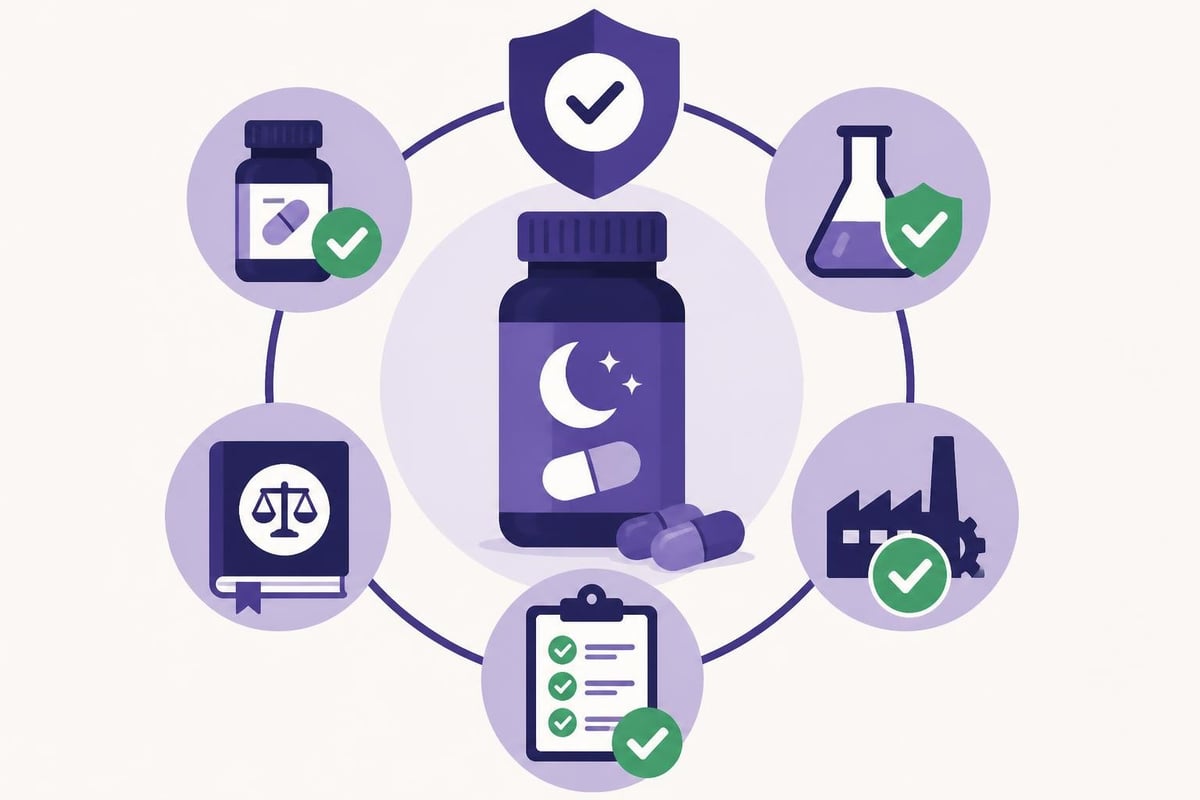
In the United States, melatonin capsules fall under the category of dietary supplements rather than prescription medications, meaning they are regulated under the Dietary Supplement Health and Education Act (DSHEA) of 1994. This regulatory framework places the burden of ensuring safety and quality on manufacturers, with the FDA conducting oversight primarily through post-market surveillance. The FDA's post-market database documents adverse event reports and regulatory actions related to melatonin products.
Key regulatory implications include:
- No pre-market approval required for new formulations
- Manufacturers responsible for substantiating label claims
- Quality control standards voluntary unless explicitly mandated
- Post-market testing reveals significant label inaccuracy issues
This regulatory environment creates substantial variability in product quality. Independent testing by organizations such as ConsumerLab has revealed that actual melatonin content can range from 83% below to 478% above labeled amounts in some products, with contamination and undeclared ingredients appearing in certain batches.
Dosing Strategies and Clinical Evidence
The optimal dose of melatonin capsules depends heavily on the intended application, individual physiology, and timing relative to desired sleep onset. A 2024 systematic review and meta-analysis examined dose-response relationships across multiple clinical trials, revealing several important patterns that challenge conventional wisdom about melatonin supplementation.
Evidence-Based Dosing Guidelines
Contrary to popular belief that higher doses produce better results, research suggests that lower doses often prove equally or more effective for many applications. The physiological concentration of melatonin in the bloodstream during natural nighttime peaks ranges from 10 to 80 picograms per milliliter, whereas even a 0.3 mg supplement can raise blood levels ten to one hundred times higher than endogenous production.
| Application | Effective Dose Range | Optimal Timing | Evidence Quality |
|---|---|---|---|
| Sleep onset delay | 0.3-5 mg | 1-2 hours before bed | High |
| Jet lag (eastward) | 0.5-5 mg | Target bedtime at destination | High |
| Shift work adjustment | 2-3 mg | Before daytime sleep | Moderate |
| Delayed sleep phase | 0.5-3 mg | 2-4 hours before current sleep time | Moderate |
| Chronic insomnia | 2 mg prolonged-release | 1-2 hours before bed | Moderate |
The American Academy of Sleep Medicine guidelines note that while melatonin may help with sleep onset latency in certain contexts, it should not be considered a first-line treatment for chronic insomnia disorder in adults. The evidence supports more specific applications where circadian misalignment drives sleep difficulties.
Timing Protocols for Different Goals
For sleep quality improvement, melatonin capsules work best when taken at consistent times that align with the desired sleep schedule. If you're looking to improve sleep quality through evidence-based supplementation, understanding both timing and dose becomes essential. Taking melatonin too early can cause unwanted drowsiness during evening activities, while taking it too late may miss the critical window for circadian phase shifting.
For jet lag prevention, the Cochrane review on melatonin concludes that melatonin capsules taken close to target bedtime at the destination can significantly reduce jet lag symptoms, particularly for travelers crossing five or more time zones eastward. The protocol involves starting melatonin on arrival (or one day before) and continuing for several days until adjusted to the new time zone.
Quality Standards and Product Selection
The wide variance in melatonin capsule quality makes informed product selection critical. Several objective criteria can help identify formulations more likely to contain accurate doses and meet purity standards.
Third-Party Testing and Certifications
Reputable manufacturers submit their melatonin capsules for verification by independent testing organizations. The United States Pharmacopeia maintains detailed monographs establishing identity, strength, quality, and purity standards for melatonin. Products bearing USP verification have undergone testing to confirm they contain the declared amount of melatonin, will dissolve properly, and are free from harmful contaminants.
Meaningful quality indicators include:
- USP Verified or NSF Certified marks confirming third-party testing
- GMP certification indicating good manufacturing practices compliance
- Batch testing with certificates of analysis available on request
- Pharmacopeial-grade ingredients meeting compendial standards
- Clear lot numbers and expiration dates enabling traceability
Products without these quality markers face higher risk of label inaccuracy, contamination with undeclared ingredients, or degradation due to improper storage conditions. When evaluating supplements across multiple quality dimensions, platforms like DoseRank systematically rank products based on evidence, dose appropriateness, trust factors, value, and availability.

Release Mechanisms and Formulation Types
Melatonin capsules come in several formulation types designed to release the active ingredient at different rates. Understanding these mechanisms helps match products to specific needs.
Immediate-Release Versus Prolonged-Release
Immediate-release melatonin capsules dissolve quickly after ingestion, raising blood melatonin levels within 30 to 60 minutes. This formulation suits individuals who need help initiating sleep or shifting circadian phase. The relatively short half-life of melatonin (approximately 40 to 60 minutes) means that immediate-release formulations typically clear from the system within four to six hours.
Prolonged-release formulations use specialized coating or matrix systems to slow melatonin absorption over several hours, more closely mimicking the body's natural nighttime melatonin curve. The European Medicines Agency assessment of prolonged-release melatonin products notes that this formulation may better support sleep maintenance in certain populations, particularly adults over 55 years old.
| Formulation Type | Peak Blood Level | Duration | Best Application |
|---|---|---|---|
| Immediate-release | 30-90 minutes | 4-6 hours | Sleep onset, jet lag, phase shifting |
| Prolonged-release | 1-3 hours | 8-10 hours | Sleep maintenance, middle-of-night awakening |
| Biphasic | 30 min + 3-4 hours | 6-8 hours | Combined onset and maintenance needs |
| Sublingual | 15-30 minutes | 3-5 hours | Rapid onset requirements |
Some manufacturers offer biphasic formulations combining immediate and prolonged-release components within a single melatonin capsule, aiming to address both sleep onset and maintenance challenges simultaneously.
Safety Considerations and Drug Interactions
While melatonin capsules generally demonstrate favorable safety profiles in short-term use, several considerations merit attention for specific populations and medication regimens.
Populations Requiring Special Caution
Children and adolescents represent a growing demographic of melatonin users, yet long-term safety data in this age group remain limited. The hormone's potential effects on reproductive development during puberty have not been thoroughly studied in humans. Pregnant and breastfeeding women should avoid melatonin capsules unless specifically recommended by healthcare providers, as melatonin crosses the placenta and appears in breast milk.
Individuals with autoimmune conditions should exercise caution, as melatonin can stimulate immune function and potentially exacerbate certain autoimmune processes. Those with epilepsy may experience altered seizure thresholds, and people with depression should monitor for worsening symptoms, as melatonin can affect mood regulation pathways.
Medication Interactions
Melatonin capsules can interact with several medication classes through various mechanisms:
- Anticoagulants and antiplatelet drugs may have enhanced effects when combined with melatonin
- Central nervous system depressants including benzodiazepines and alcohol can produce additive sedation
- Immunosuppressants may have reduced efficacy due to melatonin's immune-stimulating properties
- Diabetes medications require monitoring, as melatonin can affect glucose regulation
- Contraceptives may increase melatonin blood levels by reducing its metabolism
Healthcare providers should review medication lists before individuals begin regular melatonin supplementation. The DoseRank methodology for evaluating supplements includes assessment of potential interaction risks alongside efficacy and quality metrics.
Efficacy Beyond Sleep: Emerging Applications
While sleep-related applications dominate melatonin research, emerging evidence suggests potential benefits for other health outcomes. These applications remain investigational and should not replace established medical treatments.
Circadian Rhythm Disorders
Melatonin capsules have shown promise for individuals with delayed sleep phase disorder, non-24-hour sleep-wake disorder (particularly in blind individuals), and irregular sleep-wake rhythm disorder. These conditions involve fundamental disruptions to circadian timing rather than simple insomnia, making melatonin's chronobiotic properties particularly relevant.
Research indicates that properly timed melatonin administration can help advance or delay circadian phase by 30 to 120 minutes, depending on the dose and timing relative to the body's natural rhythm. This phase-shifting capability makes melatonin useful for gradually adjusting sleep schedules in shift workers or travelers preparing for significant time zone changes.
Antioxidant and Neuroprotective Properties
Melatonin demonstrates potent antioxidant activity, directly scavenging free radicals and upregulating antioxidant enzymes. Some research explores melatonin's potential neuroprotective effects in conditions involving oxidative stress, though these applications remain experimental. The hormone's ability to cross the blood-brain barrier and concentrate in mitochondria makes it theoretically attractive for neurological research.
Current areas of investigation include:
- Age-related cognitive decline and neurodegeneration
- Traumatic brain injury recovery
- Migraine prophylaxis
- Seasonal affective disorder
- Antioxidant support during metabolic stress
These applications require substantially more research before clinical recommendations can be established. Consumers should view such potential benefits as preliminary rather than proven indications for melatonin capsules.

Making Informed Product Choices
Given the quality variability in the melatonin supplement market, consumers benefit from systematic evaluation frameworks that go beyond marketing claims. Several practical steps can improve selection outcomes.
Reading Labels Effectively
Supplement facts panels on melatonin capsules should clearly state the amount per serving, typically ranging from 0.3 mg to 10 mg per capsule. Labels listing melatonin content in micrograms (μg) rather than milligrams (mg) may indicate lower doses, with 1 mg equaling 1,000 μg. Check whether the stated dose refers to a single capsule or multiple capsules per serving.
Ingredient lists reveal additional components that may affect tolerability or suitability. Common excipients include cellulose-based fillers, magnesium stearate as a flow agent, and silicon dioxide as an anti-caking compound. Some formulations add complementary ingredients such as L-theanine, magnesium, or chamomile extract, though evidence for synergistic effects remains limited.
Evaluating Brand Transparency
Manufacturers committed to quality typically provide detailed product information beyond minimum regulatory requirements. Transparent brands offer:
- Complete ingredient sourcing information
- Third-party testing results or certificates of analysis
- Clear contact information for consumer questions
- Detailed manufacturing and storage recommendations
- Evidence citations supporting dose selection
Brands that provide minimal information or make exaggerated efficacy claims without evidence citations deserve skepticism. When facing the overwhelming array of supplement options, taking a 60-second quiz can help narrow choices based on individual needs and priorities.
Cost-Effectiveness and Value Analysis
Melatonin capsules span a wide price range, from economy bottles costing pennies per dose to premium formulations exceeding several dollars per serving. Understanding value requires looking beyond price alone to consider dose appropriateness, quality verification, and formulation suitability.
Price-Quality Relationships
Higher prices do not automatically indicate better quality in the supplement market. Some premium brands justify higher costs through rigorous testing, specialized formulations, or superior ingredient sourcing. Others rely primarily on marketing to command premium prices without commensurate quality advantages.
Value assessment factors include:
- Cost per mg of verified melatonin content
- Third-party testing investment by manufacturer
- Formulation appropriateness for intended use
- Capsule quality and absence of unnecessary additives
- Brand track record and consumer transparency
Economy products from reputable manufacturers with third-party verification often provide excellent value, while expensive products without quality documentation may offer poor value despite premium pricing. Platforms that systematically evaluate supplements across multiple dimensions help identify genuinely superior products rather than those with merely superior marketing.
Individual Response Variability
Not everyone responds identically to melatonin capsules. Several factors influence individual response patterns, including genetics, age, baseline sleep quality, circadian chronotype, and concurrent health conditions.
Factors Affecting Response
Genetic variations in melatonin receptors (MT1 and MT2) can alter how individuals respond to supplemental melatonin. Some people report profound sleepiness and improved sleep quality at doses as low as 0.3 mg, while others notice minimal effects even at doses exceeding 5 mg. This variability suggests that personalized dosing approaches work better than universal recommendations.
Age-related changes in melatonin production and receptor sensitivity mean that older adults may respond differently than younger individuals. Natural melatonin production typically declines with age, potentially making supplementation more beneficial for some older adults, though individual variation remains substantial.
Response optimization strategies:
- Start with lower doses (0.3-1 mg) and adjust based on observed effects
- Maintain consistent timing for at least one week before evaluating efficacy
- Track sleep metrics objectively rather than relying solely on subjective impressions
- Consider circadian chronotype when determining optimal timing
- Adjust expectations based on specific goals (onset versus maintenance versus phase shifting)
Some individuals experience paradoxical effects including vivid dreams, morning grogginess, or next-day fatigue. These responses often relate to timing or dose inappropriateness rather than fundamental melatonin intolerance.
Storage and Stability Considerations
Proper storage significantly affects melatonin capsule potency over time. The hormone degrades when exposed to heat, light, and moisture, with degradation accelerating under suboptimal conditions.
Best Storage Practices
Melatonin capsules should be stored in original containers with desiccant packets retained, kept in cool, dry locations away from direct sunlight. Bathroom medicine cabinets, despite their traditional role for medication storage, provide poor environments due to temperature and humidity fluctuations. Kitchen counters near stoves or windowsills expose capsules to heat and light that accelerate degradation.
| Storage Condition | Expected Stability | Degradation Rate |
|---|---|---|
| Cool, dark, dry (ideal) | 2-3 years | <5% annual loss |
| Room temperature, indirect light | 1-2 years | 5-10% annual loss |
| Warm environment (>77°F) | 6-12 months | 15-25% annual loss |
| Heat + light + moisture | 3-6 months | >30% annual loss |
Refrigeration can extend melatonin capsule shelf life, though condensation risk when removing containers from cold storage requires allowing them to reach room temperature before opening. Freezing offers no advantage and may compromise capsule integrity.
Integration with Sleep Hygiene Practices
Melatonin capsules work most effectively when combined with evidence-based sleep hygiene practices rather than used as standalone interventions. The hormone supports circadian alignment, but environmental and behavioral factors remain crucial for optimal sleep quality.
Complementary Strategies
Light exposure management proves particularly important since light represents the strongest circadian synchronizer. Bright light exposure in the morning helps advance circadian phase, while dimming lights in the evening supports natural melatonin onset. Blue-wavelength light from screens particularly suppresses endogenous melatonin production, making evening screen time counterproductive even when taking melatonin capsules.
Temperature regulation supports melatonin's sleep-promoting effects. Core body temperature naturally declines during the biological night, and creating a cool sleep environment (around 65-68°F) facilitates this physiological process. Warm baths or showers taken 1-2 hours before bed promote subsequent cooling through increased peripheral blood flow.
Comprehensive sleep optimization includes:
- Consistent sleep-wake schedules, including weekends
- Bedroom environment optimization (dark, quiet, cool)
- Caffeine cessation at least 8 hours before bedtime
- Alcohol limitation, particularly in the evening
- Regular physical activity, preferably earlier in the day
- Stress management and relaxation practices
Melatonin capsules cannot compensate for fundamentally poor sleep habits. Individuals experiencing persistent sleep difficulties despite proper melatonin use and good sleep hygiene should consult healthcare providers to rule out underlying sleep disorders such as sleep apnea, periodic limb movement disorder, or primary insomnia requiring different treatment approaches.
Melatonin capsules offer evidence-based support for specific sleep and circadian challenges when selected carefully based on quality, dose appropriateness, and intended application. The supplement market's quality variability makes systematic evaluation essential rather than optional. DoseRank helps navigate this complexity by ranking supplements based on evidence strength, dose fit, manufacturing trust, value analysis, and practical availability, enabling consumers to identify products genuinely suited to their individual sleep goals and circumstances.