
DOSERANK guide
HTP 5 for Sleep: Evidence, Dosing, and Safety in 2026
Published
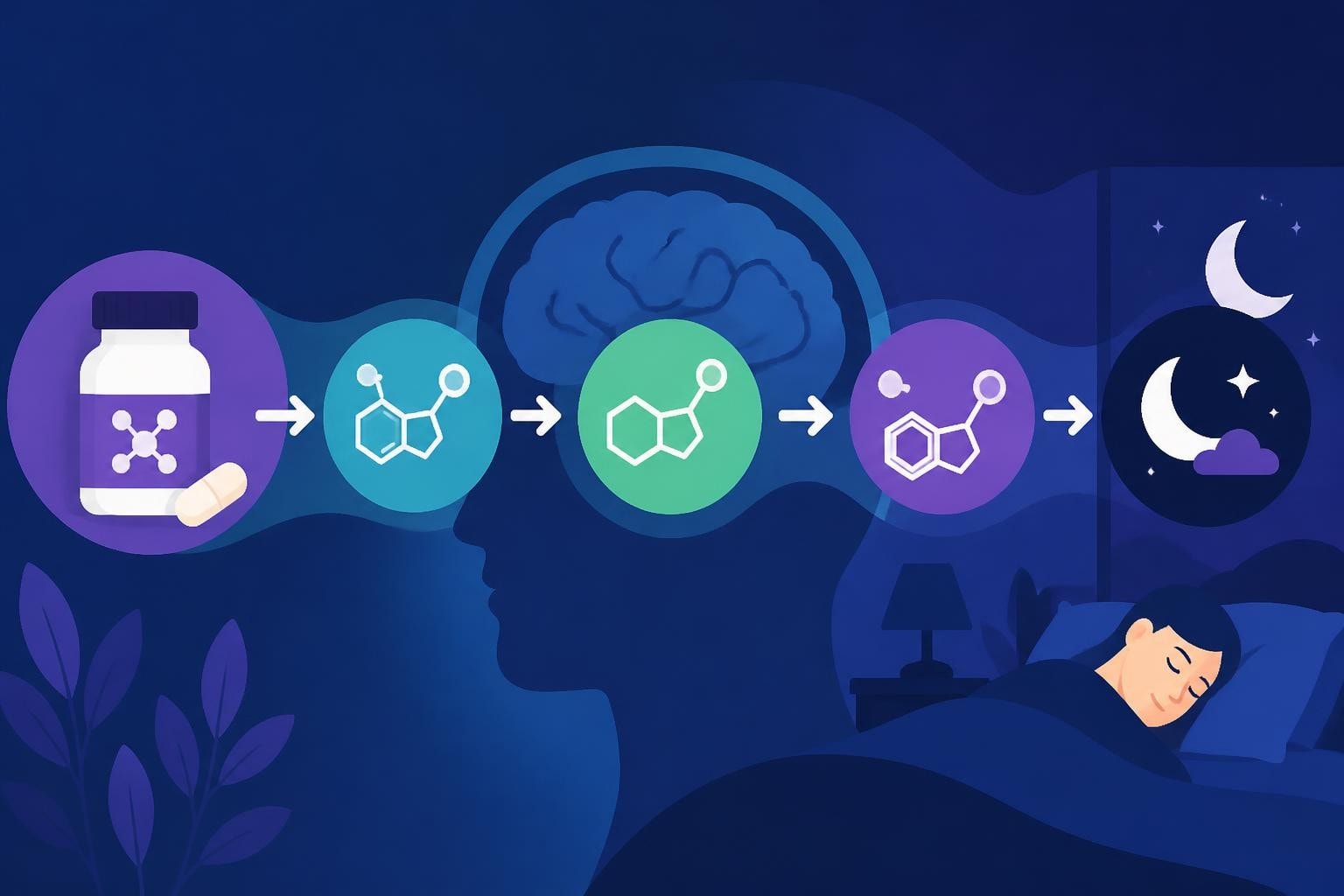
Sleep troubles affect millions of Americans, and many turn to natural supplements before prescription medications. Among these options, htp 5 for sleep has gained attention as a serotonin precursor that may help regulate sleep-wake cycles. Also known as 5-hydroxytryptophan, this compound sits one biochemical step closer to serotonin than the amino acid tryptophan, making it a popular choice for those seeking better rest. Understanding how it works, what the research shows, and how to use it safely requires looking beyond marketing claims and into the evidence that actually matters.
How 5-HTP Works in the Body
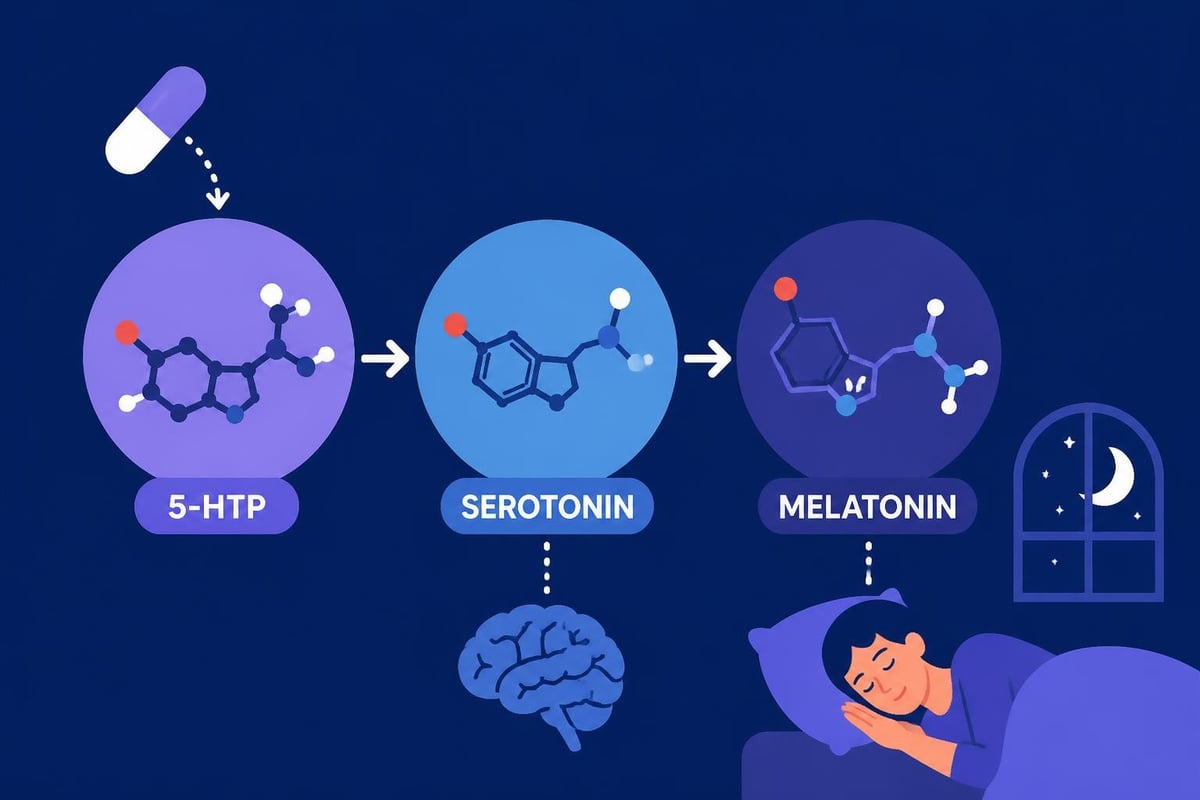
5-HTP is a naturally occurring amino acid that your body produces from tryptophan, an essential amino acid found in protein-rich foods. Once absorbed, 5-HTP crosses the blood-brain barrier and converts directly into serotonin, a neurotransmitter involved in mood regulation, appetite, and sleep cycles. This conversion happens with the help of an enzyme called aromatic L-amino acid decarboxylase.
The pathway looks like this:
- Dietary tryptophan enters the body
- Tryptophan converts to 5-HTP via tryptophan hydroxylase
- 5-HTP converts to serotonin
- Serotonin converts to melatonin in the pineal gland
When you take htp 5 for sleep as a supplement, you bypass the first conversion step. This theoretically increases serotonin availability more efficiently than tryptophan alone. The comprehensive peer-reviewed review published in the National Library of Medicine details the biosynthesis pathway and physiological roles of 5-HTP in human metabolism.
Serotonin's Role in Sleep Regulation
Serotonin itself doesn't make you sleepy, but it serves as the precursor to melatonin, the hormone that signals nighttime to your brain. Higher brain serotonin levels during the day can lead to increased melatonin production at night. Additionally, serotonin influences sleep architecture by affecting REM (rapid eye movement) and deep sleep stages.
The umbrella review in Molecular Psychiatry examines the serotonin hypothesis and related evidence, noting that while serotonin plays a role in mood and sleep, the relationship is more complex than simple deficiency models suggest.
Evidence for HTP 5 for Sleep
The research on htp 5 for sleep presents a mixed picture. Unlike prescription sleep medications with hundreds of controlled trials, 5-HTP studies are fewer and often smaller in scale. Most early research focused on depression and mood rather than sleep as a primary outcome.
What Studies Show
Several small studies from the 1970s and 1980s examined 5-HTP for sleep disorders, with some showing modest improvements in sleep latency (time to fall asleep) and sleep continuity. However, these trials often lacked placebo controls or used subjective sleep diaries rather than objective polysomnography.
Key findings from available research:
- Sleep latency: Some trials reported 10-15% reduction in time to fall asleep
- Sleep quality: Mixed results on subjective sleep quality ratings
- REM sleep: Evidence suggests 5-HTP may suppress REM sleep at higher doses
- Duration: Limited data on effects when used beyond 6-12 weeks
The National Center for Complementary and Integrative Health overview places 5-HTP in context with other sleep interventions, noting that evidence remains preliminary and more rigorous trials are needed.
A Cochrane systematic review examining tryptophan and related compounds for sleep and depression found limited high-quality evidence, with most trials showing high risk of bias or insufficient power to draw firm conclusions.
| Study Focus | Sample Size | Duration | Primary Finding | Quality Rating |
|---|---|---|---|---|
| Sleep latency | 12-45 participants | 2-8 weeks | Modest improvement | Low-Moderate |
| Sleep maintenance | 18-60 participants | 4-12 weeks | Mixed results | Low |
| Sleep quality | 24-50 participants | 6-16 weeks | Subjective improvement | Low-Moderate |
What We Don't Know
Critical gaps remain in our understanding of htp 5 for sleep. Few studies have compared it head-to-head against melatonin, magnesium, or other established sleep supplements. Long-term safety data beyond six months is sparse. We also lack dose-response studies that would help identify the optimal amount for sleep benefits versus side effects.
Dosing Guidelines and Timing
Supplement labels typically recommend 50-400 mg of 5-HTP per day, but this wide range reflects the lack of standardized clinical guidelines. Most sleep-focused protocols suggest starting low and timing intake strategically.
Recommended Starting Doses
Conservative approach for sleep:
- Week 1: 50 mg taken 30-45 minutes before bed
- Week 2-3: 100 mg if no improvement and no side effects
- Week 4+: Up to 200 mg maximum, divided into two doses if needed
Taking htp 5 for sleep on an empty stomach may improve absorption, though this can increase the risk of nausea in sensitive individuals. Some practitioners recommend taking it with a small amount of carbohydrate to facilitate tryptophan transport across the blood-brain barrier, though evidence for this strategy is limited.
The Health Canada monograph suggests consulting a healthcare practitioner for use beyond four weeks and provides regulatory perspective on suggested dosing ranges.
Timing Considerations
Unlike melatonin, which works best when taken 1-2 hours before bed, 5-HTP timing is less clear. Because it must convert to serotonin and then to melatonin, taking it earlier in the evening (2-3 hours before sleep) may be more effective than right at bedtime.
Timing factors to consider:
- Peak serotonin production occurs 1-2 hours after ingestion
- Melatonin conversion happens later in response to darkness
- Individual metabolism varies significantly
- Food intake affects absorption speed
Safety Profile and Side Effects
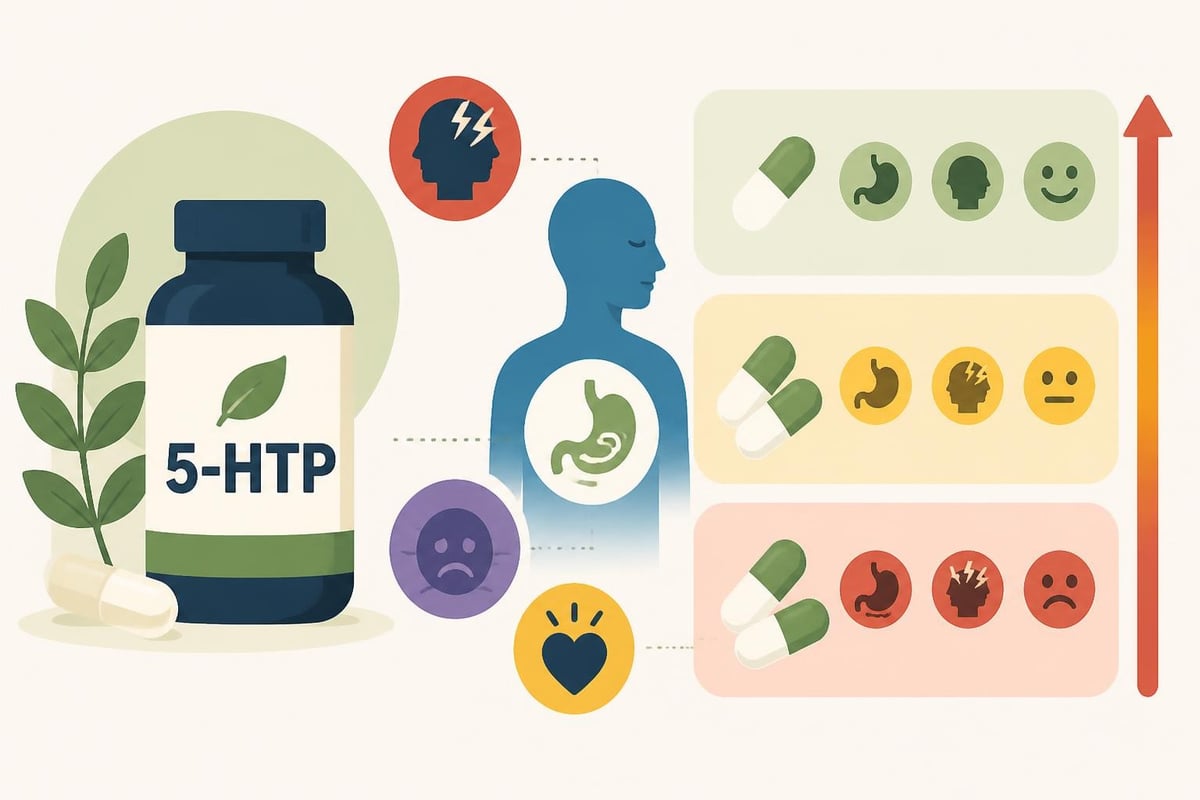
Most people tolerate htp 5 for sleep well at recommended doses, but side effects do occur. Understanding potential risks helps you make informed decisions and recognize when to discontinue use.
Common Side Effects
The most frequently reported side effects involve the digestive system, likely because serotonin plays a major role in gut function. These typically appear within the first week and may diminish with continued use.
- Nausea (10-15% of users)
- Heartburn or stomach discomfort
- Diarrhea or loose stools
- Vivid dreams or nightmares
- Morning grogginess
Serious Safety Concerns
Serotonin syndrome represents the most serious risk when using htp 5 for sleep, particularly when combined with antidepressants or other serotonergic medications. This potentially life-threatening condition occurs when serotonin levels become dangerously high.
Signs of serotonin syndrome include:
- Agitation or restlessness
- Rapid heart rate
- High blood pressure
- Dilated pupils
- Muscle rigidity or twitching
- Sweating and fever
- Confusion or disorientation
The Memorial Sloan Kettering Cancer Center monograph provides detailed safety information and emphasizes the importance of avoiding 5-HTP when taking SSRIs, SNRIs, MAOIs, or other serotonergic drugs.
Drug and Supplement Interactions
Htp 5 for sleep interacts with numerous medications and supplements, making it crucial to review your current regimen before starting. These interactions stem primarily from its effect on serotonin levels.
Medications to Avoid
| Drug Class | Examples | Risk Level | Mechanism |
|---|---|---|---|
| SSRIs | Fluoxetine, sertraline, escitalopram | High | Serotonin syndrome |
| SNRIs | Venlafaxine, duloxetine | High | Serotonin syndrome |
| MAOIs | Phenelzine, tranylcypromine | Very High | Severe serotonin excess |
| Triptans | Sumatriptan, rizatriptan | Moderate | Additive serotonergic effects |
| Tramadol | Pain medication | Moderate | Serotonin syndrome |
| Dextromethorphan | Cough suppressant | Moderate | Serotonergic interaction |
Supplement Interactions
Combining 5-HTP with other supplements that affect serotonin creates similar risks to pharmaceutical interactions. St. John's Wort, SAM-e, and L-tryptophan should not be taken alongside 5-HTP without medical supervision.
Taking 5-HTP with carbidopa (a medication sometimes used off-label to enhance 5-HTP effects) requires medical oversight, as this combination can cause scleroderma-like skin changes in rare cases.
Comparing 5-HTP to Other Sleep Supplements
Understanding where htp 5 for sleep fits among other options helps you make informed choices. Each supplement works through different mechanisms with varying evidence levels.
Melatonin vs. 5-HTP
Melatonin directly signals sleep onset and is the body's natural timekeeper. It has stronger evidence for jet lag and shift work, with clearer dosing guidelines (0.5-5 mg). 5-HTP takes a more indirect route through serotonin production and may affect mood alongside sleep.
Magnesium supports sleep through muscle relaxation and GABA receptor activation rather than the serotonin pathway. It may be safer for those on antidepressants and has broader health benefits for bone and cardiovascular health.
L-theanine promotes relaxation without sedation, working through GABA and glutamate modulation. It combines well with other sleep aids and carries minimal interaction risk.
When evaluating options for improving sleep quality, considering evidence strength, dose fit, and your individual health context becomes essential for finding the right fit.
Combination Approaches
Some supplements combine 5-HTP with other sleep-supporting ingredients like magnesium, GABA, or melatonin. While this sounds appealing, it makes it difficult to identify which ingredient helps or causes side effects. Starting with single ingredients allows you to assess individual responses.
Who Should Consider HTP 5 for Sleep
Not everyone with sleep troubles is a good candidate for htp 5 for sleep. Identifying when it might help versus when other options are more appropriate guides better decision-making.
Potential Candidates
People who might benefit from trying 5-HTP include those with:
- Difficulty falling asleep despite good sleep hygiene
- Mild mood issues accompanying sleep problems
- Previous poor response to melatonin alone
- No history of serotonergic medication use
- Willingness to start low and monitor effects
Who Should Avoid It
Absolute contraindications for 5-HTP use include:
- Current use of SSRIs, SNRIs, or MAOIs
- History of serotonin syndrome
- Pregnancy or breastfeeding (insufficient safety data)
- Carcinoid syndrome
- Surgery scheduled within two weeks (may affect serotonin levels during anesthesia)
The WebMD summary provides consumer-facing guidance on effectiveness and safety considerations that helps identify appropriate candidates.

Quality and Sourcing Considerations
The supplement industry remains largely self-regulated, making quality assessment critical when choosing htp 5 for sleep products. Not all 5-HTP supplements deliver what their labels promise.
Third-Party Testing
Look for products certified by independent testing organizations:
- USP (United States Pharmacopeia): Verifies ingredient accuracy and purity
- NSF International: Tests for contaminants and label claims
- ConsumerLab: Independent analysis of supplement quality
- Informed-Choice: Screens for banned substances
These certifications don't guarantee effectiveness but confirm the product contains what it claims without dangerous contaminants.
Manufacturing Standards
GMP (Good Manufacturing Practice) certification indicates a manufacturer follows quality control procedures, though it doesn't verify ingredient potency. Reputable brands voluntarily submit to FDA inspections and maintain batch testing records.
Source Material
Most commercial 5-HTP comes from the seeds of Griffonia simplicifolia, a West African plant. The extraction and purification process affects final product quality. Some manufacturers provide certificates of analysis showing purity levels and absence of contaminants like heavy metals or pesticides.
Practical Implementation Strategies
Starting htp 5 for sleep requires more than just taking a capsule. A systematic approach increases your chances of success while minimizing risks.
Step-by-Step Protocol
Week 1-2: Establish baseline
- Track current sleep patterns without any supplements
- Note sleep latency, nighttime awakenings, and morning alertness
- Document current medications and supplements
Week 3: Begin low-dose trial
- Start with 50 mg taken 30-45 minutes before your target bedtime
- Continue sleep tracking with identical metrics
- Monitor for digestive side effects or morning grogginess
Week 4-6: Assess and adjust
- Compare sleep metrics to baseline
- Increase to 100 mg if no improvement and no side effects
- Consider timing adjustments if experiencing vivid dreams
Week 7+: Evaluate continuation
- Decide whether benefits justify continued use
- Plan periodic breaks (1 week off every 8-12 weeks)
- Reassess need if sleep improves significantly
Optimizing Effectiveness
Beyond timing and dosing, several factors influence how well htp 5 for sleep works for you. Maintaining consistent sleep-wake schedules supports your natural circadian rhythm and may amplify 5-HTP effects. Reducing blue light exposure in the evening helps melatonin production regardless of serotonin levels.
Lifestyle factors that support 5-HTP effectiveness:
- Regular exercise (but not within 3 hours of bedtime)
- Stress management through meditation or breathing exercises
- Cool, dark bedroom environment
- Limiting caffeine after 2 PM
- Avoiding large meals within 3 hours of sleep
DoseRank evaluates supplements not just on ingredient presence but on optimal dosing, manufacturing quality, and how well formulations match human study protocols. This comprehensive approach helps identify products most likely to deliver real results.
Monitoring Your Response
Self-experimentation requires careful tracking to separate placebo effects from genuine improvements. Many people feel better simply from paying attention to sleep, making objective measures valuable.
Metrics to Track
Subjective measures:
- Sleep latency (estimated time to fall asleep)
- Number of nighttime awakenings
- Morning alertness on a 1-10 scale
- Daytime mood and energy
- Dream intensity and recall
Objective measures (if available):
- Wearable sleep tracker data (with limitations noted)
- Partner observations of sleep quality
- Functional performance on consistent tasks
- Medication or caffeine use changes
Keep a simple sleep journal for at least four weeks before and during 5-HTP use. This creates a meaningful comparison rather than relying on memory, which tends to emphasize recent experiences over long-term patterns.
When to Discontinue
Stop taking htp 5 for sleep immediately if you experience:
- Signs of serotonin syndrome
- Severe digestive upset lasting more than a week
- Worsening mood or increased anxiety
- Significant morning impairment affecting daily function
- Any new medications are prescribed (consult prescriber first)
If sleep hasn't improved after 6-8 weeks at appropriate doses, 5-HTP may not be effective for you. Continuing indefinitely without benefit exposes you to unnecessary risk without meaningful upside.
Regulatory Status and Future Research
Understanding the regulatory landscape around htp 5 for sleep helps set realistic expectations about what manufacturers can and cannot claim.
Current Regulatory Framework
In the United States, 5-HTP is classified as a dietary supplement under the Dietary Supplement Health and Education Act (DSHEA). This means manufacturers can sell it without proving efficacy, though they cannot make disease claims. The FDA can intervene only after products reach market if safety issues emerge.
This regulatory status means:
- No pre-market approval required
- Limited quality oversight beyond GMP
- Restricted health claims on labels
- Post-market surveillance for adverse events
- State-level regulations may vary
European regulations vary by country, with some requiring prescriptions while others allow over-the-counter sales with restrictions. Canada allows 5-HTP as a natural health product with specific approved uses listed in the Health Canada database.
Research Gaps and Ongoing Studies
Current research on htp 5 for sleep remains limited compared to pharmaceutical sleep aids. Future studies need to address:
- Optimal dosing for sleep versus mood effects
- Long-term safety beyond six months
- Head-to-head comparisons with melatonin and other supplements
- Objective polysomnography outcomes
- Individual variation in response predictors
Several small trials are examining 5-HTP combinations with other natural sleep aids, though results remain preliminary. The DoseRank methodology considers this evolving evidence landscape when ranking supplements, updating assessments as new research emerges.
Individual Variation and Personalization
Responses to htp 5 for sleep vary dramatically between individuals due to genetic differences, gut health, existing serotonin status, and numerous other factors. What works for one person may be ineffective or problematic for another.
Factors Affecting Response
Genetic polymorphisms in enzymes like tryptophan hydroxylase and aromatic L-amino acid decarboxylase affect how efficiently you convert 5-HTP to serotonin. Some people are naturally fast or slow metabolizers, though commercial genetic testing for these variants remains uncommon.
Gut microbiome composition influences both serotonin production (95% of body serotonin is made in the gut) and 5-HTP absorption. People with digestive conditions or recent antibiotic use may experience different effects than those with robust gut health.
Baseline serotonin status isn't easily measured, but factors like chronic stress, poor nutrition, and inflammatory conditions may indicate lower baseline levels. Those starting from a deficit might notice more dramatic improvements than those with already-adequate serotonin function.
Finding Your Optimal Approach
Rather than following a one-size-fits-all protocol, successful use of htp 5 for sleep requires personalized experimentation within safe boundaries. Start with the lowest effective dose, adjust timing based on your response, and pay attention to subtle signals your body provides.
Some people find 5-HTP most helpful during periods of high stress when sleep suffers secondarily. Others use it cyclically rather than continuously, taking it for several weeks during difficult times and discontinuing during stable periods. There's no evidence that continuous long-term use is superior to intermittent strategies.
Choosing htp 5 for sleep means weighing modest evidence against known safety concerns while recognizing substantial individual variation in response. For those not on serotonergic medications and willing to start low, monitor carefully, and adjust based on results, it represents a reasonable option to explore alongside fundamental sleep hygiene improvements. DoseRank helps cut through marketing noise by ranking supplements based on evidence strength, dose fit, manufacturing trust, and real-world availability, making it easier to identify products most likely to deliver on their promises for your specific sleep goals.