
DOSERANK guide
Glycine Dosing: Evidence-Based Guidelines for 2026
Published

Glycine stands out among amino acids for its remarkable versatility in human physiology. This simple molecule serves as a neurotransmitter, a building block for proteins, and a precursor for critical compounds like glutathione and creatine. As research continues to uncover glycine's therapeutic potential, understanding proper glycine dosing has become essential for anyone seeking to optimize their supplementation strategy. The challenge lies in matching the right dose to specific health goals, as glycine's effects can vary significantly depending on how much you take and when you take it.
Understanding Glycine's Dose-Response Relationship
The relationship between glycine dose and physiological effect follows patterns that differ from many other supplements. Lower doses support different pathways than higher doses, making glycine dosing a nuanced topic.
Baseline Production and Dietary Intake
Your body synthesizes approximately 3 grams of glycine daily through endogenous production. Dietary sources contribute another 1.5 to 3 grams from protein-rich foods, particularly collagen-containing animal products. This baseline of 4.5 to 6 grams represents what most people obtain without supplementation.
Research suggests this endogenous production may not meet optimal requirements for all physiological processes. A systematic review evaluating glycine's effects found that supplementation beyond dietary intake produces measurable benefits across multiple body systems, indicating a potential gap between baseline production and optimal intake.
Therapeutic Threshold Doses
Different health outcomes require different glycine dosing strategies:
- Sleep enhancement: 3 grams taken 30-60 minutes before bed
- Cognitive support: 5 to 15 grams divided throughout the day
- Metabolic health: 10 to 15 grams daily in split doses
- Collagen synthesis: 10 to 20 grams combined with vitamin C
The wide range reflects glycine's multiple mechanisms of action. At lower doses around 3 grams, glycine primarily acts through neurotransmitter receptors in the brain. Higher doses engage metabolic pathways, support detoxification, and provide raw material for protein synthesis.

Clinical Evidence for Specific Dosing Protocols
The scientific literature provides clear guidance on glycine dosing for specific applications. Understanding these evidence-based protocols helps optimize outcomes while minimizing unnecessary intake.
Sleep Quality and Architecture
Sleep represents one of the most studied applications of glycine supplementation. Clinical trials consistently demonstrate that 3 grams of glycine before bed improves sleep quality through thermogenic effects and neurotransmitter modulation.
This dose lowers core body temperature slightly, facilitating the natural drop needed for sleep onset. Participants in controlled studies report improved subjective sleep quality, reduced sleep latency, and better next-day functioning. The timing matters significantly-taking glycine 30 to 60 minutes before bed produces stronger effects than earlier or later administration.
For those exploring how supplements can support better rest, platforms like DoseRank help identify products targeting sleep quality based on evidence and proper dosing standards.
Cognitive Function and Mental Clarity
Glycine dosing for cognitive support requires higher amounts than sleep protocols. Studies examining glycine's effects on memory, attention, and mental processing typically use 5 to 15 grams daily.
| Cognitive Target | Typical Dose | Timing | Duration for Effects |
|---|---|---|---|
| Working memory | 5-10 grams | Morning, split dose | 4-8 weeks |
| Processing speed | 10-15 grams | Twice daily | 6-12 weeks |
| Mental fatigue | 5-10 grams | As needed | Acute (same day) |
These higher doses support neurotransmitter synthesis and provide substrate for glutathione production in the brain. The antioxidant effects may protect neural tissue while the neurotransmitter functions support synaptic activity. Research on cognitive function outcomes demonstrates measurable improvements with sustained supplementation at these dose ranges.
Metabolic and Detoxification Support
Metabolic applications of glycine require the highest doses in standard protocols. Research examining glucose metabolism, insulin sensitivity, and liver function typically employs 10 to 15 grams daily.
At these doses, glycine serves multiple roles simultaneously. It provides raw material for glutathione synthesis, supports bile acid conjugation, aids in detoxification pathways, and influences metabolic signaling. The detailed dosing information on therapeutic applications emphasizes that metabolic benefits emerge most consistently at doses above 10 grams daily.
Split dosing throughout the day maintains steady plasma levels. Many protocols divide the daily amount into three doses taken with meals, which may also support postprandial glucose control.
Safety Considerations Across Dose Ranges
Glycine's safety profile remains excellent across a wide dose range. However, understanding potential effects at different intake levels helps optimize your glycine dosing strategy.
Well-Tolerated Dose Ceiling
Clinical studies have tested glycine at doses up to 60 grams daily without serious adverse effects. Most therapeutic applications use 3 to 15 grams, well below this ceiling. The primary limitation at higher doses involves gastrointestinal comfort rather than toxicity.
Common effects at different dose levels:
- 3-5 grams: Generally no noticeable effects beyond therapeutic benefits
- 5-10 grams: Occasional mild gastrointestinal changes in sensitive individuals
- 10-15 grams: Slight digestive adaptation period for some users
- 15-20 grams: Increased likelihood of loose stools initially
- Above 20 grams: Gastrointestinal effects more common
Starting at the lower end of your target dose range and gradually increasing over one to two weeks minimizes adaptation symptoms. This approach to glycine dosing allows your digestive system to adjust while you assess individual response.
Individual Variation and Response
Response to glycine supplementation varies based on baseline status, diet composition, health conditions, and genetic factors. Some individuals notice effects at 3 grams while others require 10 grams for similar outcomes.
Testing different doses within established safe ranges helps identify your optimal intake. Keep consistent timing and duration (at least two weeks per dose level) to accurately assess effects before adjusting.
Timing Strategies for Maximum Benefit
When you take glycine matters nearly as much as how much you take. Glycine dosing strategy should align with your primary goals and daily rhythm.
Circadian-Aligned Dosing
For sleep support, evening administration leverages glycine's thermogenic and inhibitory neurotransmitter effects. Taking 3 grams 30 to 60 minutes before your target bedtime aligns with natural circadian drops in core temperature.
Morning dosing serves different purposes. Taking glycine upon waking may support alertness and mental clarity through neurotransmitter effects while providing substrate for daytime protein synthesis and metabolic processes.

Meal-Related Timing
Taking glycine with or between meals influences its effects on glucose metabolism and absorption kinetics. Some research suggests that glycine consumed with carbohydrate-containing meals may support healthy postprandial glucose responses.
For general supplementation not targeting specific metabolic effects, timing relative to meals matters less. Empty-stomach dosing may produce faster absorption and more noticeable acute effects, while taking glycine with food slows absorption and extends the duration of elevated plasma levels.
| Goal | Optimal Timing | Meal Relationship |
|---|---|---|
| Sleep quality | 30-60 min before bed | Empty stomach preferred |
| Cognitive support | Morning and afternoon | Flexible, with or without food |
| Metabolic health | With meals | Taken alongside carbohydrates |
| Exercise recovery | Post-workout | Within 30-60 minutes |
Combining Glycine With Other Supplements
Glycine dosing strategy often includes consideration of complementary nutrients and potential interactions with other supplements.
Synergistic Combinations
Certain supplements enhance glycine's effects or work through complementary pathways:
Glycine plus N-acetylcysteine (NAC): This combination supports glutathione synthesis more effectively than either alone. Typical protocols use 10-15 grams glycine with 600-1200 mg NAC daily.
Glycine plus magnesium: Both support sleep quality and neurotransmitter function through different mechanisms. Standard glycine dosing (3 grams before bed) combines well with 200-400 mg elemental magnesium.
Glycine plus vitamin C: For collagen synthesis support, combining 10-20 grams glycine with 500-1000 mg vitamin C provides both the amino acid building blocks and the cofactor needed for hydroxyproline formation.
Absorption and Competition Considerations
As an amino acid, glycine shares absorption pathways with other amino acids in the small intestine. Taking very high doses of multiple amino acids simultaneously may create competition for transport proteins.
For most supplement regimens, this competition doesn't significantly impact glycine absorption. However, if you're taking high doses of other amino acids (such as leucine, arginine, or tryptophan), spacing them 30 to 60 minutes apart from your glycine dose optimizes absorption efficiency.
Adjusting Doses Based on Individual Factors
Optimal glycine dosing varies across populations and individual circumstances. Several factors influence how much glycine produces desired effects.
Body Weight and Composition
While glycine dosing isn't typically calculated per kilogram of body weight like some supplements, larger individuals may require doses at the higher end of therapeutic ranges. A 200-pound individual might need 15 grams for metabolic support where a 130-pound person achieves similar effects with 10 grams.
Lean body mass matters more than total weight, as muscle tissue represents the primary site of glycine metabolism. Athletes and individuals with higher muscle mass may metabolize supplemental glycine more rapidly, potentially requiring higher or more frequent doses.
Dietary Protein Patterns
Your baseline glycine intake from diet influences supplementation needs. Individuals consuming high amounts of collagen-rich foods (bone broth, skin-on poultry, gelatin) obtain more dietary glycine than those following plant-based diets or eating primarily muscle meats.
Plant proteins contain less glycine than animal proteins, and muscle meats contain less than collagen-rich connective tissues. Supplementation guidelines suggest that those with lower dietary intake may notice benefits at lower supplemental doses, while those already consuming glycine-rich foods might require higher doses for therapeutic effects.
Health Status and Metabolic Demand
Certain conditions increase glycine requirements beyond typical ranges:
- Chronic inflammation elevates demand for glutathione synthesis
- Healing injuries require additional collagen production
- Metabolic disorders may impair endogenous glycine synthesis
- Intense training increases needs for protein synthesis and recovery
Individuals with these conditions might benefit from doses at the higher end of standard ranges. Working with healthcare providers helps determine appropriate glycine dosing when addressing specific health concerns.
Monitoring Response and Adjusting Protocol
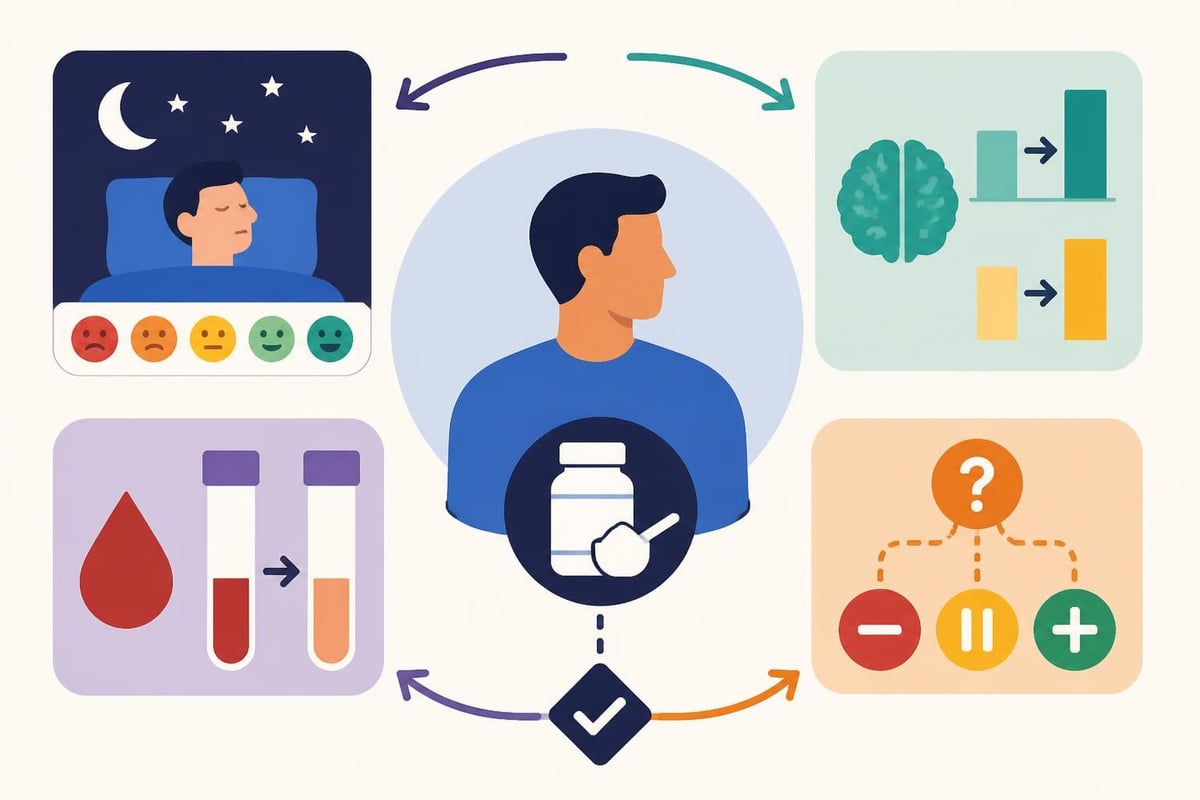
Effective glycine dosing requires attention to outcomes and willingness to adjust based on response. Systematic monitoring helps identify your optimal dose.
Subjective Markers to Track
Different glycine applications produce different measurable outcomes:
Sleep applications: Track sleep onset time, number of nighttime awakenings, sleep quality rating (1-10 scale), and next-day energy levels.
Cognitive applications: Monitor mental clarity, focus duration, task completion speed, and mental fatigue levels throughout the day.
Metabolic applications: Note energy stability, meal-related energy changes, and overall vitality.
Maintaining a simple log for two weeks at each dose level reveals patterns that guide adjustments. If current doses produce no noticeable benefit after two weeks, increasing by 2-3 grams and reassessing makes sense. If you notice desired effects, maintaining that dose allows you to establish whether benefits persist long-term.
Objective Measures When Available
Certain outcomes allow objective tracking that complements subjective assessment. Sleep tracking devices measure actual sleep architecture, duration, and efficiency. Cognitive testing apps can quantify reaction time, memory performance, and processing speed.
For metabolic applications, periodic glucose monitoring or lab work provides objective data on metabolic markers. While not necessary for everyone, these measurements help validate whether your glycine dosing strategy produces intended physiological changes.
Form and Quality Considerations
The form of glycine you choose influences dosing precision, convenience, and potentially bioavailability. Understanding differences helps optimize your supplementation approach.
Powder Versus Capsule Dosing
Glycine powder offers maximum flexibility for dose adjustment and generally provides better value at higher dose ranges. Measuring 10 to 15 grams requires multiple capsules, making powder more practical for therapeutic doses above 5 grams.
Capsules excel at doses below 3 grams and for convenience when traveling or dosing away from home. Standard capsules contain 500 to 1000 mg, requiring 3 to 6 capsules for sleep-dose protocols.
Purity and Testing Standards
Pharmaceutical-grade glycine typically exceeds 99% purity. Lower-grade supplements may contain fillers or processing residues that reduce the actual glycine content per serving.
Third-party testing verifies label accuracy and screens for contaminants. When selecting glycine supplements, platforms like DoseRank evaluate products based on evidence-based dosing, purity verification, and value, helping you identify options that deliver the doses you need.
Advanced Dosing Strategies
Beyond standard protocols, several advanced approaches to glycine dosing merit consideration for specific populations or goals.
Pulsed Versus Continuous Dosing
Most research examines continuous daily supplementation, but some practitioners employ pulsed protocols with higher doses on specific days. For example, taking 15 grams on training days and 5 grams on rest days may support exercise recovery while minimizing total weekly intake.
Limited research directly compares these approaches, but the strategy may suit those seeking to optimize specific periodic demands (intense training, cognitive challenges, metabolic stress events) while maintaining baseline support.
Front-Loading Protocols
Some evidence suggests that higher initial doses followed by lower maintenance doses may saturate certain pathways more quickly. A two-week loading phase at 15 grams daily followed by 5-10 grams for maintenance represents one such approach.
This strategy mirrors protocols used for some other supplements (creatine, certain vitamins) but lacks extensive specific research for glycine. The theoretical basis involves saturating body stores more rapidly, particularly for applications related to collagen synthesis or glutathione status.
Bioavailability Enhancement
While glycine generally absorbs well, certain strategies may enhance uptake or effects:
Taking glycine with a small amount of carbohydrate may enhance cellular uptake through insulin-mediated amino acid transport. Combining your dose with 15-30 grams of carbohydrate potentially increases intracellular glycine availability.
Dividing larger daily doses into smaller, more frequent administrations maintains steadier plasma levels throughout the day. Rather than taking 15 grams once daily, dividing it into 5 grams three times daily produces more consistent blood levels.
Special Population Considerations
Certain groups require modified approaches to glycine dosing based on unique physiological circumstances or needs.
Athletic Populations
Athletes face elevated demands for glycine through increased protein synthesis, collagen turnover from training stress, and enhanced glutathione requirements from oxidative stress. Evidence-based protocols for athletic populations often use higher doses than general health applications.
Doses ranging from 10 to 20 grams daily support recovery, particularly when combined with adequate total protein intake. Timing glycine intake around training sessions-particularly in the post-workout window-may enhance its incorporation into muscle protein synthesis.
Older Adults
Aging affects both endogenous glycine synthesis and dietary intake patterns. Older adults may have reduced capacity for glycine production while simultaneously needing more for collagen maintenance, immune function, and glutathione synthesis.
Starting at standard therapeutic doses (3-10 grams) makes sense, with potential adjustment upward based on response. Older adults metabolizing medications should consult healthcare providers, as high-dose glycine may theoretically interact with certain drugs metabolized through conjugation pathways.
Plant-Based Diet Followers
Individuals following vegetarian or vegan diets obtain less dietary glycine than omnivores. Plant proteins provide glycine, but in lower concentrations than animal sources, particularly collagen-rich animal products.
Those on plant-based diets might derive greater benefit from supplementation at doses of 5 to 15 grams daily to bridge the gap between plant-based intake and optimal status. This approach complements rather than replaces adequate total protein intake from varied plant sources.
Cost-Effectiveness Across Dose Ranges
Economic considerations influence long-term sustainability of supplementation protocols. Understanding the cost implications of different glycine dosing strategies helps maintain consistency.
Price Per Dose Analysis
Glycine ranks among the most affordable amino acid supplements. Bulk powder typically costs $15-30 per kilogram, yielding 66 to 333 daily doses depending on your protocol:
Cost per day at different doses (based on $20/kg powder):
- 3 grams daily: $0.06 per day, $22 per year
- 5 grams daily: $0.10 per day, $37 per year
- 10 grams daily: $0.20 per day, $73 per year
- 15 grams daily: $0.30 per day, $110 per year
These costs remain modest compared to many supplements, making even higher-dose protocols economically sustainable for most users. Personalized dosing calculators help estimate your individual needs and associated costs.
Value Optimization Strategies
Buying larger quantities reduces per-gram costs substantially. Five-kilogram bulk purchases often cost 30-40% less per gram than 250-gram containers. For those committed to longer-term supplementation at moderate to high doses, bulk purchasing improves value significantly.
Choosing powder over capsules becomes increasingly economical at higher doses. While capsule convenience has value, powder forms deliver 10-15 grams at a fraction of capsule costs for equivalent amounts.
Building Your Personalized Protocol
Integrating all these considerations into a coherent, individualized glycine dosing strategy requires systematic decision-making.
Step-by-step protocol development:
- Identify primary goals: Sleep, cognition, metabolic health, recovery, or general wellness
- Select starting dose: Use evidence-based ranges for your primary goal (3g for sleep, 5-10g for cognition, 10-15g for metabolic)
- Choose timing: Align with circadian rhythm and goal (evening for sleep, distributed for metabolic)
- Select form: Powder for doses above 5g, capsules for lower doses or convenience needs
- Implement consistently: Maintain chosen dose and timing for 2-3 weeks minimum
- Monitor response: Track relevant subjective and objective markers
- Adjust as needed: Increase by 2-3g if inadequate response, decrease if experiencing unwanted effects
- Reassess periodically: Evaluate protocol every 2-3 months, adjusting based on changing goals or response
This framework transforms general glycine dosing guidelines into a personalized approach matched to your individual circumstances, goals, and response patterns. Evidence-based dosing guides provide additional context for refining your approach over time.
Whether you're just beginning to explore glycine supplementation or optimizing an existing protocol, understanding the nuances of glycine dosing empowers better decisions and improves outcomes.
Navigating the complexities of glycine dosing becomes simpler when you have access to evidence-based supplement rankings and personalized recommendations. DoseRank evaluates glycine supplements and thousands of other products based on scientific evidence, proper dosing, quality standards, and value-helping you find options that match your specific health goals without the guesswork. Start with the platform's quick quiz to identify your priorities, then explore rankings tailored to your needs.