
DOSERANK guide
Fish Oil Capsules: Evidence-Based Guide for 2026
Published

Fish oil capsules remain one of the most widely consumed dietary supplements globally, valued for their concentrated omega-3 fatty acid content. These softgel capsules encapsulate oil derived from fatty fish species, primarily delivering eicosapentaenoic acid (EPA) and docosahexaenoic acid (DHA). Despite decades of research and widespread consumer adoption, the landscape of fish oil supplementation continues to evolve, with ongoing debates about efficacy, quality standards, and optimal dosing strategies shaping how both healthcare professionals and consumers approach these products in 2026.
Understanding the Active Components in Fish Oil Capsules
The therapeutic potential of fish oil capsules stems primarily from their omega-3 fatty acid content. EPA and DHA represent the two most studied long-chain omega-3 polyunsaturated fatty acids found in marine sources. Each compound exhibits distinct biological activities within human physiology.
EPA predominantly influences inflammatory pathways and cellular signaling. Research demonstrates its role in modulating eicosanoid production, which affects immune response and cardiovascular function. DHA concentrates heavily in neural tissue and retinal membranes, supporting structural integrity in brain cells and photoreceptor function.
Concentration Versus Whole-Oil Formulations
Fish oil capsules vary significantly in their omega-3 concentration:
- Standard fish oil: Typically contains 30% combined EPA and DHA
- Concentrated formulas: Range from 50% to 90% omega-3 content
- Prescription-grade products: Often exceed 90% pure EPA or combined EPA/DHA
Higher concentration products require fewer capsules to achieve target doses but may carry premium pricing. The concentration method (molecular distillation, ethyl ester conversion, or re-esterification to triglyceride form) affects both purity and bioavailability.

Quality Standards and Purity Concerns
The quality of fish oil capsules depends on sourcing, processing, and storage practices. Independent testing by organizations like Consumer Reports has revealed significant variation in purity and label accuracy across commercial products.
Contaminant Testing Parameters
| Contaminant Type | Safety Threshold | Testing Method |
|---|---|---|
| Mercury | <0.1 ppm | Atomic absorption spectroscopy |
| PCBs | <0.09 ppm total | Gas chromatography |
| Dioxins | <2 ppt WHO-TEQ | Mass spectrometry |
| Oxidation (peroxide value) | <5 meq/kg | Titration methods |
Third-party certifications from IFOS (International Fish Oil Standards), USP (United States Pharmacopeia), or NSF International provide independent verification of purity claims. These programs test for heavy metals, environmental contaminants, and oxidative degradation products that compromise both safety and efficacy.
Oxidative Stability and Freshness
Fish oil capsules are vulnerable to oxidation throughout their shelf life. Rancid fish oil develops off-flavors and may contain oxidized lipid species that negate potential health benefits. Quality manufacturers incorporate:
- Nitrogen flushing during encapsulation
- Antioxidant additions (mixed tocopherols, rosemary extract)
- Opaque or amber capsule shells blocking UV light
- Individual blister packaging minimizing oxygen exposure
Consumers should check expiration dates and store fish oil capsules in cool, dark environments. A fishy odor when opening the bottle often signals advanced oxidation.
Clinical Evidence and Health Outcomes
Research on fish oil capsules spans cardiovascular disease, cognitive function, inflammatory conditions, and metabolic health. The evidence quality varies considerably across these domains.
The Cochrane systematic review on omega-3 intake for cardiovascular disease provides the most comprehensive analysis of randomized controlled trials. Their findings indicate modest or no benefit for most cardiovascular endpoints in general populations, though specific subgroups may experience different outcomes.
Cardiovascular applications have generated mixed results in recent large-scale trials. While earlier observational studies suggested protective effects, more rigorous placebo-controlled trials published between 2018 and 2026 show:
- No significant reduction in major adverse cardiovascular events in primary prevention
- Possible modest benefit for heart failure outcomes
- Prescription EPA-only products showing some benefit for high-risk patients already on statins
- Triglyceride-lowering effects confirmed at doses of 2-4 grams daily
Cognitive and Neurological Applications
DHA comprises approximately 40% of brain polyunsaturated fatty acids, prompting investigation into cognitive support applications. Evidence suggests:
- Prenatal supplementation may support infant neurodevelopment
- Maintenance of cognitive function in healthy older adults shows inconsistent results
- Treatment of established dementia demonstrates minimal benefit
- Depression and mood disorders show small positive effects in some meta-analyses
The Harvard Medical School perspective on fish oil supplements emphasizes the gap between dietary fish consumption benefits and supplemental fish oil outcomes, noting that whole-food sources provide additional nutrients and bioactive compounds absent in isolated capsules.

Dosing Strategies and Bioavailability Factors
Effective use of fish oil capsules requires attention to total omega-3 dose, EPA/DHA ratio, formulation chemistry, and consumption timing.
Evidence-Based Dosing Ranges
Different health goals correspond to varying omega-3 requirements:
- General health maintenance: 250-500 mg combined EPA/DHA daily
- Triglyceride reduction: 2,000-4,000 mg combined EPA/DHA daily
- Inflammatory conditions: 1,000-3,000 mg combined EPA/DHA daily
- Cognitive support: 400-1,000 mg DHA daily
For those seeking to increase omega-3 index (the percentage of EPA and DHA in red blood cell membranes), consistent daily intake of 1,000-2,000 mg combined omega-3s typically achieves the target range of 8-12% within 3-4 months.
Chemical Form and Absorption
Fish oil capsules contain omega-3s in different molecular forms affecting bioavailability:
| Form | Structure | Absorption Characteristics |
|---|---|---|
| Natural triglyceride | Glycerol backbone + 3 fatty acids | Best absorption, especially with fat-containing meals |
| Ethyl ester | Ethanol + fatty acid | Requires pancreatic enzymes; lower absorption when fasting |
| Re-esterified triglyceride | Synthesized triglyceride | Similar to natural form; good absorption |
| Phospholipid (krill oil) | Phospholipid-bound omega-3s | May have enhanced brain delivery |
Taking fish oil capsules with dietary fat significantly improves absorption for all forms. Studies show a 50-90% increase in omega-3 uptake when consumed with a meal containing at least 15 grams of fat compared to fasting conditions.
Selecting Quality Fish Oil Capsules
The supplement market offers hundreds of fish oil products with varying quality, potency, and value propositions. Systematic evaluation criteria help consumers identify products meeting their specific needs.
Label Reading Essentials
Examine supplement facts panels for:
- Total omega-3 content per serving (not just fish oil quantity)
- Specific EPA and DHA amounts listed separately
- Serving size (number of capsules providing stated dose)
- Additional ingredients (vitamin E, flavorings, preservatives)
- Suggested use instructions and any contraindication warnings
Many products prominently display "1000 mg Fish Oil" while containing only 300 mg combined omega-3s. The actual EPA plus DHA content determines therapeutic potential.
Third-Party Testing and Certifications
Independent verification programs assess:
- Purity: Absence of contaminants above safety thresholds
- Potency: Omega-3 content matches label claims (±10%)
- Freshness: Oxidation markers remain within acceptable limits
- Formulation integrity: Proper encapsulation and dissolution
Certifications from IFOS, USP, NSF, or ConsumerLab indicate completed testing. Some manufacturers publish certificates of analysis on their websites, providing batch-specific test results.
Price-to-Potency Analysis
Cost per milligram of omega-3 varies dramatically across products. A systematic comparison requires:
- Calculating total EPA + DHA per bottle
- Dividing retail price by total omega-3 milligrams
- Comparing across equivalent quality tiers
Premium pricing sometimes reflects superior purity testing, sustainable sourcing certifications, or enhanced bioavailability forms. Budget products may deliver adequate omega-3 content but require verification of quality standards.
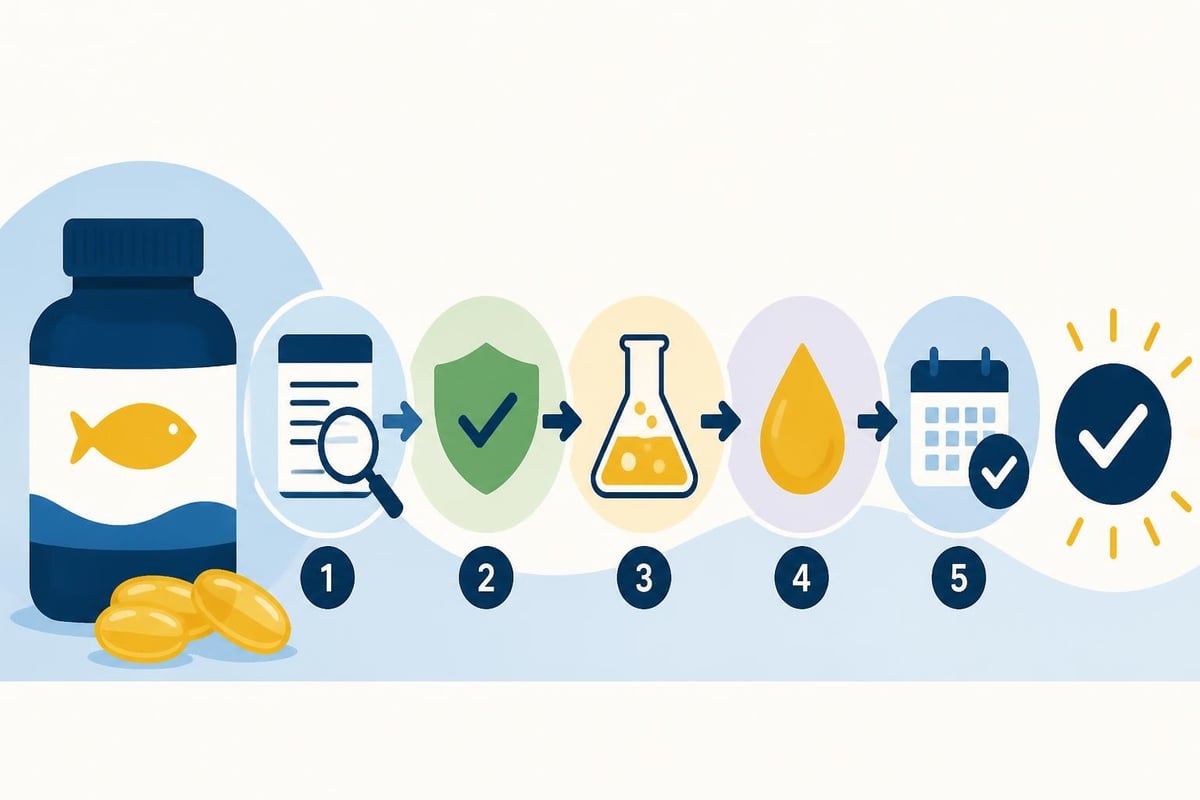
Platforms like DoseRank systematically evaluate supplements across multiple dimensions including evidence strength, dosage appropriateness, manufacturer trust factors, cost-effectiveness, and real-world availability. This multi-criteria approach helps consumers identify fish oil capsules that balance quality with value for their specific health goals.
Regulatory Framework and Health Claims
Fish oil capsule marketing operates within regulatory boundaries established by government agencies. The permissible health claims differ across jurisdictions.
FDA Regulations in the United States
The Food and Drug Administration distinguishes between:
- Dietary supplements: General fish oil capsules marketed under DSHEA regulations without pre-market approval
- Prescription fish oils: FDA-approved drugs (Lovaza, Vascepa, Omtryg) with specific therapeutic indications
Supplement manufacturers may make structure/function claims (describing effects on normal body systems) but cannot claim to diagnose, treat, cure, or prevent diseases without FDA approval. Qualified health claims regarding reduced coronary heart disease risk require specific language and evidence standards.
European Union Health Claim Authorization
The European Food Safety Authority evaluates health claim applications based on scientific substantiation. Authorized omega-3 health claims include:
- DHA contributes to maintenance of normal brain function (250 mg DHA daily)
- DHA and EPA contribute to normal heart function (250 mg combined daily)
- DHA contributes to maintenance of normal vision (250 mg DHA daily)
- DHA intake by mothers contributes to normal brain and eye development of the fetus and breastfed infants (200 mg DHA beyond the 250 mg daily recommendation for adults)
These authorized claims set minimum effective doses and require products to clearly state the claim conditions.
Practical Considerations for Long-Term Use
Sustained fish oil capsule supplementation requires attention to tolerability, safety monitoring, and integration with overall dietary patterns.
Common Side Effects and Management
Most users tolerate fish oil capsules well, but some experience:
- Gastrointestinal effects: Fishy aftertaste, belching, nausea, or loose stools
- Bleeding risk: Theoretical concern at very high doses (>3 grams daily)
- Immune modulation: Possible minor effects on immune response
- Drug interactions: Potential enhancement of anticoagulant medications
Management strategies include:
- Starting with lower doses and gradually increasing
- Taking capsules with meals to minimize GI upset
- Choosing enteric-coated formulations that dissolve in the intestine
- Freezing capsules to reduce reflux and fishy burps
- Selecting flavored or deodorized products
Safety Monitoring for High-Dose Users
Individuals consuming more than 2 grams of omega-3s daily should discuss monitoring with healthcare providers, particularly if taking anticoagulant medications or scheduled for surgery. Some practitioners recommend periodic checks of:
- Bleeding time or coagulation parameters
- Liver function tests (for very high doses)
- Fasting lipid panels (to assess triglyceride response)
- Vitamin E status (fish oil may slightly increase requirements)
Sustainability and Sourcing Considerations
Environmental impact and fishery sustainability have gained prominence in consumer decision-making for fish oil capsules.
Marine Resource Management
Fish oil production relies on both wild-caught forage fish (anchovies, sardines, menhaden) and byproducts from food fish processing. Sustainability certifications include:
- Marine Stewardship Council (MSC): Certifies sustainable wild fisheries
- Friend of the Sea: Covers both wild-caught and aquaculture sources
- IFFO RS: Industry standard for responsible supply
These programs assess stock health, ecosystem impact, and management effectiveness of source fisheries.
Alternative Omega-3 Sources
Growing demand and environmental concerns have spurred development of alternatives:
- Algal oil capsules: Vegetarian DHA (and sometimes EPA) from microalgae cultivation
- Krill oil: Antarctic krill-derived phospholipid-bound omega-3s
- Fish processing byproducts: Utilizing heads, frames, and viscera otherwise discarded
Algal sources eliminate concerns about marine contaminants while reducing pressure on wild fish stocks. Current production costs typically result in higher retail prices compared to conventional fish oil capsules.
Integration with Dietary Omega-3 Sources
Supplementation represents one approach to increasing omega-3 intake, complementing dietary strategies.
Whole-Food Alternatives
Fatty fish consumption provides omega-3s alongside complete protein, vitamin D, selenium, and other nutrients:
| Fish Type | Serving Size | EPA + DHA Content |
|---|---|---|
| Atlantic salmon (farmed) | 3.5 oz (100g) | 2,000-2,500 mg |
| Atlantic mackerel | 3.5 oz (100g) | 1,500-2,000 mg |
| Sardines (canned) | 3.5 oz (100g) | 1,000-1,500 mg |
| Rainbow trout | 3.5 oz (100g) | 800-1,200 mg |
| Albacore tuna | 3.5 oz (100g) | 700-1,000 mg |
Consuming fatty fish 2-3 times weekly typically provides 1,000-2,000 mg omega-3s daily without supplementation.
Balancing Supplementation and Diet
Fish oil capsules work best as part of comprehensive nutritional strategies:
- Addressing overall diet quality before adding supplements
- Using capsules to fill gaps when fish consumption is infrequent
- Adjusting supplemental doses based on dietary omega-3 intake
- Considering total omega-6 to omega-3 ratio in the diet
Plant-based ALA (alpha-linolenic acid) from sources like flax, chia, and walnuts provides some omega-3 benefit but converts inefficiently to EPA and DHA, making marine sources or algal supplements more reliable for achieving target tissue levels.
Emerging Research Directions
Scientific investigation continues to explore novel applications and refine understanding of fish oil capsules in human health.
Current research priorities for 2026 include:
- Personalized omega-3 recommendations based on genetic polymorphisms affecting fatty acid metabolism
- Microbiome interactions with omega-3 supplementation and resulting metabolite production
- Specialized pro-resolving mediators (SPMs) derived from EPA and DHA with inflammation-resolving properties
- Combination therapies pairing omega-3s with other bioactives for enhanced outcomes
- Delivery optimization through novel encapsulation technologies improving stability and absorption
Early-stage research examines fish oil's potential role in supporting cognitive function through multiple mechanisms beyond simple membrane incorporation, including neurotransmitter modulation and neuroprotective signaling pathways.
Fish oil capsules continue to occupy a significant position in the supplement landscape, backed by substantial research yet requiring discerning evaluation of quality, dosing, and individual health goals. The evidence supports specific applications while highlighting limitations in others, making informed product selection essential. DoseRank helps navigate the crowded fish oil market by ranking products based on clinical evidence strength, appropriate dosing, manufacturer trustworthiness, cost-effectiveness, and practical availability, enabling you to identify supplements that genuinely match your health objectives rather than marketing claims.