
DOSERANK guide
Best Multivitamin Ranking: Evidence-Based Guide 2026
Published

Finding the right multivitamin in 2026 requires more than scanning labels at the pharmacy. With thousands of formulations making bold claims and varying wildly in quality, price, and composition, consumers need a systematic approach to identify products that deliver real value. A best multivitamin ranking should evaluate supplements across multiple dimensions, from clinical evidence and ingredient dosing to manufacturing trust and practical considerations like cost and availability. This comprehensive guide breaks down the essential criteria that separate exceptional multivitamins from overpriced placebos.
Understanding Modern Multivitamin Rankings
The supplement industry has evolved significantly since the days of simple one-a-day formulas. Today's best multivitamin ranking systems must account for personalized nutrition needs, emerging research on bioavailability, and the complex interplay between nutrients. Traditional approaches that simply count ingredients or compare prices miss critical factors that determine whether a product will actually improve health outcomes.
Evidence Quality as the Foundation
Clinical research forms the bedrock of any credible ranking. Large-scale randomized trials have examined multivitamin effects on cognitive function, cardiovascular health, and cancer risk, providing data that should inform product evaluation. However, not all evidence carries equal weight.
Key evidence markers include:
- Published peer-reviewed studies on specific formulations or comparable products
- Sample sizes large enough to detect meaningful effects
- Duration of trials that matches real-world supplementation patterns
- Outcome measures that reflect clinically significant changes
- Replication by independent research groups
The most reliable multivitamins either have direct clinical validation or closely mirror formulations tested in published research. Generic multivitamins rarely invest in proprietary studies, but their compositions can be compared against evidence-based dosing standards established in systematic reviews.

Dose Fit and Nutrient Forms
A multivitamin containing thirty ingredients means nothing if the doses are ineffective or the forms poorly absorbed. The best multivitamin ranking systems examine whether each nutrient appears in quantities that research suggests can move the needle on measurable outcomes.
| Nutrient Consideration | Optimal Approach | Common Shortfall |
|---|---|---|
| Vitamin D dosing | 1,000-2,000 IU minimum | 400 IU (outdated RDA) |
| B12 form | Methylcobalamin or adenosylcobalamin | Cyanocobalamin only |
| Folate type | L-methylfolate or folinic acid | Folic acid alone |
| Magnesium amount | 100-200 mg elemental | 50 mg or less |
| Mineral chelation | Glycinate, citrate, picolinate | Oxide forms |
Dose fit also means avoiding excessive amounts that provide no additional benefit or may cause imbalance. Fat-soluble vitamins (A, D, E, K) require particular attention, as very high doses accumulate over time. The ideal formulation provides nutrients at levels that fill common dietary gaps without creating new problems.
Six Pillars of Supplement Ranking
Comprehensive evaluation requires examining products through multiple lenses. Single-factor comparisons inevitably miss crucial trade-offs that affect real-world satisfaction and results.
Evidence-Based Formulation Design
Beyond individual nutrient studies, formulation design itself reflects evidence literacy. Do the ratios between nutrients make physiological sense? Are synergistic combinations present while antagonistic pairs are separated?
Evidence-informed design principles:
- B-complex vitamins in balanced ratios that reflect metabolic relationships
- Calcium and magnesium in appropriate proportions (typically 2:1 or less)
- Vitamin K2 included when vitamin D exceeds 1,000 IU
- Trace minerals present in meaningful amounts, not just token doses
- Absence of ingredients with negative interaction profiles
DoseRank's methodology applies these principles systematically, scoring formulations based on how well they align with current nutritional science rather than marketing trends.
Trust and Manufacturing Standards
Third-party testing and manufacturing certifications provide objective quality signals. The best multivitamin ranking considers whether products undergo verification for label accuracy, contaminant screening, and stability testing.
Certifications worth weighing include NSF International, USP Verified, ConsumerLab approval, and current Good Manufacturing Practices (cGMP) compliance. These aren't just participation trophies; they represent independent confirmation that what's on the label matches what's in the bottle.
Transparency about ingredient sourcing, testing protocols, and manufacturing facilities further distinguishes trustworthy brands. Companies that openly share Certificates of Analysis and invite scrutiny typically maintain higher internal standards than those that operate behind closed doors.
Value Assessment Beyond Price
Cost per serving tells only part of the value story. True value emerges from the relationship between price, dosing adequacy, and ingredient quality. A fifteen-dollar multivitamin with effective doses of premium forms may deliver better value than a five-dollar product requiring triple doses to achieve similar nutrient intake.
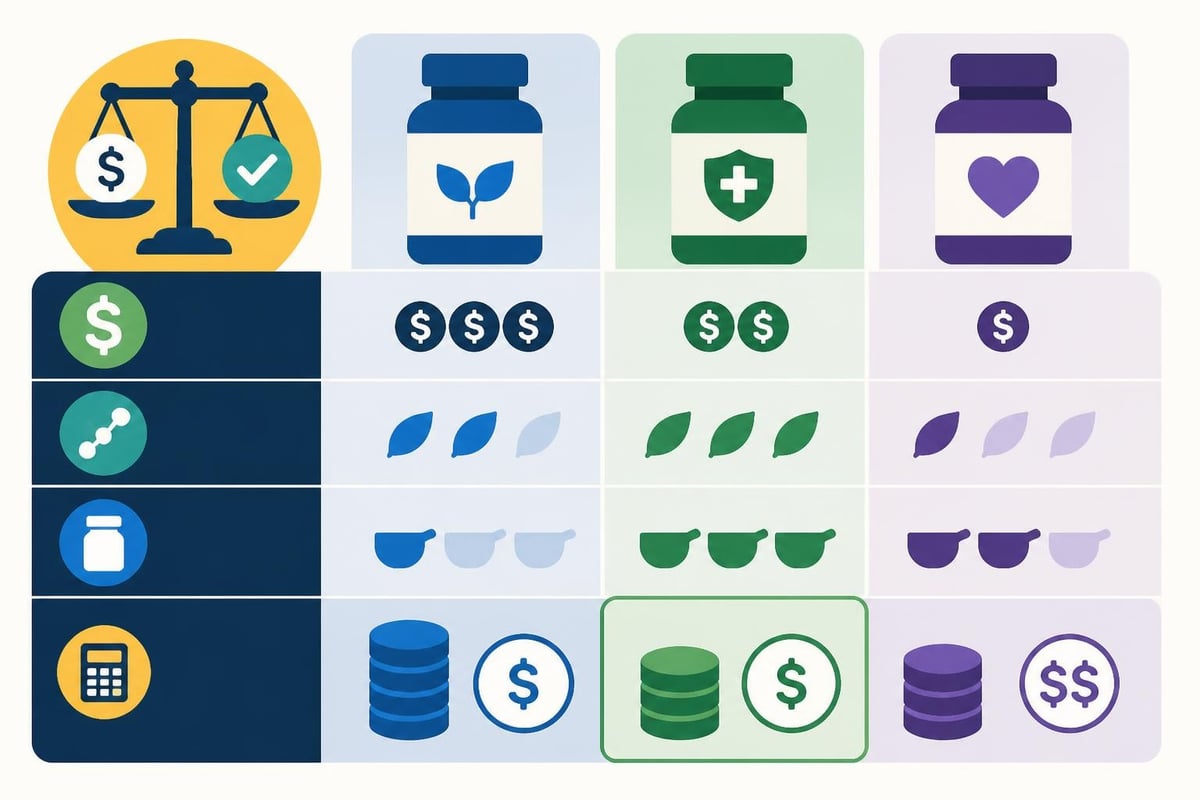
Value calculation factors:
- Cost per day of supplementation
- Bioavailable nutrient delivery (not just label claims)
- Servings required to reach evidence-based doses
- Shelf life and stability of nutrient forms
- Return policies and satisfaction guarantees
Budget-conscious consumers should calculate the effective cost of meeting their nutritional goals rather than simply comparing bottle prices. Sometimes spending more upfront reduces total expenditure by eliminating the need for additional standalone supplements.
Popularity and User Experience
While popularity doesn't prove efficacy, it does reflect accumulated user experience across thousands of real-world trials. The best multivitamin ranking incorporates feedback patterns while filtering out noise from incentivized reviews and marketing-driven hype.
Meaningful popularity signals include sustained sales over multiple years, repeat purchase rates, and detailed reviews that discuss specific experiences rather than generic praise. Red flags appear when products show sudden popularity spikes tied to influencer campaigns or promotional discounts.
User experience encompasses practical factors often overlooked in clinical discussions. Pill size, flavor for chewables, stomach tolerance, and packaging convenience all affect long-term adherence. The most evidence-based formulation delivers zero benefit if people stop taking it after two weeks.
Navigating Common Multivitamin Categories
Different life stages and health goals call for specialized formulations. Understanding category distinctions helps narrow the field before applying detailed ranking criteria.
General Adult Formulations
Standard adult multivitamins target nutrient gaps common in typical Western diets. They emphasize vitamins D and B12, magnesium, and antioxidants while keeping mineral doses moderate to accommodate varied dietary intakes.
These products work best for relatively healthy adults seeking nutritional insurance. They rarely address specific deficiencies or therapeutic goals, but they provide a solid foundation for overall wellness.
Gender-Specific Products
Men's and women's formulas adjust certain nutrients to match different physiological needs. Women's versions typically boost iron and calcium, while men's formulations often omit or reduce iron while emphasizing prostate-supporting nutrients like selenium and lycopene.
The meaningfulness of these distinctions varies. Premenopausal women genuinely need more iron, but many other gender-based adjustments reflect marketing more than science. Harvard Health Publishing notes that most adults can use either formulation if the nutrient profile matches their individual needs.
Age-Optimized Formulas
Multivitamins for adults over fifty typically reduce or eliminate iron while increasing vitamins D and B12 to address age-related absorption changes. These adjustments align with real physiological shifts that affect nutrient needs and metabolism.
Senior formulations may also boost antioxidants, add vision-supporting compounds like lutein and zeaxanthin, and include higher doses of calcium. The best products in this category balance these additions without creating excessive doses that stress aging kidneys or interact with common medications.
Prenatal and Postnatal Options
Prenatal multivitamins represent the most evidence-backed category, with clear clinical guidance on essential nutrients. Folate (preferably as methylfolate), iron, choline, and omega-3 DHA form the core of effective formulations.
The best prenatal ranking prioritizes bioavailable nutrient forms, adequate dosing for pregnancy needs, and the absence of potentially harmful additives. Many products still use folic acid instead of methylfolate and skip choline entirely despite strong evidence for its importance in fetal brain development.
The Role of Individual Health Outcomes
Generic rankings serve broad audiences, but individual optimization requires matching supplements to specific goals. The relationship between multivitamin intake and measurable health outcomes varies based on baseline nutrition status, genetics, lifestyle factors, and existing health conditions.
Targeting Nutrient Status Improvements
Some users seek multivitamins primarily to correct deficiencies or elevate specific biomarkers. For example, improving vitamin D status requires products with at least 1,000 IU of vitamin D3, while addressing B12 needs benefits from methylcobalamin in doses exceeding 100 mcg.
When targeting specific outcomes, the best multivitamin ranking considers whether formulations provide therapeutic doses of relevant nutrients or merely preventive amounts. A product excellent for general wellness may prove inadequate for someone working to raise low iron stores or optimize B-vitamin status for cognitive function.
Understanding Outcome-Based Selection
Rather than choosing supplements based on ingredient lists alone, outcome-focused selection starts with health goals and works backward to identify necessary nutrients and effective doses. This approach prevents both over-supplementation in areas where diet already provides adequate intake and under-dosing for targeted needs.
Platforms that help users take a quick quiz to identify specific health goals can match multivitamins to individual circumstances more precisely than one-size-fits-all recommendations. This personalization accounts for dietary patterns, existing supplementation, life stage, and health priorities.
| Health Goal | Key Nutrients | Minimum Effective Doses |
|---|---|---|
| Immune support | Vitamin C, D, Zinc, Selenium | 500 mg, 2000 IU, 15 mg, 100 mcg |
| Energy production | B-complex, Iron, Magnesium | 25+ mg B-vitamins, 18 mg, 150 mg |
| Bone health | Vitamin D, K2, Calcium, Magnesium | 2000 IU, 100 mcg, 500 mg, 200 mg |
| Antioxidant protection | Vitamins C, E, Selenium, Zinc | 250 mg, 100 IU, 100 mcg, 15 mg |
Red Flags in Multivitamin Selection
Not all highly ranked products deserve their positions. Marketing budgets and strategic partnerships can inflate rankings that lack rigorous evaluation standards. Recognizing warning signs helps consumers avoid wasted money and potential health risks.
Common red flags include:
- Proprietary blends that hide individual ingredient amounts
- Mega-doses of water-soluble vitamins with no therapeutic justification
- Inclusion of herbs or botanicals without standardization or evidence
- Claims about "whole food" sources without bioavailability data
- Absence of third-party testing despite premium pricing
- Synthetic nutrients marketed as "natural" with misleading terminology

The best multivitamin ranking systems penalize these practices rather than rewarding slick marketing. Consumer Reports guidance emphasizes independent testing and evidence-based evaluation over manufacturer claims.
Integration with Overall Supplement Strategy
Multivitamins rarely stand alone in an optimal supplement regimen. Understanding how they fit with targeted single-nutrient supplements and condition-specific products creates more effective overall strategies.
Multivitamin as Foundation vs. Complete Solution
For individuals with generally adequate diets, a quality multivitamin may provide sufficient nutritional insurance without additional supplementation. However, many people benefit from layering targeted supplements on top of a multivitamin base.
The foundation approach uses multivitamins to cover broad nutritional basics while addressing specific needs through standalone supplements. This strategy allows higher doses of particular nutrients without the imbalances that can occur when mega-dose multivitamins push some nutrients far above requirements.
Avoiding Redundancy and Excess
Taking multiple supplements simultaneously risks doubling up on nutrients and exceeding safe upper limits. The best multivitamin ranking considers how products integrate with common supplement stacks rather than evaluating them in isolation.
Before adding targeted supplements to a multivitamin regimen, calculate total intake across all sources. Fat-soluble vitamins, iron, zinc, and copper particularly warrant attention because excesses accumulate or compete with other minerals. Systematic reviews have examined risks of excess antioxidant supplementation, finding that more isn't always better.
Practical Selection Process
Armed with ranking criteria, consumers can systematically evaluate options without drowning in analysis paralysis. A structured decision framework streamlines the selection process.
Step-by-Step Evaluation
- Identify primary health goals: General wellness, specific deficiency correction, or targeted health outcome improvement
- Determine must-have nutrients: Based on dietary gaps, lab results, or evidence-based recommendations for your demographic
- Set quality thresholds: Decide minimum standards for third-party testing, nutrient forms, and manufacturing practices
- Establish budget parameters: Calculate acceptable cost per day while factoring in value beyond unit price
- Compare top candidates: Use ranking systems that weight criteria according to your priorities
- Verify availability: Ensure consistent supply through reliable channels with quality storage conditions
This process prevents impulse purchases based on clever packaging while ensuring selected products genuinely match individual needs. The outcomes-based approach helps users focus on supplements likely to move the needle on their specific health markers.
Ongoing Optimization
The best multivitamin for you today may not remain optimal as your diet, health status, or goals evolve. Annual reassessment makes sense for most people, with more frequent evaluation during major life changes like pregnancy, menopause, dietary shifts, or diagnosis of new health conditions.
Tracking subjective changes in energy, immune function, and overall wellness provides valuable feedback, though these markers are influenced by countless factors beyond supplementation. When possible, periodic lab work for key nutrients (vitamin D, B12, iron, magnesium) offers objective confirmation that your supplement strategy is working.
Future of Multivitamin Rankings
Advances in personalized nutrition, biomarker testing, and artificial intelligence are transforming how supplements get evaluated and recommended. The best multivitamin ranking systems in 2026 increasingly incorporate individual variability rather than assuming one-size-fits-all solutions.
Personalization Technologies
Genetic testing can reveal variations in nutrient metabolism that affect individual requirements. For example, MTHFR gene variants impact folate conversion, making methylfolate forms essential for some individuals. Future rankings will likely integrate genomic data to refine recommendations.
Microbiome analysis offers another personalization layer, as gut bacteria influence nutrient production, absorption, and requirements. As these technologies become more accessible and affordable, supplement rankings can account for individual biological contexts rather than population averages.
Enhanced Transparency Standards
Blockchain verification, real-time batch testing results, and enhanced supply chain tracking will allow consumers to verify quality claims with unprecedented precision. The best multivitamin ranking systems will incorporate this data, rewarding brands that embrace radical transparency while flagging those that resist independent verification.
Digital tools that scan product labels and instantly compare them against evidence databases will democratize access to sophisticated evaluation. Rather than relying on marketing claims or simplified star ratings, consumers will access detailed breakdowns of how products score across multiple evidence-based criteria.
Choosing a multivitamin doesn't have to be overwhelming when you apply systematic ranking criteria that prioritize evidence, dose adequacy, trust, and value. Whether you're seeking basic nutritional insurance or targeting specific health outcomes, the right evaluation framework cuts through marketing noise to identify products that genuinely deliver. DoseRank simplifies this process by ranking supplements across all these dimensions and tailoring recommendations to your individual goals through a quick assessment that matches you with evidence-backed options suited to your needs.