
DOSERANK guide
1 mg Melatonin: Dosage, Benefits & Effectiveness Guide
Published

Sleep struggles affect millions of Americans, and many turn to melatonin supplements for relief. While bottles often contain 3 mg, 5 mg, or even 10 mg tablets, research suggests that a smaller amount may be just as effective and potentially safer. Understanding why 1 mg melatonin deserves attention can help you make smarter choices about sleep support and avoid the pitfalls of excessive dosing that plague the supplement market.
Why Lower Doses Matter for Sleep Support
The relationship between melatonin dose and effectiveness doesn't follow a simple "more is better" pattern. Your body naturally produces only about 0.3 mg of melatonin each night, which means even 1 mg melatonin represents a significant boost to your endogenous levels.
Research has consistently shown that lower doses can be just as effective as higher ones for many sleep applications. Guidance from sleep experts emphasizes that doses below 1 mg may work as well as the multi-milligram products lining store shelves. This challenges the common assumption that bigger doses deliver better results.
The Physiology Behind Low-Dose Effectiveness
Melatonin works primarily as a signal to your body's internal clock rather than a sedative. When darkness falls, your pineal gland releases melatonin to communicate that it's time for sleep. Supplementation amplifies this signal, but there's a ceiling to how much your receptors can respond to at once.
Key physiological facts about melatonin:
- Natural nighttime production peaks at just 0.1-0.3 mg
- Receptor saturation occurs at relatively low blood levels
- Higher doses don't proportionally increase receptor activation
- Excess melatonin gets metabolized without added benefit
The circadian timing system responds to the presence of melatonin and the shift from daytime lows to nighttime highs. A 1 mg melatonin dose creates a sufficient signal without overwhelming your system or creating unnaturally high blood levels that persist into the morning.

Comparing Effectiveness Across Dose Ranges
Clinical trials have tested melatonin at doses ranging from 0.3 mg to 10 mg, providing valuable data on comparative effectiveness. The results often surprise people who assume larger doses work better.
| Dose Range | Sleep Onset Effect | Next-Day Grogginess | Blood Level Peak |
|---|---|---|---|
| 0.3-1 mg | Moderate to strong | Minimal | Physiological |
| 2-3 mg | Strong | Mild to moderate | 10-20x natural |
| 5-10 mg | Strong | Moderate to severe | 40-100x natural |
Studies examining melatonin's role in sleep regulation demonstrate that timing matters more than dose size for many applications. Taking 1 mg melatonin at the right time produces better results than taking 5 mg at the wrong time.
Applications Where 1 mg Proves Sufficient
Lower doses shine particularly well for specific sleep challenges. Jet lag studies have found that 0.5-1 mg taken at the destination bedtime effectively shifts circadian rhythms without causing excessive drowsiness. Shift workers benefit from similar low-dose strategies to realign their internal clocks.
People with delayed sleep phase syndrome often respond well to small evening doses taken 2-3 hours before desired bedtime. The goal is to nudge the circadian system earlier, not to create pharmaceutical-level sedation.
For general sleep support, recommendations from major medical centers suggest starting with 1 mg and only increasing if needed after several nights of consistent use. This conservative approach minimizes side effects while identifying your minimum effective dose.
Safety Profile and Side Effect Considerations
One compelling reason to start with 1 mg melatonin involves the safety advantages of lower doses. While melatonin is generally well-tolerated, side effects increase with dose escalation.
Common side effects that dose-dependent:
- Morning grogginess and daytime sleepiness
- Headaches and dizziness
- Vivid dreams or nightmares
- Mood changes and irritability
- Hormonal effects at higher doses
The comprehensive safety profile documented by sleep researchers shows that 1 mg melatonin produces fewer adverse effects than 3-5 mg doses while maintaining therapeutic benefit for most users. This matters especially for long-term use, where minimizing side effects supports consistent compliance.
Metabolism and Morning Hangover Effect
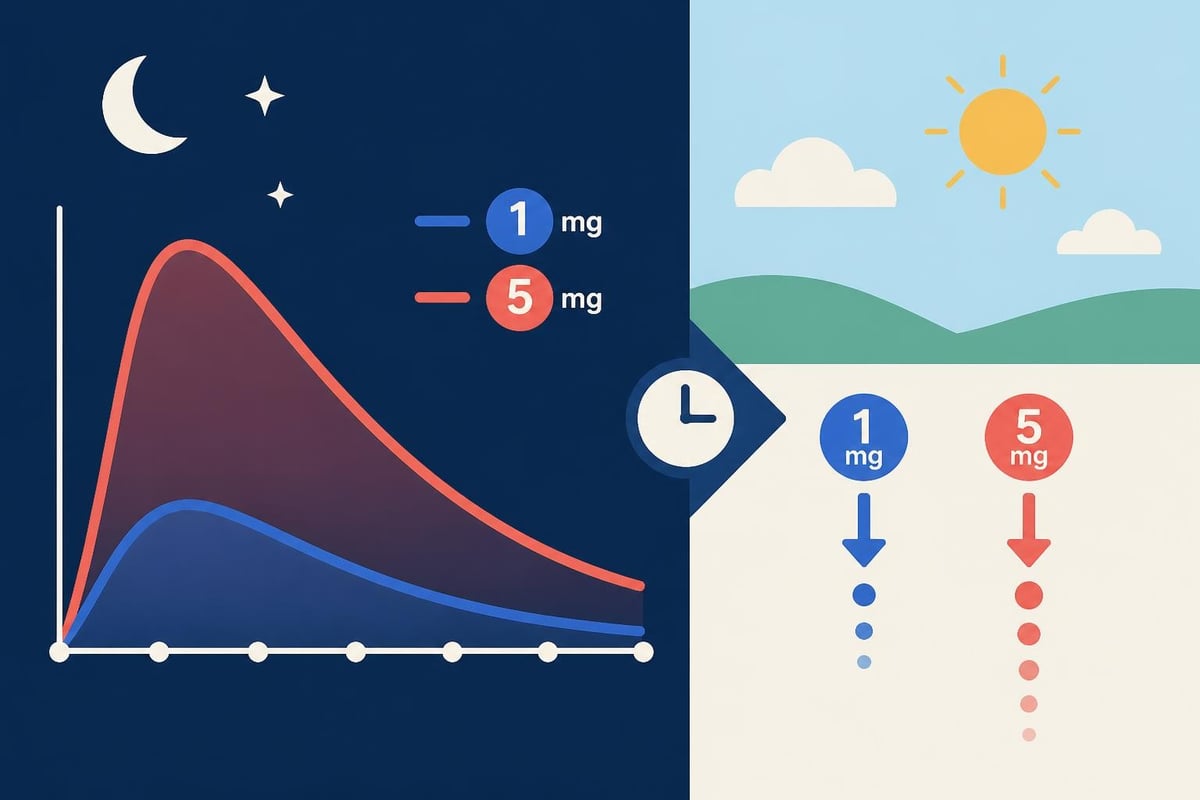
Melatonin has a relatively short half-life of about 30-50 minutes, but higher doses create blood levels that take hours to fully clear. When you take 5-10 mg, you may still have significant melatonin circulating when your alarm goes off, contributing to that groggy, heavy feeling.
A 1 mg melatonin dose produces peak blood levels that more closely mimic natural production patterns. The hormone completes most of its work within 3-4 hours, clearing your system by morning. This pharmacokinetic advantage translates to better next-day alertness and cognitive function.
If you're exploring supplements to improve sleep quality, understanding dose-response relationships helps you make evidence-based choices. Platforms that evaluate supplements on multiple factors beyond just ingredient lists can guide you toward products with appropriate dosing backed by research.
Timing Strategies for Maximum Effectiveness
When you take melatonin matters as much as how much you take. The 1 mg dose works best when coordinated with your body's natural rhythms and your specific sleep goals.
Standard Sleep Support Protocol
For typical sleep onset difficulty, take 1 mg melatonin 30-60 minutes before your target bedtime. This timing allows blood levels to rise as you're beginning your wind-down routine, reinforcing your body's natural sleep drive.
Optimal timing framework:
- Choose a consistent target bedtime
- Take 1 mg melatonin 30-60 minutes prior
- Dim lights and reduce screen exposure
- Engage in relaxing pre-sleep activities
- Get into bed when drowsiness appears
Consistency amplifies effectiveness. Taking 1 mg melatonin at roughly the same time each night trains your circadian system to anticipate sleep, strengthening the hormone's signaling effect over time.
Circadian Phase Shifting Applications
When your goal involves shifting your sleep-wake timing rather than just promoting sleepiness, earlier administration often works better. People trying to advance their sleep schedule might take 1 mg melatonin 3-4 hours before current bedtime, gradually moving both the dose and bedtime earlier over several weeks.
Travel across time zones requires different timing. The general rule: take 1 mg melatonin at the target bedtime in your destination time zone, even if that means dosing at an unusual hour initially. This helps reset your master clock to the new environment.
Quality Considerations and Label Accuracy
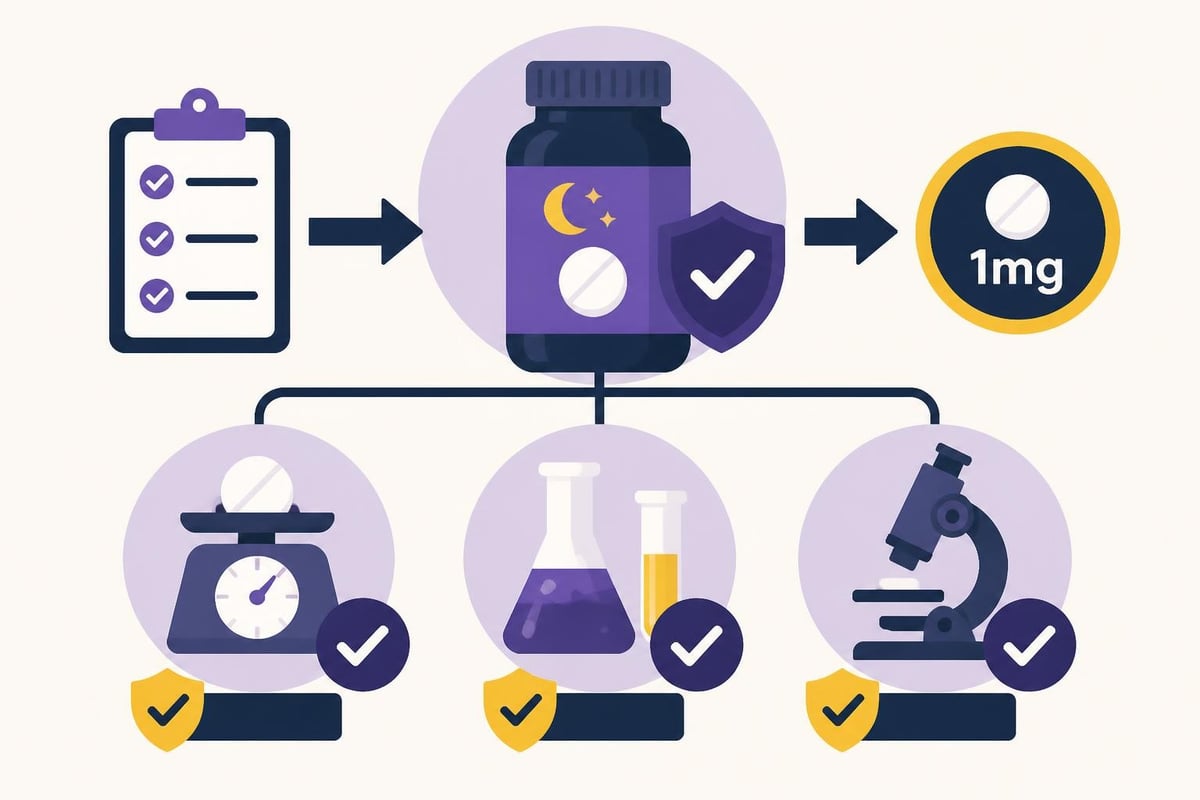
Not all melatonin supplements deliver what their labels promise. Research examining commercial products has found dramatic variability in actual melatonin content, with some containing 80% less or 470% more than labeled amounts.
When selecting a 1 mg melatonin product, third-party testing certifications provide critical quality assurance. Look for seals from NSF International, USP, or ConsumerLab, which verify that bottles actually contain the stated dose.
| Quality Marker | Why It Matters | What to Look For |
|---|---|---|
| Third-party testing | Confirms actual content | NSF, USP, ConsumerLab seals |
| Manufacturing standards | Ensures purity and consistency | GMP certification |
| Ingredient transparency | Reveals fillers and additives | Complete ingredient list |
| Lot-specific testing | Catches batch variations | Batch numbers and testing |
The detailed supplement labeling available through federal databases shows what comprehensive disclosure looks like. Products that provide full transparency about formulation details signal commitment to quality.
Formulation Factors That Affect Absorption
Melatonin supplements come in various forms, each with different absorption characteristics. Standard tablets and capsules typically take 30-45 minutes to reach peak blood levels. Sublingual forms dissolve under the tongue, producing faster onset in 15-20 minutes.
Extended-release formulations aim to maintain melatonin levels throughout the night, though evidence for superior effectiveness remains mixed. For most users starting with 1 mg melatonin, immediate-release forms provide appropriate pharmacokinetics that match natural production patterns.
Liquid formulations offer dosing precision that tablets can't match. When you need exactly 1 mg, or want to experiment with 0.5 mg or 0.75 mg, liquid melatonin preparations allow precise measurement with a dropper or measuring device.
Individual Response Variation and Personalization
Everyone's melatonin system operates slightly differently, which means 1 mg melatonin produces variable results across individuals. Age, genetics, existing sleep disorders, and medication use all influence how you respond to supplementation.
Age-Related Considerations
Natural melatonin production declines with age, which partially explains why older adults experience more sleep difficulties. Paradoxically, older individuals often show enhanced sensitivity to supplemental melatonin, meaning lower doses prove more effective.
Children and adolescents typically produce robust melatonin levels naturally, making supplementation less necessary. When pediatric use is appropriate under medical guidance, doses well below 1 mg often suffice. The developing endocrine system responds strongly to small hormonal signals.
Response patterns by age group:
- Young adults: Standard sensitivity, 1 mg often ideal starting point
- Middle-aged adults: Moderate sensitivity, 1-3 mg range common
- Older adults: Increased sensitivity, 0.5-1 mg frequently sufficient
- Children: High sensitivity, medical supervision required
Genetic Factors in Melatonin Metabolism
Variations in liver enzymes that metabolize melatonin create fast and slow metabolizers. Fast metabolizers clear melatonin quickly, sometimes benefiting from slightly higher doses or extended-release forms. Slow metabolizers may find even 1 mg melatonin produces morning grogginess, suggesting a 0.5 mg dose would work better.
You can't easily determine your metabolizer status without genetic testing, but response tracking provides practical guidance. If 1 mg leaves you groggy, try 0.5 mg. If it produces no effect after a week of consistent use, consider increasing to 1.5-2 mg before jumping to the high doses marketed as standard.
Integration with Sleep Hygiene Practices
Melatonin supplements work best as one component of comprehensive sleep support, not as a standalone solution. Even the optimal 1 mg melatonin dose delivers disappointing results when sleep hygiene remains poor.
The physiological mechanisms of melatonin show it facilitates sleep onset primarily by signaling darkness and reinforcing circadian timing. It doesn't override the wake-promoting effects of bright light, caffeine, or psychological arousal.
Complementary Sleep Environment Strategies
Create conditions that allow 1 mg melatonin to work effectively by addressing environmental sleep disruptors. Temperature regulation matters enormously - your core body temperature needs to drop for sleep onset, which happens best in rooms maintained at 65-68°F.
Light exposure management amplifies melatonin's effects. Dim lighting in the evening hours prevents suppression of both natural and supplemental melatonin. Blue light from screens proves particularly disruptive, making evening device use a major sleep saboteur.
Environmental optimization checklist:
- Room temperature: 65-68°F
- Complete darkness or blackout curtains
- Minimal noise or white noise masking
- Comfortable mattress and pillows
- No screens 1-2 hours before dosing
Behavioral Patterns That Support Melatonin Function
Consistency in sleep-wake timing creates the strongest circadian rhythms, making 1 mg melatonin more effective when taken as part of a regular schedule. Weekend sleep schedule chaos undermines the hormone's timing signals, reducing its benefit.
Caffeine consumption requires strategic timing. Since caffeine blocks adenosine receptors and promotes alertness through different mechanisms than melatonin affects, late-day caffeine directly counteracts supplementation benefits. Cut off caffeine intake at least 6-8 hours before your melatonin dose.
Exercise supports sleep through multiple pathways, but timing matters. Intense evening workouts within 2-3 hours of bedtime can elevate core temperature and arousal, working against melatonin's sleep-promoting effects. Morning or afternoon exercise proves optimal for most people using sleep supplements.
Long-Term Use Patterns and Tolerance Questions
Concerns about melatonin tolerance and dependency frequently arise when people consider nightly use. The evidence suggests that 1 mg melatonin doesn't typically produce tolerance or diminishing effectiveness with ongoing use, though individual experiences vary.
Unlike pharmaceutical sleep medications that often require dose escalation, melatonin's role as a hormonal signal rather than a sedative means your receptors don't down-regulate significantly with continued exposure. Studies of nightly melatonin use extending months to years haven't demonstrated systematic tolerance development.
Appropriate Long-Term Applications
Chronic circadian rhythm disorders often warrant extended melatonin supplementation. Shift workers, blind individuals without light-based circadian entrainment, and people with delayed sleep phase disorder may benefit from indefinite use of 1 mg melatonin as part of their sleep management strategy.
Short-term applications include jet lag recovery, temporary schedule disruptions, and adjustment to daylight saving time changes. For these situations, using 1 mg melatonin for several days to weeks addresses the specific challenge without requiring long-term commitment.
| Use Duration | Appropriate Scenarios | Monitoring Needs |
|---|---|---|
| 1-7 days | Jet lag, schedule shift | Minimal |
| 1-4 weeks | Temporary sleep disruption | Basic response tracking |
| 1-3 months | Seasonal sleep changes | Monthly effectiveness review |
| Ongoing | Chronic circadian disorders | Periodic reassessment |
Periodic Reassessment Strategy
Even when long-term use proves beneficial, periodic breaks allow you to assess whether 1 mg melatonin remains necessary. Try a week without supplementation every few months to determine if your natural sleep patterns have improved or if underlying issues have resolved.
This reassessment approach prevents unnecessary supplementation while ensuring you continue using melatonin only when it provides clear benefit. Document sleep quality during both supplementation and break periods to make evidence-based decisions about ongoing use.
Interactions and Contraindications
While 1 mg melatonin presents fewer interaction risks than higher doses, several medication classes and health conditions require consideration before starting supplementation.
Blood thinners like warfarin may interact with melatonin through effects on blood clotting factors. Immunosuppressants used after organ transplantation could potentially interact with melatonin's immune-modulating properties. Diabetes medications require monitoring because melatonin can affect glucose metabolism and insulin sensitivity.
Medications requiring caution:
- Anticoagulants and antiplatelet drugs
- Immunosuppressants
- Diabetes medications
- Blood pressure medications
- Sedatives and CNS depressants
Autoimmune conditions present a theoretical concern because melatonin influences immune function. While evidence doesn't clearly contraindicate use, people with conditions like rheumatoid arthritis or lupus should consult healthcare providers before starting even 1 mg melatonin supplementation.
Pregnancy and breastfeeding represent situations where melatonin supplementation lacks sufficient safety data. The hormone crosses the placenta and appears in breast milk, but research hasn't established safe dose ranges for these contexts.
Making Evidence-Based Supplement Choices
Navigating the crowded melatonin market requires evaluating products on multiple dimensions beyond just the 1 mg dose. Evidence quality, manufacturing standards, value proposition, and brand reputation all contribute to selecting an effective supplement.
When you're researching options, comprehensive evaluation platforms help cut through marketing claims. DoseRank ranks supplements based on evidence, dose fit, trust, value, popularity, and availability, providing a systematic approach to comparing products. Rather than relying solely on customer reviews or brand recognition, examining supplements through multiple evidence-based lenses leads to better choices.
Critical Evaluation Factors
Start by confirming that the product actually contains 1 mg melatonin through third-party verification. Check for certifications from independent testing organizations that verify label accuracy and screen for contaminants.
Review the complete ingredient list for unnecessary additives, allergens, or fillers that might cause reactions. Simple formulations with minimal excipients generally prove superior to products loaded with questionable additional ingredients.
Consider the cost per dose, not just the bottle price. A 1 mg melatonin product offering 120 doses at a lower per-dose cost delivers better value than a 30-count bottle, even if the upfront price seems attractive.
Product selection framework:
- Verify third-party testing certification
- Confirm 1 mg dose per serving
- Review complete ingredient disclosure
- Calculate cost per dose
- Check manufacturer reputation and standards
- Assess formulation type (tablet, capsule, liquid)
- Consider packaging quality and shelf-life protection
Starting with 1 mg melatonin offers an evidence-based approach to sleep support that minimizes side effects while providing effective circadian signaling for most users. Whether you're addressing occasional sleep disruption or managing chronic circadian rhythm challenges, this lower dose deserves consideration as your starting point. DoseRank helps you navigate supplement choices by ranking products on evidence, dose appropriateness, quality, and value - take the quick quiz to discover supplements matched to your specific sleep and wellness goals.